Saturday, 24 May 2014

SAVING MR BANKS

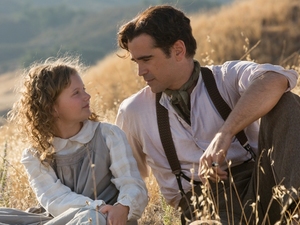
Saving Mr Banks tells the moving and true story of the encounter between Walt Disney and the creator of Mary Poppins, Mrs P. L. Travers. As a pastor I probably watched this movie different to most people.

I saw a very hurt lady have her heart carefully exposed by a very wise man. My ability to see this was made so much easier by the great script writing and editing. Actors normally get the credit for carrying a movie, and Tom Hanks and Emma Thompson are two of the best, but this movie is particularly a tribute to its writers and editors. They have managed to go beyond the usual flash-back sequences and cleverly used selective scenes from Travers' childhood to help the viewer to increasingly understand why Mary Poppins is so important to Mrs Travers.


The movie is set in Australia, America and England. The mystery begins in Australia where Travers was born and grew up. We are then in 1961 where we learn that Walt Disney has tried for 20 years to buy the rights to Mary Poppins. 

This movie explores fatherhood. P. L. Travers is who she is, a highly creative yet bitter woman, because of the relationship she had with her father (played magnificently by Colin Farrell). She adored him. He was the one who ignited her imagination. But there is something about their relationship which has also caused her to withdraw. Fathers can not but help to have a profound influence on their daughters.

But this film is also about two other dads. The first of these is Walt Disney. The reason that he is relentless in securing the rights to Mary Poppins is because he made a father's promise to his daughters that he would one day bring their beloved "Mary" to the big screen.  The second of these fathers is Ralph, played by the great Paul Giamatti.  Ralph is assigned by Disney to be Travers' chauffeur. She is inconsiderate of him and rude to him for most of their interaction until a very touching moment when she learns that he is the father of a disabled daughter. From that point, there is a fond connection between them.


Things did not go well between Travers and Disney. She walked out of their negotiations and returned to England. It was then that Walt Disney learns that P. L. Travers is not "P. L. Travers". He flies immediately to London on the next flight after Mrs. Travers and this is the climatic moment of the movie. It is here that Walt Disney sounds far more like a pastor than a movie producer. In this scene between Disney and Travers, there are two fathers in the room. Disney shares the story of the interaction he had growing up with his merciless father and proves to Travers that he understands the vital connection between her father and Mary Poppins. He then puts it to her that she needs to let the pain of her past go. Walt Disney offers Travers a way to redeem her father by trusting him to tell her story of Mr Banks (the father in the Mary Poppins' story) well.

When the film has its world premiere in Hollywood, we see it through P. L. Travers eyes. We see her as a little girl deeply in love with her daddy. We see her losing her daddy. And we see Mary Poppins who came to her childhood home with the promise of saving her daddy. But on the screen we are taken into P. L. Travers imaginative world of make-believe where, unlike the real world, she is able to save her daddy. And thus, we are shown that the story of Mary Poppins is actually not about Mary Poppins - but about her daddy and his redemption.

Curiously, this very well told and moving story is described as a 'comedy' by the producers. Comedy? No. Drama with some humorous scenes? Yes.

Saving Mr Banks, Mr Walt Disney and Mr Walter Mitty - my online audio Movie review from a Christian perspective taken from my radio show - bit.ly/RSWwQ5

Andrew Corbett

Friday, 16 May 2014

BLOOD STAINED FOOTPRINTS

Spend time with a follower of the Christ and you'll unmistakeably notice something. Spend time with someone who pretends to follow Christ and you'll never see it. Real Christ followers follow Christ. Like trackers who know the signs to look for when tracking someone, Christ-followers find in the Word of Life the tell-tale indicators to the path that Christ has already trod. These followers follow even when it's tiring, even when it's difficult, even when it's discouraging. After a while you notice that this kind of Christ-following produces the unmistakeable Christ-likeness that only comes from walking in the blood-stained footsteps of the Master.
Although a righteous person may fall seven times, he gets up again,
but the wicked will be brought down by calamity.

Proverbs 24:16 The NET Bible
For the last few years, Kim and I have done a major hike over four to six days. Each of these have hikes have been thoroughly taxing for me. We've had to hike over mountains, through swamps, across rivers and creeks, and around fallen trees and over boulders. Our last attempted over-night hike was abandoned when the snow blizzard meant we were traipsing through a foot of snow into an area of visibility of no more than 50 metres. Hiking can be tough going. There are times when the best I could do is to just keep going.
Ponder the path of your feet;
then all your ways will be sure.
Proverbs 4:26
I'm perhaps ashamed to say that on each of our longer hikes I have wanted to quit about halfway through. But halfway is no place to stop! You're halfway back or halfway to go - either way you've got the same distance to go. And that's what I've noticed about real followers of Christ: they just keep going. This is called faithfulness. The kind of faithfulness that followers of Christ develop along the path of Life is a fruitful one. That is, the path is made all the better because they are travelling on it. Faithful followers of Christ don't just journey on the path, they help others journeying on the path as well. They don't travel empty. On the hikes that Kim and I have done, we have to start our adventure with fully-loaded back-packs. (A fully loaded means at least 25 kilograms.) On the journey to follow Christ there are times when you have to share your resources with other travellers like I did on our last Freycinet walk when I gave a butane cylinder to a fellow traveller.
I have taught you the way of wisdom;
I have led you in the paths of uprightness.
Proverbs 4:11
By checking the map of Scripture we can look ahead to what lies before us on our journey to follow Christ. We see Christ loving and serving people. We see people letting Him down and eventually betraying Him. We see Him in the upper room of the night He was betrayed and He is washing the dung-stained feet of His proud disciples (who happened to be arguing over which of them was the greatest!). We see Him laying His life down after enduring phenomenal hardship. The closer we get to Christ the steeper the journey seems to become. But the ascent to follow Christ closely is only as acute as our resistence to follow Him. When Peter was reluctant to follow, the path of life was steep and cause him to become distant.
¶ Then they seized him and led him away, bringing him into the high priest's house, and Peter was following at a distance.
Luke 22:54
I look at many in our church and say to myself - These are faithful followers. They keep turning up. They keep serving. They keep learning. They keep helping. They stay humble. They often struggle to say 'No' and wonder if they should say it more often than they do, but they follow a Christ who says, "Yes. Come, follow Me."
If you are one of these faithful ones who keep following, you will have already encountered the disappointment that another follower, John Bunyan in his classic book, Pilgrim's Progress, describes. It wasn't the obstacle, the devilish attacks, the horrid conditions, that Pilgrim found most disappointing. It was when he was momentarily strengthened by a fellow traveller who joined him on the Path of Life but soon dropped back, took a break, retreated, or went on side-tracks. Following Christ on this Path is like being a burning coal. The flame of the coal always burns brighter when it is accompanied with other coals!

You will find the road map to the Path of Life in the Word of Life, the Bible.
The Path of Life - ΒΆ You make known to me the path of life;
in your presence there is fullness of joy;
at your right hand are pleasures forevermore.
Psalm 16:11
The Pathmaker and Giver of Life calls His children to be followers not consumers. The New Testament uses the word: disciple to describe a follower of Christ. This word means learner. This is how how you can detect a true follower of Christ. Not only are their feet spattered with Someone else's blood, they are learning to keep going, to keep serving, to keep helping - to keep following their beloved Lord and Saviour.
Ps. Andrew

Wednesday, 14 May 2014

APOLOGISING FOR ATTRACTIVE CHRISTIANITY

Christianity can be presented attractively if it is presented 'Apologetically' (reasonably) with gentleness and respect (1Peter 3:16-17). Many people have never heard a well-reasoned defense of the claims of Christianity. I have briefly introduced five categories of evidence. In another article I have presented five proofs for the existence of God. In yet another article I respond to the five main objections offered against the existence of God. This article assumes the next logical challenge: But why Christianity and not any other religion? It is my hope that as an ambassador of Christ you might be able to use the points raised in this article to more attractively respond to this challenge...

Jesus Christ was attractive. But He wasn't attractive for many of the reasons we normally associate with attractive people. In fact, Isaiah the Prophet foretold that the Christ would have "no form or comeliness (beauty) about him" (Isa. 53). Yet, thousands of people were attracted to Christ from the early days of His public ministry. Something made Jesus Christ attractive. It should therefore by no surprise that He gave principles and instructions for His followers which would present Him and His message attractively. Christianity is meant to be attractive. This involves being socially attractive, intellectually attractive, spiritually attractive and aesthetically attractive. One such example of Christ promoting attractive Chrisitanity is the parable He told about the sower.
Attractive Christianity

Friday, 9 May 2014

A CONFESSION


workOur society is in trouble. It used to be that drugs were a problem in communities materially less fortunate than most. Now illicit drugs are a growing problem in materially affluent communities. People are turning to drugs and illicit sex to fill the void, numb the pain of unfulfilment, and dull their despair. The root cause of this void, pain and despair is a gross lie - that life has no meaning. But the Life-Giver has designed that our lives are meaningful when we workworshipwonder and love. Each endeavour contributes to what defines us as human beings. Anyone who does not work is depriving themselves of the very thing that can give them dignity, satisfaction, and fulfilment. But the same is true of the dignity, satisfaction and fulfilment that comes from the worship of the One True Life-Giving God, the wonder of who God is and what God has done, but especially from loving and being loved. There is one place (that is much more than a 'place') where each of these aspects come beautifully together.
¶ I love you more than I can say.
Because I'm madly in love with you,
They blame me for everything they dislike about you.

Psalm 69:9 THE MESSAGE
Before every Sunday morning worship service, the worship and pulpit teams meet in my office for team-talk and prayer. For a couple of years I had a separate white-board sign that said-
"We work so others can worship.
Our work is our worship."
Jesus, the perfect man, the happiest man, was the greatest example of work (Jn. 4:34), worship (Mtt. 26:30), wonder (Acts 14:3), and love (Jn. 13:1). His death on the Cross was the means by which He could establish the 'place' (which is really the people) where the best work, worship, wonder and love could be done. It is impossible to overstate how hard Christ has worked to establish and extend His Church, inspire worship, create wonder and foster love. Christ's churches come in different sizes, different kinds of people, different venues, with different meeting times, music styles, and leadership structures.
¶ Husbands, love your wives,
as Christ loved the church and
gave himself up for her
Ephesians 5:25
The New Covenant House-of-the-Lord, the Church, is one of the greatest sources of blessings that God offers to the world. While not technically correct, Bill Hybles often quoted statement - "The local church is the hope of the world" (the local church declares that Christ is the hope of the world) has a powerful sentiment behind it. I have seen, felt and heard of Christ's supreme passion for His church time and time again. The Word of God promises that those who are planted in the House of the Lord will "flourish" (be abundantly blessed). I was very recently reminded of this powerful truth when two of our church family who had been looking for work in the field of their professional training volunteered at our church. Within a week or so of volunteering they both had secured employment. They are both now flourishing just as Psalm 92 promised.
They are planted in the house of the LORD;
they flourish in the courts of our God.

Psalm 92:13
It is in the community of believers that Christ has established to foster work, worship, wonder and love, that Christ calls us to learn these fundamentally human aspects. From this growing broad community of the church, men lead their own families as 'micro-churches' and foster in their children what work, worship, wonder and love should look like. Fathers especially carry this ministry of the church to their sons by showing them what work looks like and that work necessarily involves doing things you don't want to do. (We need a generation of young men who understand and exhibit the qualities of self-discipline and self-motivation undergirded by a willingness to accept responsibility.) The family home becomes the seed-bed for fostering worship (adoration of God, attention to Scripture, audible praying). Parents promote, rather than hinder, a deep wonder of the natural world which God has created for us to enjoy which is why school work has far to do with worship than it does with textbooks and exams.


And it is in the family home where children are trained in the art of love.

We have now almost returned to some Ancient Roman values of marriage, family and sexuality where women are viewed as objects, children as accessories, and sex as a recreational sport. Today the "Pornography Industry" is the largest 'industry' in the world! Conservative estimates place it at several hundred billion dollars in annual turnover, but it is almost certainly closer to a trillion dollars a year! Economist Doug French reports that at least 28,000 internet users view online porn every second! Is it any wonder then that young men view women as objects of their gratification rather than as people who need a man to commit exclusively to them for life and truly love them for better or for worse?!
"The foremost danger to marriage in our time is the wholesale degradation of women in the popular culture," Shmuley Boteach, The Jerusalem Post
It is from the family home that children learn to love. They witness their Mum and Dad hugging. They hear their Dad talking respectfully to his wife and their Mother. They experience the stern rebuke of their father when they have been impolite to their Mother or sibling - because a loving father is a father who disciplines his children (Heb. 12:9). They feel the loving comfort of their mother when only a mother's caress will soothe. And ultimately they learn that true love comes from God and is gladly expressed toward Him by meeting together with other God-lovers in the House of the Lord each week. The result is that children get the idea that love is not merely a feeling but a willing commitment to another for their highest good which produces these feelings.
¶ O LORD, I love the habitation of your house
and the place where your glory dwells.

Psalm 26:8
I'm concerned. I'm deeply concerned. We have a generation that does not work, wonder, worship or love, as it should. Instead, it works to avoid work, senselessly amuses itself 24/7 (rather than engaging in the holy art of scientific wonder), worships the created rather than the Creator, and gladly buys the delusion that love is something you make rather than something you give. These things are utterly destructive to the human soul - in fact, destructive to the core of what it means to be "human". Is it any wonder then, that the world's second largest global industry is now alcohol and illicit drugs. And in what must be an ironic metaphor of our day, the affect of heroine is best felt the first time it is used and creates a craving for more and with each subsequent hit of heroine or cocaine the 'high' is nowhere near the same. In fact, in a recent Ross Kemp documentary, where he interviewed crack addicts in Chicago, he was repeatedly told by them that they had never re-achieved the initial high they felt when first trying the drug that would soon master their lives. These addicts all said they were addicted to these drugs after just three days of use and that each hit to satisfy their craving was merely to help them feel "normal" (not to get 'high'). And this is the illusion of what the world offers when it cons people into thinking that right work, wonder, worship and love will not satisfy the human soul.

People, whose souls are being destroyed by these lies, need to see and hear an alternative. It is possible for God to set someone free from the destructive lifestyles of crime, drugs, idleness, and promiscuity. God does this regularly. The Giver-of-Life has sent His Son to pay the price of our guilt and shame and to set us all free and give our lves hope and meaning. This hope is now proclaimed through the local church. Are you in bondage to despair, idleness, drugs or sexual addictions? Jesus Christ can save and deliver you. You are one prayer away from beginning your journey to freedom. This is the kind of prayer that confesses failure and mistakes. It is the kind of prayer that confesses our need for forgiveness by and reconciliation with God. It is the kind of prayer that asks God for help to live the way we should. Will you pray this kind of heart-prayer?

 It is in the House of God that we learn the true value of working, how to wonder, the inspiration to worship as we should, and how to love others. It is from the local church that draw the principles for raising our families. This is why society needs strong, vibrant, local churches to help foster strong, healthy marriages which produce strong, happy, fulfilling families. This is why, as Bill Hybels puts it, the local church is the hope of the world. In this sense, I believe it. And, I must confess, I love my church for being it.

Ps. Andrew

Friday, 2 May 2014

A HAPPY LIFE

He was truly happy. It would be unfair to assume that his happiness was due to a trouble-free life. He had many troubles. But he was happy, really happy. His happiness was independent of his position and circumstances. He often reflected that life was very unfair to him - unfair in a positive way. He felt that he didn't deserve the many blessings he enjoyed. His life stands to this day as one of the greatest testaments to achievable happiness that any person has ever attained. And what he discovered is little known today, but ready for anyone to enjoy.
¶ Now to him who is able to keep you from stumbling and to present you blameless before the presence of his glory with great joy
Jude 24
Happiness is all too elusive for most people. It needn't be. He not only found it, he learned how to share it. When he was just months old a wandering gypsie woman came up to his pram, picked up his little hand, and prophesied over him. Her prophesy was remarkably fulfilled. Despite his many obstacles nad his painful accident, he would go on to bring joy and great happiness to millions of people for decades and decades.


He was the eldest of eleven children. Big families tend to shape a person in a certain way not seen often seen now. As a youngin', he had a love for nature and books fostered in him by a loving father. Those who recognise the ingredients of happiness will have detected something vital in what I've just said. He graduated from his small high school when he was just 14 years old while it took others another few years to do the same. He describes his school days as "happy". This came at a cost though. He as now required to contribute to the household. At around 15 he became a clerk. He was happy at work. He found his work relatively easy. His eager mind craved more and wandered. His craving was satisfied by night school. His wandering was satisfied with his day-dreaming. He was happy.

He was day-dreaming when tragedy struck. Others said that tragedy struck because he was day-dreaming. Either way, the accident severed his right leg just below his knee. Medical treatment in the late 1800s was crude and it was touch and go as to whether he would even survive the contracted septicaemia. Doctors eventually gave up hope and told his parents so. After a passionate full morning of prayer by his earnest mother, he miraculously regained consciousness. It was a Catholic Sister whom he first laid eyes on and although he was only 15 and she was nearly 40, he was so happy to know that someone had so carefully tended to him that he fell in love with her instantly.
in every way and everywhere we accept this with all gratitude.
Acts 24:3
Even with his right leg gone, he was happy. Happy to be alive. Happy to go on in life. Another ingredient of happiness. But at 16 he was forced to leave his family home and move to, the then, world's largest city. He arrived and marvelled. But he felt lost. A sense of loneliness the like of which he had not known. Despite being happy he knew something was missing. He became aware of his utter lostness. He heard a street preacher tell him of the God who loved him and offered to save him, forgive him, adopt him, and use him. It wasn't at that moment. It was later. He didn't do it to become happy. He was already happy. He gave his life to Christ in the quietness of his own company - but not that it was a particular moment. It seemed to him to be process. He now had a new reason to be happy. He joined a church and was baptised. He was now 18. A strange thing happened to him after he arose from the baptismal water. The pastor and elders gathered around him, laid hands on him, then bade him to "receive the Holy Ghost". A strange thing immediately occured. He felt an unfamiliar sensation of power, purpose, and presence. He experienced a new happiness. He describes it in his autobiography as if he was now walking a foot above the ground!
You have put more joy in my heart
than they have when their grain and wine abound.

Psalm 4:7
This stirring grew. He felt that he was called. He began to suspect that the gypsy, who spoke those prophetic words nearly twenty year earlier, may not have been what she initially appeared to be. He began to follow his heart. His heart held a pen. His words soon appeared in newspapers. His heart held a Bible in one hand and a pulpit in another. He was invited to speak alongside that street preacher who had made such an impression on him. His first sermon lasted seven minutes. No one was saved. But he discovered a new level of happiness as a result of his attempt. He continued this for several months. Eventually dozens gathered around him regularly on the street corner to listen. One of those intrigued from a distance was known as 'the Prince of Preachers'. He kept an eye on this happy chap.

The Prince then made his move. He became the young man's benefactor. This was the last thing the Prince did. He died days later and over 30,000 mourners attended his funeral procession.

His benefactor arranged for a full scholarship for him at Pastors College. He was happy to be in College. As part of this he was assigned a small village church to oversee. At 22 he met a young woman in this church who won his heart. His heart was irretrievably smitten when he escorted her in the dusk moonlight and retrieved then returned her hat. Placing her broad-brimmed hat back on her head he looked into her eyes shimmering softly in the moonlight. Snared, but happier than ever. Unlike the worldly relationships of today, he took the Scriptures seriously which prescribed happiness with the love of your life. As a result, he was a perfect gentleman toward her. Happiness and delayed gratification always complement each other. After two years of blossoming friendship he gave her a first kiss and never kissed her again until they were married nearly a year later. They enjoyed 64 years of marriage which he described as the happiest years of his life. Together they had five children. One of their daughters died tragically when she was in her forties. He took up his pen and shared with the world the comfort he received from Psalm 23, called IN PASTURES GREEN. When happiness takes a break it is often relieved by times of comfort and joy.
He restores my soul.
He leads me in paths of righteousness
for his name's sake.

Psalm 23:3
The O.B.E. that Dr. F.W. Boreham received from
Queen Elizabeth for Preaching & Literature
He lived a happy life. He served three churches, the first in a New Zealand town of a thousand people where he says he was utterly happy and content to do so. After twelve years there he moved to Hobart and served there for ten years. It was during this time that their "special" daughter was born. She experienced continual night-terrors due to her incurable meningitus which led her daddy to hold her for hours on end in the middle of the night to bring her comfort. The church came to know that whenever their pastor stepped into the pulpit and spoke with unusual tenderness for a man of his times that the young princess had had a particularly troubled night. They saw their burdened pastor happy. He was happy to be married to his Sweetheart, to be the father of four daughters, and to pastor them through counsel and preaching.

Toward the end of his life, just weeks before he entered into infinite happiness, he was visited by Billy Graham who had read each of his 55 books. Dr Graham invited the aged sage to join him on the centre stage at the MCG as he launched his Melbourne evangelistic campaign. But he was happy to enjoy the pleasant company of just his wife instead of the adoration of over 100,000 appreciative people. At 88, despite the pain he felt in his amputated leg (which he had concealed from everyone including his family), he was deeply happy. He had learned and sought to share that happiness comes from living nobly. He showed millions from the pages of the Sacred Text what noble living entailed. But more than that he showed millions what the Sacred Text meant when it prescribed noble living.

Ps. Andrew Corbett

Friday, 25 April 2014

'A' GRADE CHARACTER

Every parent wants their children to do well at school. When they receive their child's school report they look hopefully at it to see if they got any 'A's. But there is a set of 'A's that every parent should want for their child that will have a lasting benefit for their lives well beyond the school ground.

When it comes to helping their children learn, many parents confuse schooling for education. If you have to choose, choose education. And while your children's teachers are busy showing your children how to do well on the Government's Naplan tests, you might like to introduce six 'A's that you insist your children learn: Ability, Accountability, Awareness, Attachment, Actuality, and Awe.
and endurance produces character, and character produces hope
Romans 5:4
These six 'A's are the components of character. Character is the fabric of a person's soul. This fabric can be weak - torn by the slightest flutter, or it can be strong - able to withstand life's storms and adjust accordingly.

The story is told of a couple of friends who grew up together. One of the young men leaves his hometown and eventually builds a very successful business. Meanwhile, his childhood friend who remained in their hometown has become a struggling carpenter. As the years go by, the successful businessmen pines to return to his childhood hometown and does. The news of his return spreads around the town. He soon catches up with childhood friend and learns that he has become a carpenter. "That's great!" he tells his tradesman friend, "You can build my my new home!" The proposed house is grand. It is the biggest project that the carpenter has ever undertaken. Added to this, his successful businessman friend has offered to pay very generously for its construction. Without a contract, the two old friends shake hands and the deal is done.
As the carpenter is building the new home, he becomes angry. "How dare he come back into town and start throwing his money around like a big-shot!" he thinks. The more he thinks about how unfair life has been, the closer he gets to his hatching his scheme. He begins to reason that this old friend might be a good businessman, but he surely doesn't know much about carpentry and building. He further reasons that if he was to scrimp here and there and use second grade material rather than the first grade material he quoted on, he could increase his profit margin and his wealthy friend would never know the difference. But as he begins to swindle his friend he goes far further than he ever intended. But when the day comes to hand over the newly constructed house to his friend and client, he has a moment of guilt about what he has done but then quickly dismisses it because he reasons his wealthy friend can afford it. As he brazenly hands the keys of the new home over to his client he is then stunned when his old friend explains why he is giving the keys back. "I heard that things had been tough for you. I've done well in life and I'd like to do something for you. You've built me the finest house money could buy - and you've poured your heart and sould into building it. I'd like to give you this house as a gift!"
Character is the fabric of our lives just like the building material was the fabric of the house in this story. Just as a house can have a fancy faΓ§ade and a coat of paint to hide its structural deficiencies, so we too can put up faΓ§ades to hide our character deficiencies. These six 'A's are the ingredients to first-grade character development.
Practice these things, immerse yourself in them, so that all may see your progress.
First Timother 4:15
1. ABILITY
Learning to ride a bikeEvery child needs to develop their abilities. This can only happen when allowed to fail. It takes practice. (Most children do not naturally understand the difference between rehearsing and practicing). Developing abilities involves stretching present capactities, focussing for an extended period of time, learning from those with better abilities. It unavoidably involves setbacks. It requires persistence. Life demands certain abilities and the level of a person's character is how those demands are met.
To one he gave five talents, to another two, to another one, to each according to his ability. Then he went away.
Matt. 25:15
2. ACCOUNTABILITY
Unsuccessful T-Shirts #1- I Love AccountabilityNone us of like to be corrected. But without the character strength to accept correction our children's characters cannot be developed. Children must be taught how to receive correction, welcome it, and apply it humbly. This is the process of accountability. Parents often don't want to correct their children for fear of nagging or discouraging, but children need to understand that being held accountable for their actions (what they've done) and responsibilities (what they should do) will set them up for maximising their life's potential. Accountability also involves congratulating, rewarding, and celebrating your children's efforts as well.
For whoever keeps the whole law but fails in one point has become accountable for all of it.
James 2:10
It takes an extended season of heat and pressure to turn a piece of coal into a diamond.
¶ In the end, serious reprimand is appreciated
far more than bootlicking flattery
.
Proverbs 28:23

Inappropriate Jim3. AWARENESS
Parents are responible to make their children aware of no only what is right and wrong, but also, what is appropriate and what is inappropriate. Learning the right and appropriate way to behaveis an essential skill for life. It requires the character trait of awareness.
 For our boast is this, the testimony of our conscience, that we behaved in the world with simplicity and godly sincerity, not by earthly wisdom but by the grace of God, and supremely so toward you.
Second Corinthians 1:12
4. ATTACHMENT
When surveyed, the majority of employers said that they would employ someone who was moderately competent and able to get along with others, before they would employ someone highly competent. Getting along with others is a learned art. Parents may be proud that their child gets an 'A' for Social Studies (History and Society, "Sose") but if their child lacks social skills that 'A' means little. From the toddler years, parents train their children to share, to be polite, respectful of elders and those in authority, how to apologise, how to hold a conversation with appropriate eye-contact, and how to show sympathy.
Love one another with brotherly affection. Outdo one another in showing honor.
Romans 12:10
5. ACTUALITY
Reality avoidance measureCharacter is strengthened when reality is accepted. Our children may not like reality. They may not be willing to accept it. But as soon as they do they are best equipped to begin to deal with it. Apparently Denial is not just a place in Egypt! Playing in a Grand Final for the losing team. Failing an exam. Not passing a test. Being told you can't sing. Not being selected. Attracting certain people. Finding yourself repeatedly in similar circumstances. Earning money but never having any. Helping your child align with the actual world rather than the ideal world, will be one of the greatest training gifts you can give them.
For we know that the whole creation has been groaning together in the pains of childbirth until now.
Romans 8:22
In the actual world, dishes need washing up (not just putting in the sink for someone else to do), clothes need folding and putting away, grass needs mowing, people let you down, people offend you, and you let people down and offend others. Parents should help their children to accept the actual world of reality in which we live and learn to forgiveforgetflex, and friend well.

6. AWE
awe in worship of GodIf you add nothing else to your child's character, add this one thing: awe. This is a deep sense of reverence for God. It is a sense in which we take our right place in the universe (which is not the centre of it). We acknowledge that this universe is God's and everything in it - including us (Psalm 24:1). We live our lives in awe of what God has done. We admire it. We take pictures of it. We sing about it. But most of all we admire Him. We become a picture to the world of Him. We sing about Him.

A deep sense of awe centres around a profound devotion to Christ. This is why children need to learn that church is a delight. They need to see us model to them that when we are assembled in church we are in awe of God through the worship (sometimes despite the music and sometimes despite the engagement of those around us), in the midst of our fellowship with other believers, under the sound of the preached Word, and in the acts of service that we each contribute to the Lord's House.

I don't know who raised the young lady we met in the carpark at James River Assembly in Springfield Missouri. But they deserve badges or medals of honour for the outstanding job they did in raising their daughter! We drove into the church carpark when the temperature was -10ΒΊC ! She was wearing warm clothing - beanie, mittens, thick jacket. But she must have been cold. As we drove into the carpark she was smiling as she directed the traffic. But that's not all she was doing. She was dancing. Yes, dancing! She looked genuinely happy to be serving the Lord in any way she could. That day I heard the famous pastor preach but was barely impressed. Instead, the best and loudest sermon I heard that day, was from this young lady! She was a picture of awe. She was in awe of her God and it showed because she was prepared to serve in the House of God in a way that few would have even been prepared to try. I can tell when people have a deep sense of awe for God. They too serve. If you look closely at our ushers this Sunday you'll see the word "awe" written on their souls.
 For a day in your courts is better
than a thousand elsewhere.
I would rather be a doorkeeper in the house of my God
than dwell in the tents of wickedness
.
Psalm 84:10
And awe doesn't stop at the doorway of the Church building - it's refueled, re-calibrated, re-ignited so that we can enter into the world with an awe-full awareness of God and His works.

These are six essential ingredients to strong character that School Report cards tend to neglect but no parent should.

Ps. Andrew

Tuesday, 22 April 2014

What Happens When Dr Hugh Ross Visits Your Church

We've just hosted Astronomer and Astrophysicist, Dr Hugh Ross, for a five day Easter campaign. Before he arrived, after we announced he was coming to Launceston, we became aware of the campaign of opposition to his visit. I only looked at a fraction of the emails which were put in circulation among my colleagues calling for a boycott of his visit. In these emails, and printed materials, Dr Ross was accused of being "a charlatan", "a tool of Satan", "an atheist pretending to be a Christian", "divisive", "heretical", who "distorted the Bible", promoted "secular" science over the Bible, and did not take the Bible "literally". In the week he actually arrived in Launceston, one 'ministry' website declared that Dr Ross was "racist" because "he teaches that Australian aboriginals are not human!

In every instance (and I did not have time to challenge every opponent) when I asked if these opponents if they had actually read a Hugh Ross book or attended one his talks, the answer was: no. This was extremely disturbing.

Our first meeting was a Business Breakfast which was nearly sold out two weeks before the event. For those familiar with events in Tasmania, this was extraordinary! In fact, we sadly had people turned away at the door of this first event because we were fully booked out. Dr Ross was questioned about how he understood the "days" of Genesis 1-2 and gave a reasoned response showing that the expression, 'evening and morning' occurs no-where else in Scripture (and is not applied to the seventh "day") and that the Hebrew word translated "day" ('yom') has four literal meanings - (i) 24 hours ("Last Tuesday was her birthday."); (ii) Daylight hours ("While it is day, we will work.");  (iii) Part of the day ("It took us all day to drive from Launceston to Hobart."); (iv) A long period of time ("Back in the Romans' day there was a lot of bloodshed."). Of note, Dr Ross pointed out that the Hebrew word for era, long time, is the same Hebrew word, "yom" (often translated in English as "day", but the same Hebrew word used Genesis 2:4 is used to describe the entire period of creation from Genesis 1:1 to Genesis 1:26).

We held an Apologetics Seminar the same day as Business Breakfast which was nearly fully subscribed - quite remarkable for a mid-week, weekday event. One of the questions which came up during the seminar was about the physical laws such as gravity, the speed of light and the second law of thermodynamics.  Dr Ross stated that God created these laws to govern what He was creating. He cited Jeremiah 31:35 and 33:25 as straightforward examples of this Biblical claim. Thus, when someone attempted to persuade him that radio-metric dating techniques are unreliable, he simply pointed to the Scriptures to show that the Bible states it is designed by God to be reliable.

On Maundy Thursday we did a Radio Breakfast Show interview, where I pressed Dr Ross with some of the things that these anonymous emailers were accusing him of. One of the issues put to him was that he was interpretting the Bible with science - that is, despite the plain reading of the Biblical text only giving us thousands of years of existence, he was reading into the Text millions and billions of years. He responded by pointing out that the Bible does not give a date for the creation of the universe and the assumption of only thousands of years was built on a calculation of the genealogies which are known to be incomplete. He showed that the Hebrew expression, "father" was the same used to describe Grand-father, Great-Grand-father, Great Great-Grand-father and so on. [Listen]

We then filmed some interviews (keep an eye out for them on my YouTube Channel), had some private meetings, then did a sold-out Dinner meeting. Dr Ross showed that from the creation of the universe, the universe has expanded at an exquisitely fine-tuned rate. If it had expanded any slower, our universe would not have come into existence. If it had initially expanded any quicker, our universe would not have been formed. The margin of error for this expansion rate is so infinitesimally small that it is like driving then accelerating your car for a million kilometres at a speed/rate that must not waver to at least the 47th decimal place. 


Good Friday morning was held in our church at Legana and was full.

We then hired the largest hall in Launceston for our Good Friday evening service as part of the Launceston Easter Community Festival. Around 900 attended this meeting where Dr Hugh Ross gave the scientific evidences for the existence of the God of the Bible. He was quizzed on the law of decay (mentioned in Romans 8). He pointed out that this was a necessary component to God's good creation of the world. Dying, ageing, wearing-out, decay, running down, are all an essential part of life and without it life itself could not be. When a star, such as our Sun, gives off light, it is decaying. When we eat food, our stomach breaks down the food in order to draw the necessary nutrients for our bodies. We know that both of these aspects of decay were in play before the Fall of Man.

One of the comments from an attender was that Dr Ross had presented him with a problem. When I asked "How so?" He replied, "My vision of God was far too small - now I need a bigger one!" Another attender told me that they had previously been taught that science was corrupted because of the Fall and couldn't be trusted, but he could now see that this was utterly wrong and that God had decreed science to observe what He has done and to receive glory as we admire His works in the Book of Nature.

The night was made even more memorable by the presence of so many ministers of the churches of Launceston being in attendance. Bishop John Harrower even drove up from Hobart just to lend his support to the evening! While Dr Ross appealed to the head, I summed up his address and appealed to people's souls, Sonia Bowen and the assembled worship team appealed to the hearts of those present. This is partly why we referred to the Festival as a Festival of Art - Music - and, Thought.


Resurrection Sunday was full in the morning. This was quite a change in pace. Rather than have Dr Ross speak, I interviewed him. Because I knew Dr Ross, and some of the personal struggles he has had to overcome, I was able to draw these out in the interview. For many people this was the highlight of Dr Ross's ministry with us. People were particularly enthralled by his position on supernatural gifts and miracles.

Then Sunday night we nearly filled the Tailrace Centre. I interviewed Dr Ross so that people got a broad idea of where he was coming from, and then we took Q & A.  One of the questions, which was quite aggressive, related to the Old Testament genealogies and the ages of the fathers. Dr Ross attempted several times to answer the question without the freedom to do so by the listener. Here is some background information from Doug Ward about this issue-
Have you ever added up the numbers in the genealogies of Gen. 5 and 11 to compute the number of years from Adam to the Flood, and from the Flood to Abraham? I know that I have, at least a couple of times. I can remember my grandmother doing this sum on the back of an envelope when I was boy. She may have even assigned it to me as an exercise in arithmetic. 
If you have carried out this computation, you are certainly not alone. Bishop Usher's famous seventeenth-century estimate that Adam was created in 4004 B.C. was partially based upon it. The numbers are just sitting there, waiting to be added up. 
But is there any significance to the fact that the biblical text itself does not list the totals? The Bible does periodically give chronological information-e.g., Ex. 12:40 mentions that the Israelites were in Egypt for 430 years, I Kings 6:1 gives a figure of 480 years from the Exodus to the building of Solomon's temple, and Judges 11:26 states that 300 years elapsed between Israel's arrival in the Promised Land and the time of the judge Jephthah-but it is silent about the total time from Creation to the Flood and from the Flood to Abraham. 
The answer may be that the genealogies in Gen. 5 and 11 were not intended to give an unabridged record of the time before Abraham. In fact, an examination of other biblical genealogies reveals that these lists often skip generations. 

Some Examples of Omissions
 
A prime example is the genealogy of Jesus in Matthew 1. When Matt. 1:8 mentions ``Joram begat Ozias''(KJV), three generations are omitted: Ahaziah (2 Kings 8:25), Joash (2 Kings 12:1), and Amaziah (I Kings 14:1). Later, in verse 11, Jehoiakim is left out (2 Kings 23:34). Here Matthew's purpose is not to give an exhaustive account of Jesus' ancestry; rather, he is establishing that Jesus was a descendant of David, as the Messiah was prophesied to be. The numerical equivalents of the Hebrew consonants in David's name add up to 14, and Matthew is emphasizing Jesus' Davidic ancestry by listing his genealogy in three groups of fourteen notable individuals (Matt. 1:17). 
Matthew gives an even more striking abridgment in the opening sentence of his genealogy: "The book of the generation of Jesus Christ, the son of David, the son of Abraham.'' In [2], Walter Kaiser comments that if Matt. 1:1 were written in the style of Genesis 5, it might read something like,``And Abraham was 100 years old, and he begat David. And David was 40 years old, and he begat Jesus Christ.'' After all, Matthew 1 is intended to trace the messianic line, and Abraham was 100 when he begat Isaac, through whom this line continued on to David. Similarly, David was about 40 when Solomon, the next occupant of his throne, was born. 
Comparisons of other biblical genealogies reveal further omissions in a number of them, as Green documents in [1]. For instance, a comparison of Ezra 7:1-5 and I Chron. 6:3-14 shows that six names are left out in Ezra 7:3. Another example of apparent omissions occurs in Exodus 6:16-20, where four generations are given from Levi to Moses. There are several reasons to suspect that this account is condensed: 
(a) I Chron. 7:23-27 lists 11 generations (many more than four) between Levi's brother Joseph and Moses' successor Joshua. 
(b) Numbers 3:19,27 lists the total number of males in the Kohath clans at 8600 one year after the Exodus, including 2750 between the ages of 30and 50 (Num. 4:36). If there were only two generations from Kohath to the Exodus, then Kohath must have been very prolific indeed! 
(c) Kohath was born before the Israelites settled in Egypt (Gen. 46:11), so Kohath was at least 350 years older than Moses. There is room for many more than two generations in these 350 years. 
These examples and others suggest that the Gen. 5 and 11 may themselves contain omissions. The structure of the lists in Genesis also implies that the names could have been carefully chosen, as in Matthew 1. Both the Gen.5 and 11 lists include ten names, and each ends with a father having three sons. Enoch, the key name in the Gen. 5 list, is seventh in the list, paralleling Lamech, the seventh in the list of the generations of Cain's descendants (Gen. 4:17-19).  
But if the numbers in Gen. 5 and 11 are not meant to be added, why are they mentioned in the text? Green and Kaiser suggest that these numbers may be meant to show the effects of sin on the long lifespans that God apparently originally intended for man. Abraham's life of 175 years and Moses' life of 120 were significantly shorter than the lifespans of over 900 years recorded by Adam, Methusaleh, and Noah.

And more great articles at-

Lots of people contributed to making Dr Ross's visit to Launceston such a success. Without the efforts of several key people, this enormous event could not have happened. The feedback we received from seekers, struggling Christians, and non-Christians was incredibly encouraging. Many people stated that they now had good reasons to believe in the God of the Bible and to put their faith in Jesus Christ as Creator, Lord and Saviour.

Andrew Corbett