Saturday, 16 April 2022

A DECREASING VISION OF GREATNESS


“For Pride is spiritual cancer: it eats up the very possibility of love, or contentment, or even common sense.”  C.S. Lewis, Mere Christianity, 2017:125

There is one sin that is worse than all others. It is the worst because it is insidious and imperceptibly deceptive. It is always at the root of all other sins. It was the original sin. In C. S. Lewis’s classic book, Mere Christianity, it warranted an entire chapter (“The Great Sin”) and Lewis claims that it is the greatest threat to any person – including the Christian – and their standing before God. Thus, to be truly spiritual, Spirit-led, Spirit-empowered, and spiritual, demands that the man or woman of God be on guard against what Lewis called “spiritual cancer” — pride. To have any chance of guarding against the spread of this deadly spiritual and character blighting ‘cancer’ requires that we adopt a decreasing vision of ‘greatness’.

He must increase, but I must decrease.”
John the Baptist, John 3:30


THE PROBLEM WITH RECOGNISING PRIDE 

C. S. Lewis tells us what we all already know about spotting pride: we loathe it when we see it in someone else, but never (except for Christians) imagine that we are guilty of it ourselves (p. 121). In fact, Lewis continues, the problem is that the more easily we can recognise pride in someone else the more likely we are guilty of the same pride. We are all quick to justify or excuse ourselves of our own pride, and just as quick to condemn it in others as inexcusable.

The fear of the LORD is hatred of evil.
  Pride and arrogance and the way of evil
and perverted speech I hate.
Proverbs 8:13

THE ESSENCE OF PRIDE IS COMPETITIVE

How we think about pride and humility is very often confused and unhelpful. In John DIckson’s book, Humilitas, he defines humility as withholding your power for the good of others. He gives the illustration of a black man in the 1930s sitting at the back of a bus in Detroit (USA) when a three teenage white boys got on the bus at the next stop. The young boys soon start to call the black man names and taunt him. This taunting intensified until the black man came to his stop and stood to leave the bus. The boys were surprised that he was much taller than they had realised. As he walked up to the boys he reached into his pocket and gave one of them a business card on his way past, and then got off the bus. After he left the boys looked at the business card which simply read: Joe Louis, Boxer. These three boys had just picked a fight with the undefeated world heavyweight boxing champion. Joe Louis, in the opinion of Dr. John Dickson, displayed great humility. Did Joe Louis know that he could dispatch these young men? Certainly. Was that confidence that he had in his ability a form of pride? Yes and no. C. S. Lewis writes in Mere Christianity that there is a virtuous pride that comes from working hard and achieving a desired outcome. We expect this of tradesmen. We want them to take pride in the work. This kind of pride, Lewis argues, is for the good of others. The ‘others’ in this instance could be a student’s parents as he or she strives to do their schoolwork for the pride of their family name. A teacher may encourage this in her students when she tells them, “Take some pride in your work and rewrite this essay.”

“We say in English that a man is ‘proud’ of his son, or his father, or his
school, or regiment, and it may be asked whether ‘pride’ in this sense is a sin.
I think it depends on what, exactly, we mean by ‘proud of’. Very often, in such
sentences, the phrase ‘is proud of means ‘has a warm-hearted admiration for’.
Such an admiration is, of course, very far from being a sin.”
C.S. Lewis, Mere Christianity.

But Lewis contrasts this desirable pride with the cancerous pride of competitiveness. 

“In fact, if you want to find out how proud you are the easiest way is to ask
yourself, `How much do I dislike it when other people snub me, or refuse to take
any notice of me, or shove their oar in, or patronise me,. or show off ?’ The
point is that each person’s pride is in competition with every one else’s pride.”
C.S. Lewis

Lewis writes, “Pride gets no pleasure out of having something, only out of having more of it than the next man. We say that people are proud of being rich, or clever, or good-looking, but they are not. They are proud of being richer, or cleverer, or better-looking than others.” Pride is therefore the attitude of considering ourselves to be better than another. Lewis is quick to point out that this does not mean thinking less of ourselves, but rather that we should each think less about ourselves! The ultimate pride is therefore atheism. The atheist’s pride reaches to the heavens and at its core wants to be better than the Supreme Being.

“In God you come up against something which is in every respect immeasurably
superior to yourself. Unless you know God as that – and, therefore, know
yourself as nothing in comparison -you do not know God at all.” – C. S. Lewis


DECREASING INTO GREATNESS

Jesus described John the Baptist as the greatest man who has ever lived (Matt. 11:11). John had been drawing huge crowds to his baptisms (Matt. 3:5). When Jesus came on the scene, the crowds dissipated and went after Jesus (Matt. 4:25). John’s response is the inspiration for the title of this week’s Pastor’s Desk – He must increase and I must decrease. And I find in John’s words the essence to true humility and the antidote to cancerous pride. To be great – truly great – requires this kind of attitude. To be a great follower of Christ we must be others focused, thinking less about ourselves, prepared to serve without praise, forgive without apology, repent without pretense, and prepared to praise and thank others even if we are not. This is, I fear, what it means to decrease and allow Christ to increase in our lives.


Your pastor,

Andrew

Let me know what you think below in the comment section and feel free to share this someone who might benefit from this Pastor’s Desk.

Saturday, 9 April 2022

THE WIND BLOWS WHERE IT WISHES - SO IT IS WITH THE SPIRIT


This week I have heard of yet more stories of people who had no knowledge of Christianity as they grew up, yet had an almost sudden conversion to Christ. This has included the stories of several Muslims (now ‘former Muslims’) who knew nothing to very little about Christianity, and had always been taught that Islam was the one true religion, who then heard a Christian explain the gospel and were then supernaturally converted. (Several of these Islamic converts to Christ also had supernatural dreams where they claimed that Jesus appeared to them!) I also heard of an atheist scientist who been taught that science could explain away the need for a God/god, who then heard the gospel and was resoundingly converted. The other story I heard this week was closer to home and involved a young lady who had grown up in an ‘atheist home’ where her parents were actually hostile to religion and particularly forbad her from anything to do with Christianity. Years later, her growing curiosity led her into a church one Sunday morning. She heard the gospel and was converted to Christ. Each of these stories confirm what Jesus taught about the power of the gospel and the mysterious work of the Holy Spirit in unlikely people being like the invisible force of the ‘wind’.

“The wind blows where it wishes, and you hear its sound,
but you do not know where it comes from or where it goes.
So it is with everyone who is born of the Spirit.”
John 3:8


THE WIND OF THE SPIRIT
BRINGS UNLIKELY CONVERSIONS

When Jesus spoke these words about the transforming work of the Holy Spirit in a person being like the wind, He was talking to the Teacher of Israel, Nicodemus.

¶ Now there was a man of the Pharisees named Nicodemus, a ruler of the Jews.
This man came to Jesus by night and said to him, “Rabbi, we know that you
are a teacher come from God, for no one can do these signs that you do
unless God is with him.”
John 3:1-2

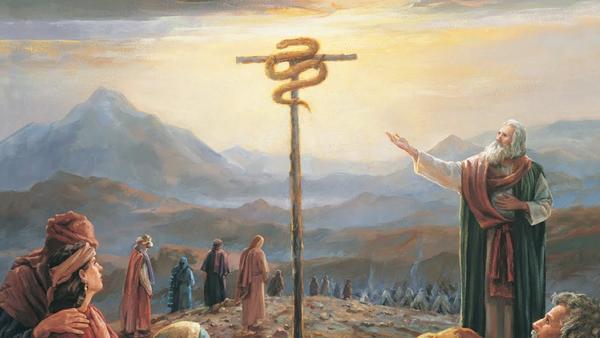
Num. 21:5 And the people spoke against God and against Moses, “Why have you brought us up out of Egypt to die in the wilderness? For there is no food and no water, and we loathe this worthless food.” Num. 21:6 Then the LORD sent fiery serpents among the people, and they bit the people, so that many people of Israel died. Num. 21:7 And the people came to Moses and said, “We have sinned, for we have spoken against the LORD and against you. Pray to the LORD, that he take away the serpents from us.” So Moses prayed for the people. Num. 21:8 And the LORD said to Moses, “Make a fiery serpent and set it on a pole, and everyone who is bitten, when he sees it, shall live.” Num. 21:9 So Moses made a bronze serpent and set it on a pole. And if a serpent bit anyone, he would look at the bronze serpent and live.Nicodemus was used to viewing God as the Law-Giver, and religion as a matter of keeping God’s Laws. But Jesus talked to him about God as a Father who gave His only Son, with whom anyone who simply looked (KJV, Isa. 45:22, ESV “turned”) to Him could be spiritually healed. Just as Moses had lifted the bronze serpent in the wilderness and all the poisoned people had to do was to look to this bronze serpent on the pole, so, anyone who would look to the lifted Saviour who would be lifted up on a cross of wood could also be healed from the serpent’s (Rev. 12:9) poison of sin (Jn. 3:14-15). 

¶“For God so loved the world, that He gave His only Son,
that whoever believes in Him should not perish but have eternal life.
For God did not send his Son into the world to condemn the world,
but in order that the world might be saved through Him.
John 3:16-17 (note 1Cor. 10:9)

As a result of his encounter with Jesus, the religious leader of Israel (John 3:1) was transformed spiritually. Nicodemus remained faithful to Christ from that point on and attended to the dead body of the crucified Saviour (John 7:50-52; 19:39). His conversion to Christ had the obstacle of religious pride that only a work of the Holy Spirit could heal. Nicodemus was an unlikely convert.


THE WIND OF THE SPIRIT BRINGS
UNLIKELY ANSWERS TO PRAYER

At the age of 30, when Jesus was baptised by John the Baptist, John saw the Holy Spirit come down upon Jesus as a dove would (John 1:32). This was the point when Christ’s public ministry began. After His baptism, and a 40-day fast in the wilderness, Jesus returned to Galilee “in the power of the Spirit” (Luke 4:14). As a result, Christ performed signs, wonders, and miracles (Acts 10:38). With such an intimacy with the Holy Spirit and consistent demonstrations of the Spirit’s miraculous power, the thing that actually impressed those closest to Him was how He prayed. At times He spent all night in prayer while His disciples slept (Luke 6:12). It seemed to His disciples that Jesus prayed from His heart to God as if God was His Father. This led His disciples to ask Him, “Teach us to pray.” (Luke 11:1). Jesus not only taught them how to pray, but He also taught them what to pray.

Then He said to His disciples, “The harvest is plentiful, but the labourers are few;
therefore pray earnestly to the Lord of the harvest to send out labourers into His harvest.”
Matthew 9:37-38

It seems to me that if the most Spirit-led, Spirit-empowered, Spirit-anointed, Spirit-filled, man spent more time praying than sleeping and then taught people how and what to pray, we should probably take note. What we note is two profound truths: (i) pray; and, (ii) pray for people to accept the gospel and for people to have preached that gospel. The result of implementing these two truths is that the wind of the Spirit often brings unlikely answers to our prayers leading to unlikely people encountering Christ. Saul of Tarsus was an unlikely convert that almost certainly resulted from the Christians he was persecuting praying for his conversion (Acts 9:1-18).


UNLIKELY MOMENTS

The wind of the Spirit leads to unlikely moments. Sometimes the Christ-follower finds him or herself in situations where sharing their conversion story leads to someone beginning their journey to Christ. These moments can be quite unlikely. They can occur in a supermarket aisle. They can occur while walking your dog. They can occur at a football match. The Spirit’s wind blows He wishes in the most unlikely moments. For Nicodemus it happened in the dark of night in a secret meeting with Jesus. 

Jesus answered him, “Truly, truly, I say to you, unless one is born again he cannot see the kingdom of God.” Nicodemus said to Him, “How can a man be born when he is old? Can he enter a second time into his mother’s womb and be born?”  Jesus answered, “Truly, truly, I say to you, unless one is born of water and the Spirit, he cannot enter the kingdom of God. That which is born of the flesh is flesh, and that which is born of the Spirit is spirit. Do not marvel that I said to you, ‘You must be born again.’
John 3:3-7


UNLIKELY WELCOMES

The wind of the Spirit also results in the most unlikely welcomes. The most dramatic example of this in the four Gospels would have to have occurred at the most unlikely moment. When Christ was crucified between two criminals He was ridiculed repeatedly by both criminals for hours on end. But then something happened in the soul of one of them. The wind of the Spirit had blown on his soul. He stopped mocking and ridiculing and asked Christ for forgiveness. Christ pardoned him and assured him that he would enter into Paradise and be with Christ for eternity. 

But the other rebuked him, saying, “Do you not fear God, since you are under the same sentence of condemnation? And we indeed justly, for we are receiving the due reward of our deeds; but this man has done nothing wrong.” And he said, “Jesus, remember me when You come into Your kingdom.” And He said to him, “Truly, I say to you, today you will be with Me in paradise.”
Luke 23:40-43

Within three hours all three crucified men were dead.

¶ It was now about noon, and darkness came over the whole land until three in the afternoon, because the sun’s light failed.
The temple curtain was torn in two. Then Jesus, calling out with a loud voice, said, “Father, into Your hands I commit My spirit!”
And after He said this He breathed His last.
¶ Now when the centurion saw what had happened, he praised God and said, “Certainly this man was innocent!”
Luke 23:44-47 NET

Physical death is not the end of a person’s life. Can you imagine the scene when the crucified criminal who had just been forgiven three hours earlier turned up at the entrance of Paradise? I doubt that there was a need for security at Paradise’s doors, but if there was, I could imagine, with a little inspiration from Alistair Begg, that they might have wanted to quiz this unlikely convert before granting him entrance into Paradise.

“Can you explain justification by faith?” they might have asked.

“No, I don’t even know what that means” he might have replied.

“Were you baptised?”

“Baptised? I’ve never heard of it.”

“Then how in the world did you come to be here?”

“The man on the middle cross said I come here!”

“Oh! Then come right in. Welcome!”

As we prepare for the upcoming Tasmania Celebration with evangelist Will Graham, I suspect that the result will be hundreds and hundreds of people who will also experience an unlikely welcome into that heavenly Paradise because the wind of the Spirit blew on their soul awakening them to their need to turn to the Saviour. And some of these unlikely welcomes will be result of the Spirit’s wind blowing on their soul in their final moments in this life. But for the majority of these unlikely welcomes given to unlikely converts who experienced the Holy Spirit’s unlikely breeze upon them in unlikely moments, their welcomes will be given at the doors of hundreds of churches where they had previously thought they would never have been made welcome! May the Spirit of God blow across our State and bring more and more unlikely converts into the Kingdom of God’s Son!

Your pastor,

Andrew

Let me know what you think below in the comment section and feel free to share this someone who might benefit from this Pastor’s Desk.

Friday, 1 April 2022

“I WAS IN THE SPIRIT ON THE LORD’S DAY"

THE FAITH OF CHRIST’S YOUNGEST APOSTLE

A year earlier all hell had broken loose when the tyrant emperor Caesar Nero had outlawed Christianity; and now, the last surviving apostle of Christ had been banished to Patmos Island. All looked bleak. The youngest of Christ’s apostles, John was just a teenager when he witnessed the brutal and protracted execution of Jesus. John, now in his fifties, had many reasons to feel disappointed and even disillusioned with God. His apostolic colleagues had each been martyred – having been put to death in often gruesome ways including: crucifixion, flaying, and beheading. On this barren rocky island, separated from the woman he had pledged to her crucified Son that he would look after, and away from the people that Christ had shed His blood for, John was alone. Ever since Jesus had risen bodily from dead, these life-time faithful sabbath-keeping Jews now recognised that Christ had sanctified the first day of the week, Sunday, as His day. It was also on this sanctified day that Christ poured out Holy Spirit on his gathered disciples. Ever since that day, no matter how he felt or the circumstances he was in, John had made it his custom to be in the Spirit on the Lord’s Day. This is why the earliest Christians shifted the day of worship from Saturday to Sunday as their ‘Sabbath’.

John’s first Sunday on this island of banishment was no exception. He was in the Spirit on the Lord’s Day. While some weak Christians (note Rom. 14:1; 15:1; 1Thess. 5:14) find disappointment with God an excuse to forsake God, John did not. While they may use their excuses for disappointment with God to walk away from their church family, John did not. John’s example has something to teach us.    

¶ I, John, your brother and partner in the tribulation
and the kingdom and the patient endurance that are in Jesus,
was on the island called Patmos on account of the word of God
and the testimony of Jesus. I was in the Spirit on the Lord’s day…
Revelation 1:9-10a


JOHN’S WORSHIPPED CHRIST
EVEN WHEN THINGS GOT DIFFICULT

Have you had a bad day? A bad week? A bad month? Have you prayed and God has not answered your prayers? The apostle John had been subjected to horrible violent persecution for month after month since Caesar Nero had commenced a State sponsored campaign of martyrdom against Christians. He had recently been publicly humiliated in Ephesus and it is believed that he was subjected to an attempt to martyr him (note Rev. 1:9). Rather than yelling at God about how unfair God had been, John continued to remember what his Lord and Saviour went through – especially after Jesus had entered Jerusalem days before He was to be crucified – and understood that God is still good even when things are bad. Shortly before the apostle Peter was martyred by order of Nero, Peter had written this to the Bithynian believers (take note of how he referred to Nero):

Honor everyone. Love the brotherhood. Fear God. Honor the emperor…
But if when you do good and suffer for it you endure, this is a gracious
thing in the sight of God. For to this you have been called, because Christ
also suffered for you, leaving you an example, so that you might follow
in His steps. He committed no sin, neither was deceit found in his mouth.
When He was reviled, He did not revile in return; when He suffered,
He did not threaten, but continued entrusting Himself to Him who judges justly.
First Peter 2:17, 20-23


JOHN ALWAYS KNEW THAT GOD WAS GOOD
EVEN WHEN LIFE WAS SOMETIMES BAD

Each of the apostles of Christ, including John, had a resolute confidence in God’s goodness despite their often difficult circumstances. The apostle Paul wrote to the Romans before he was extradited there to stand trial before the Emperor, and stated in Romans 8, that all of creation was subject to futility as a result of the fall of mankind into the devil’s plot to destroy them.

For the creation was subjected to futility, not willingly,
but because of Him who subjected it, in hope
Romans 8:20

All of creation, says the apostle Paul, was subject futility as a result of mankind’s rebellion. But it was not subject to this futility – disease, sickness, viruses, accidents, pain, betrayal – by the devil. No, it was subject to the consequences of rejecting God by God who subjected it in hope! What is our hope? It is surely not that we will lives exempt from futility as much as we would prefer that. No, our hope extends beyond this life, beyond the grave, to the kingdom of God prepared for all ‘the children of God’.

 that the creation itself will be set free from its bondage to corruption
and obtain the freedom of the glory of the children of God.
Romans 8:21

This world is subject to the futility of cancer. This is world is subject to the futility of war. This world is subject to the futility of injustice. But the believer is not subjected to only dwell with God in a world of futility. In my previous Pastor’s Desk I cited the fourth century theologian, Athanasius, who said that followers of Christ now “despise” death and find it as nothing to be feared.

Death used to be strong and terrible, but now, since the sojourn of the Saviour and the death and resurrection of His body, it is despised; and obviously it is by the very Christ Who mounted on the cross that it has been destroyed and vanquished finally.
Athanasius, On The Incarnation, 5:29

HOW DID JOHN GET IN THE SPIRIT?

John tells us that it was “the Lord’s day”, so, he took steps to be in the Spirit (Rev. 1:10). He treated Sunday as a day different to every other day. This was the day when believers gathered to sing, pray together, heed God’s Word and Spirit, and fellowship together (“Communion”) over the Lord’s Table. It was a day to hear from God and be refilled with His Spirit. Even though John was alone and isolated from his brothers and sisters in Christ, and he prepared his soul to meet with God. Perhaps he spent time in prayer. Perhaps he spent time seeking God. Perhaps he worshiped by singing the songs that the early Church had developed to teach theology and gospel truths to their illiterate members. Then he waited to hear from God. And he did (which is how we came to have the Book of Revelation). How would our Sunday church’ experience be different if we each took time to prepare our souls to meet with God together? How might our collective witness be effected if we each regarded Sunday as a different day to every other day? 

¶ Then I turned to see the voice that was speaking to me,
and on turning I saw seven golden lampstands,
and in the midst of the lampstands one like a son of man,
clothed with a long robe and with a golden sash around His chest.
Revelation 1:12-13


TWO LESSONS 

John was in the Spirit on the Lord’s day. We have just considered these two important aspects of how the last of the original apostles remained faithful to Christ even when he was on his own. John’s example inspires us not to let our disappointments or unanswered prayers to be excuses to walk away from God. Secondly, John understood that Jesus ushered in the New Covenant and sanctified a new day of corporate worship, Sunday. This new day of worship would not need the old festivals and ceremonies that the Old Covenant demanded (Heb. 10:18). The New Covenant was commemorated by bread and wine. The Old Covenant involved effort, rituals, ceremonies, sacrifices, and a priesthood. The New Covenant was established by Christ and administered by the Holy Spirit. And it still is. And it this same Holy Spirit who invites each of us to prepare our souls to meet with God, especially as we prepare to meet together on the Lord’s day.

And when they had prayed, the place in which they were gathered together
was shaken, and they were all filled with the Holy Spirit and
continued to speak the word of God with boldness.
Acts 4:31


Your pastor,

Andrew

Let me know what you think below in the comment section and feel free to share this someone who might benefit from this Pastor’s Desk.