Showing posts with label leadership. Show all posts

Saturday, 1 March 2025

ECCLESIOLOGY Part 9 - PROBLEMS AND GROWING PAINS

Ecclesiology Part 9 - the relationship of problems to growth
 

I suspect most church leaders want their churches to numerically grow. Such church growth, though, is often elusive to many church leaders. While there is no guaranteed formula for achieving numerical church growth, there are certainly well-established ways for a local church not to grow (which I will refer to shortly). There are some churches that experience rapid growth then, just as rapid, experience decline - and are often bewildered as to why. Perhaps it is not true in every instance, but often this happens because of how these churches process problems. That is, churches which are ill-prepared for dealing appropriately with problems inevitably will probably experience numerical decline. This is why every church which is seeking to sustainably grow numerically must know how to process problems in a healthy way.


SEEING PROBLEMS DIFFERENTLY

The late David Cartledge told me something quite counter-intuitive about what was the measure of a good leader: 

The measure of a leader is determined by the size of the problems they solve!” 

I have never forgotten this gem of wise insight from Dr. Cartledge. This comment has significantly helped me to grow as a leader and to view problems quite differently. Rather than seeing problems as roadblocks, hindrances, distractions, or setbacks - I began to understand the relationship between problems and the growth of a leader. (Every parent understands this problem:growth relationship as they help their young children grow into adults as they help them to learn how to deal with increasingly complex life problems.) By viewing problems as an opportunity for growth, a leader can then approach these problems with the aim of resolving them rather than retreating from them. By seeking to resolve a problem a leader becomes teachable and open to learning new solution strategies. This leads to him or her becoming more equipped to deal with similar but bigger problems next time.

I have noticed that when a church leader stresses too readily over minor setbacks or disappointments, the confidence placed in them by those they lead tends to be diminished. Similarly, when a volunteer, team or department leader is confronted with a problem which is overwhelming them - and their senior pastor shows them how to solve that problem wisely, their confidence in the senior leader grows. Thus, dealing with problems, rather than avoiding or denying them,  is essential if a leader and his or her church wants to grow. However, the problem:growth relationship is also inversely relative...    

Dr. Andrew Corbett speaking at a church leaders conference in Queensland on how to make wise decisions


GROWTH CREATES NEW PROBLEMS!

It’s almost like the classic problem of which came first - the chicken or the egg? Not only does solving problems within a church potentially lead to numerical growth, numerical growth creates problems! The first (and ongoing growth problem) is resistance to change. An anglican church growth consultant used the analogy of retail businesses to illustrate this growth problem. 

1. Consider the mum and dad corner-store. In Australia these used to be called milk bars. They sold bread, milk, newspapers, cold drinks, a few essential grocery items, and confectionary. These stores would have a regular number of customers from around the neighbourhood. The store owners knew many of these customers by name. Churches with up to 70 regular attendees are run like these corner-stores.

2. The independent hardware store. These stores may be privately owned by one owner, but will have a few staff also employed. The owner is known by those who shop in his store, and he knows some of them by name. Churches with 100 to 180 regular attenders are like these stores where there is a senior minister who also employs one or two part-time assistants.

3. The department store. These are larger stores which sell a variety of goods that are organised into departments. The manager of the store is probably not the owner and therefore is not personally known by the customers. There could be around 20 or more employees with some of them working as department managers. Churches with 200 - 700 regular attenders are like these stores where most congregants do not deal directly with the senior minister but do have a pastoral relationship with assistant pastors who oversee a department of the church. 

4. The Shopping Centre. These are the largest retail expressions where nearly everything that is ordinarily sold, is available for purchase. These shopping centres include large department stores, specialty stores, entertainment, dining, and comfortable environs and décor. Customers do not generally know who the centre manager is - and probably do not mind this. Their concern is that they can comfortably shop and get what they want when they want it. These centres cater for people from all backgrounds, ages, and tastes. Churches with a regular attendance of 2,500 - 5,000+ are often like these shopping centres (and are referred to as “mega churches”. The senior minister is probably a gifted orator whose preaching/teaching is what attracts people to the church's Sunday services. But this is also supplemented by professional level worship singers and musicians, a well-run concurrent children's program, professional quality multi-media presentations, and clearly defined discipleship pathways which enable people to get involved and utilise their gifts and ministries. 

Dr. Andrew and Kim Corbett's farewell service at Legana Christian Church, September 2024

Consider these four scales of church growth and consider the challenges that would have been encountered by those leading in #1 to grow to the size of #2. Imagine the circumstances where this growth may have been foisted upon the mum and dad because of overwhelming customer growth and demand. It is not too difficult to imagine that this mum and dad may have been overwhelmed and decided to sell their small business to someone who was not overwhelmed by the prospect of this growth - in fact, the new owner may even look forward to the challenge of restructuring this business so that it could grow. This is a scenario faced by many type #1 churches and pastors.


CONCLUSION

No matter what type of church it is, problems will arise and need to be wisely dealt with. As church leaders and churches grow, commensurate problems will arise. These problems should not thought of as unusual. Consider the narrative through the Book of Acts. In nearly every chapter there is a problem > solution > growth pathway.

Note the problem which led to the initial restructuring of the church's leadership and ministries:

Acts 6:1Now in these days when the disciples were increasing in number, a complaint by the Hellenists arose against the Hebrews because their widows were being neglected in the daily distribution.

Acts 6:3 Therefore, brothers, pick out from among you seven men of good repute, full of the Spirit and of wisdom, whom we will appoint to this duty. Acts 6:4 But we will devote ourselves to prayer and to the ministry of the word.”

Problems force us to humble ourselves and seek the help, assistance, and advice of others. This is an important ingredient in growing stronger. While prayer is essential and important for solving overwhelming problems, too many pastors deny themselves the means of growth that is derived from wise and godly counsel because of pride - or perhaps, ignorance. If you want your church to grow it begins with a willingness to seek it and to be transformed by God's Spirit so that it can happen — which means this growth will commence in you first! I encourage you to seek the kind of growth that strengthens you in wisdom, knowledge and character. And this can only begin to happen when a leader is committed to humbly following Christ and heeding His Word.  

I welcome your feedback below.


Tuesday, 19 November 2024

ECCLESIOLOGY Part 3 - STRUCTURE


 Ecclesiology is the study of the Church. There are three vital sources from which we can draw to do ecclesiology: (i) the Scriptures; (ii) theology; and, (iii) the history of the Church. In referencing the universal Church of all ages, locations, and distinctions, a first letter capital is used: Church. In referencing a particular church in a particular location at a particular time, no capital letter is used. Thus, I have served as a pastor, I have served four churches, but Jesus the Christ is the Chief Shepherd over the Church (1Pet. 5:4). Because a local church is an expression of the Church, and it is biblically described metaphorically as a human body (1Cor. 12), the body of Christ (Eph. 5:23), a family (“household” Eph. 2:19), and a building (Eph. 2:20-22), it is necessarily structured. This structure, like its metaphors, means that its composite is greater than the sum of its parts. Structure therefore means that it is organised, and ordered. This has two profound implications for any church: firstly, a local church is to be structured so that it has orderly leadership (Titus 1:5); and, secondly, that every local church should be in relationship with the Church as represented by leaders outside of itself (as evidenced in Acts 15 for example). Here is a reflection on church structure for your consideration and profit.  

THE ROLE OF A SHEPHERD

The language of the New Testament to describe a leader of a local church is drawn upon the writings of the prophets in the Old Testament. The prophets described GOD as a ‘shepherd’ who leads and cares for His people as it they were His flock (Isa. 40:10-11). GOD expected His priests and princes to similarly care for His people on His behalf as they too were shepherds. By the time of  Jeremiah, these leaders were denounced as not being true shepherds (Jer. 6:3; 10:11; 12:10; 23:1-2). God then declared that the day would come (when the New Covenant was instigated) that He would send true shepherds to truly care for His people-

¶ “ ‘And I will give you shepherds after My own heart, who will feed you with knowledge and understanding.

JEREMIAH 3:15


"I will set shepherds over them who will care for them, and they shall fear no more, nor be dismayed, neither shall any be missing, declares the LORD."

 JEREMIAH 23:4


A shepherd “watches over” his sheep. In a similar way, GOD the Son has appointed shepherds to watch over those who gather as a local community of believers. The description of a church as a ‘household’ gives us an understanding the that earliest apostles understood that a church bore some resemblance to the structure of a Greco-Roman household, where the householder served as the overseer. 


The householder provided for, protected, accommodated, and gave identity to each member of the household. This presents a beautiful and challenging picture to pastor, elders, ministers, today of their enormous responsibility within a local church.


A wise pastor will lead his pastoral charge by setting the direction of the church, developing other leaders, guarding doctrine so that it accords with Scripture, and bringing various levels of corrective discipline as required (2Tim. 4:1-2). 

While a local church may have a plurality of leaders, but it is biblical and appropriate for them to recognise a first among equals which exhibits humility, accountability, and authority. Such a recognition should be supported by an obvious sense of God’s call upon, and gifting of, that person.


Friday, 28 July 2023

THE RESILIENT

THE RESILIENT

For this very reason, make every effort to supplement your faith with virtue,
and virtue with knowledge, and knowledge with self-control, and self-control with steadfastness, and steadfastness with godliness, and godliness with brotherly affection, and brotherly affection with love. For if these qualities are yours and are increasing, they keep you from being ineffective or unfruitful in the knowledge of our Lord Jesus Christ.

Second Peter 1:5-8

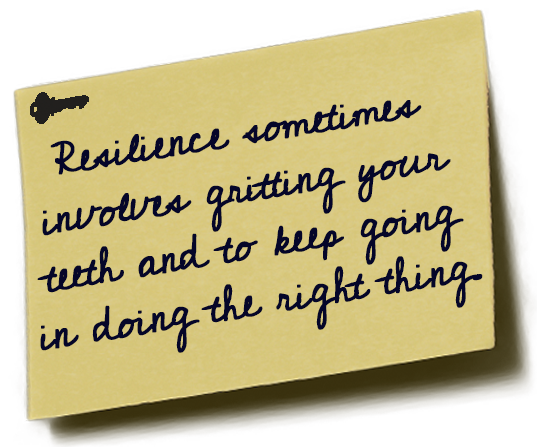
Resilience was one of the predominant character traits of the early Christians. They called it being steadfast. For these early Christians being ‘resilient’ meant being able to keep going despite set backs, discouragements, betrayals, unforeseen circumstances, lack of energy, motivation, and resources. Like a weary hiker looking down a long road that leads to the mountain range they must walk over, being resilient in life means putting one foot in front of the other, and then doing it again, and again, and again, and so on. God knows that today, in what many are describing as “Post-Christendom” (and the resilient among us prefer to think of as Pre-Christendom) to be resilient is to live with a purpose, to stay focused, to live for others, and to strive toward a good, honourable, goal. With so many reasons to lose sight of the true purpose of life the tendency is to be tricked into believing that life right now is too hard. But the truth be told – people need to know how to be more resilient. Leaders especially need to be resilient right now. Churches assuredly need to be resilient at this time. With the recent interference into churches by government through the measures they said was “to keep people safe” — it has actually depleted people’s ability and willingness to be resilient! Here’s what leaders, people, and churches can do about it.


The Apostle Barnabas always urged his converts to Christ to be resilient against the opposition, hardships, persecutions, and false teachings they would have to endure, telling them to be steadfast

When he came and saw the grace of God,
he was glad, and he exhorted them all to remain faithful
to the Lord with steadfast purpose
Acts 11:23

Barnabas’s exhortation gives us the vital keys to becoming resilient: (i) remain faithful to the Lord by continuing to meet together as a church fellowship, and (ii) live with steadfast purpose. The Apostle Paul learned from his mentor and he too also made it his practice to urge believers to be resilient – 

¶ Therefore, my beloved brothers, be steadfastimmovable,
always abounding in the work of the Lord,
knowing that in the Lord your labor is not in vain.
First Corinthians 15:58

In this verse Paul gives us additional keys to developing the kind of resilience necessary to be a mature Christian: (i) Be immovable in your commitment to doing the right thing by Christ and your brothers and sisters; (ii) always abound in the work of the Lord by serving others; and (iii) know and remember that everything you do in and on behalf of your church family is actually for the Lord and is therefore “not in vain”.


Older men are to be sober-minded, dignified,
self-controlled, sound in faith, in love, and in steadfastness.
Titus 2:2

Perhaps it’s because ‘older men’ (you know, men 60-years of age and older) all tend to be grumpy (I personally wouldn’t know about this because I am only in my fifties) that Paul tells his lieutenant, Titus, to encourage the older men in the church of Crete to be: (i) sober-minded (more positive in their outlook), (ii) dignified (be a good role model of what a happy man of God looks like), (iii) self-controlled (especially with how the talk and use their time), (iv) sound in faith (lovers of God and His Word), (v) loving (cheering on the next generation of Christian leaders despite their youth and inexperience), and (vi) steadfast (in their endurance and dogged commitment to participate in the service and communal worship of the Church).

Without resilience it is simply not possible to know, love, and enjoy God to the fullest. The younger half-brother of Jesus, the Apostle James, wrote this – 

And let steadfastness have its full effect,
that you may be perfect and complete, lacking in nothing...
¶ Blessed is the man who remains steadfast under trial,
for when he has stood the test he will receive the crown of life,
which God has promised to those who love him.
James 1:412

James actually said that the believer’s steadfast resilience would result in the believer receiving a glorious reward from the Lord – the crown of life


In the past few years pastors have faced more challenges than most. Yes there were many unprecedented challenges, but pastors had deal with all kinds of hindrances from doing their job in a way that was obedient to Christ and His Holy Word. In 
Glenn Packiam’s book, The Resilient Pastor’, he tells pastors that –

What have we observed so far? There has been a shifting of cultural tectonic plates as many contexts have become more and more post-Christian. The clearest way to explain that in terms of the earthquake-like shift is to say that we are post- Christendom, that era when Christianity and country, the kingdom of God and a sociopolitical kingdom, were symbiotically connected. This shift—though not necessarily the total rupture of the relationship—has caused a surge in the cultural oceanic waters. These waves look like the rise of new kinds of pluralism, paganism, and individualism.The aftermath is a mess. There are casualties—think of the programs churches would run that no longer exist, the TV shows in which Christianity was assumed as the backdrop for the family conflict, the changing laws about marriage, and more. And there is confusion. Christian impulses and values are being used to condemn Christian doctrines, practices, and institutions. The West is trying to sever the tree from its root while still demanding its fruit. Glenn PeckiamThe Resilient Pastor, Barna Group, 2022, Page 40

Even though the pandemic has been over for two years now, its detrimental effects on how many believers viewed church is still taking a toll. In some respects, the pandemic brought unseen things to the surface and exposed what had long laid hidden. Sadly, one of those things was — What constitutes ‘church’ and what does being a part of church family Biblically mean? Many pastors now realise that many within their church congregation had a very poor understanding of how the Bible describes what the church is and what it means to be the church.

Earlier this year when it seemed that I was close to death’s door, I was physically unable to be with my church family on each Lord’s Day for nine weeks. Never in my life – and particularly never in my 27-years of pastoring Legana had I been absent from church for that long. My heart ached. When the specialist told me that my condition was terminal and that there could be no treatment or improvement in my condition, I knew that my absence must end. I needed to be physically present with my church family. There is something very physical and tangible about being the church. Christ has ensured that when His church comes together it will involve all of our physical and spiritual senses. When we partake of the holy and sacred elements of communion, we are holding the Lord’s body together as we ingest the consecrated unleavened bread. When we hold the cup we smell the fruit of the vine and imbibe His blood. When we hear each other pray and sing our praises and touch one another’s souls by our participation in exalting Christ together. As we hear the Word of God read, we hear, Our Father in heaven…forgive us as we forgive othersWe are reminded of our role as a church to be the body of Christ as a visible presentation of God’s love and forgiveness to a bitter, unforgiving, unforgiven, angry, hurt, world.


Thus, it is a prime responsibility of a local church to meet together each Lord’s Day as our highest priority. We must draw from the encouragement of the first apostles as recorded in God’s Word who taught the first Christians how to be resilient. We must then re-learn these same keys:


(i) Look to Christ as the Lord in constant prayer;

(ii) Overlook offences that keep us from being immovable in our devotion to Christ and His holy Church;

(iii) Take your stand on God’s Word daily to draw spiritual strength and encouragement so that we can receive revelation from Him, because, above all – He (not the world) is our Audience of One.

May God grant us His grace to be resilient, abounding in good works, fruitful in our service of others, and ever hopeful that we have been promised a brighter and better future than our past.

Amen.

Pastor at Large,

Andrew

Let me know what you think below in the comment section and feel free to share this someone who might benefit from this Pastor’s Desk.

Friday, 14 July 2023

SOME WALLS NEED TO BE TORN DOWN AND SOME WALLS NEED TO BE REBUILT

SOME WALLS NEED TO BE TORN DOWN AND SOME WALLS NEED TO BE REBUILT

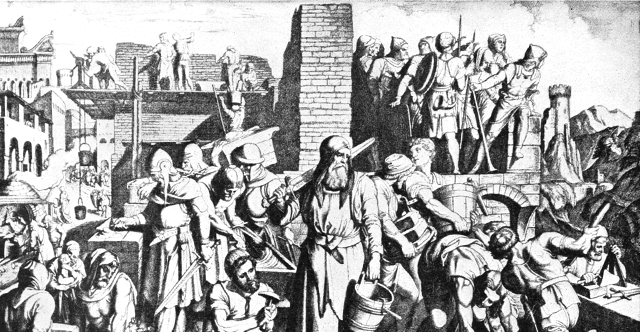
One of the most remarkable examples of great leadership given in the Bible is that of Nehemiah. Others may claim that the feats of King David were greater and these people may have a point. But I have word to say in favour of Nehemiah and offer several reasons for regarding him as the greater leader. Firstly, King David was a builder while Nehemiah was a re-builder. As any builder can tell you, building is far easier than rebuilding. King David was a military commander whose soldiers were compelled to obey his orders. But Nehemiah was a public servant, a royal wine-waiter, who had no power to compel anyone – yet dozens of people willingly assisted him to fulfil his leadership vision. King David executed his opponents. Nehemiah used his wits to avoid and even ignore his opponents and outsmart his critics. King David’s lust and arrogance nearly undid all the good he had done. Nehemiah’s refusal to be corrupted ensured that the divine plan of redemption remained on track and paved the way for the coming of the prophesied ‘Son of David’ who would atone for the sins of all mankind. And ultimately, Nehemiah achieved this with far, far, fewer resources than the enormous wealth that King David’s military spoils afforded him. Without an army, or thousands of servants, or the wealth of a king, Nehemiah instead employed one of the most powerful strategies that any leader can use: partnership.


After Judea had ignored the warnings of the prophet Jeremiah and gone deeper into sin, evil, and wickedness, the prophesied doom of destruction of their once glorious city and their expulsion from their land was the result. The Babylonian King, Nebuchadnezzar, sent a clear message to all the surrounding nations when he had his forces utterly demolish Jerusalem and its temple after breaking down its once fortress-like wall in protection. For some seventy years the ruins of Jerusalem lay amidst its own rubble. When the Medo-Persian conquerors eventually conquered the Babylonian Empire – it was Cyrus who decreed that all Jews were now free to and their captivity in Babylon return to their homeland. But many Jews who had not been born in Jerusalem had no emotional connection with Jerusalem and did not return there. But there were a few who did choose to relocate back to their ancestral home. However, when they arrived, they were overwhelmed with the seemingly impossible task of rebuilding their grand-parents’ once beloved city.

The words of Nehemiah the son of Hacaliah. Now it happened in the month of Chislev,
in the twentieth year, as I was in Susa the citadel, that Hanani, one of my brothers,
came with certain men from Judah. And I asked them concerning the Jews who escaped,
who had survived the exile, and concerning Jerusalem.  And they said to me,
“The remnant there in the province who had survived the exile is in great trouble and shame.
The wall of Jerusalem is broken down, and its gates are destroyed by fire.”
Nehemiah 1:1-3

It would be too easy to think that Nehemiah’s concern for Jerusalem was merely architectural. And while he certainly had a deep concern for its bricks and mortar – which, to some, are literally the building blocks of a city – however, in Nehemiah’s mind, the wall and gates around the city and the buildings it safeguarded were powerful symbols of the inhabitants honour and dignity. Buildings and walls and do not make a city — people who inhabit a city is what make a city! But in those days, a city without a protective wall and gates was cause for derision by its neighbours.


Nehemiah had clearly served the Persian King well over many years. Despite being exiled from his ancestral homeland, he had earned a reputation with the king over that time as a diligent and loyal man of integrity. He was someone in whom the king could trust. However, after receiving the distressing news of Jerusalem’s pitiful state from his recently returned brother he was moved to tears of sadness. This lasted for days and jeopardised his impending scheduled service in the king’s presence.

¶ As soon as I heard these words I sat down and wept and mourned for days,
and I continued fasting and praying before the God of heaven.
Nehemiah 1:4

Despite being merely a wine-waiter, Nehemiah had decided that he was the one who would do something to rebuild the enormous damage that had happened to his ancestral home. His years of closely watching the king ruling his vast empire gave him a first-hand look at what high-level and strong leadership looked like and helped prepare him for this important task. But still, Nehemiah looked to the Lord for His guidance and strength.

O Lord, let your ear be attentive to the prayer of your servant,
and to the prayer of your servants who delight to fear your name, and give success to your servant today, and grant him mercy in the sight of this man.”
¶ Now I was cupbearer to the king.
Nehemiah 1:11

Coming into the king’s presence while looking upset was a risky thing to do. When the king then asked why he was sad, Nehemiah demonstrated his spiritual depth.

¶ In the month of Nisan, in the twentieth year of King Artaxerxes, when wine was before him,
I took up the wine and gave it to the king. Now I had not been sad in his presence.
And the king said to me, “Why is your face sad, seeing you are not sick?
This is nothing but sadness of the heart.” Then I was very much afraid.
I said to the king, “Let the king live forever! Why should not my face be sad,
when the city, the place of my fathers’ graves, lies in ruins, and its gates have been destroyed by fire?”
Then the king said to me, “What are you requesting?” So I prayed to the God of heaven.
Nehemiah 2:1-4

The result was that the king appointed him as his first governor of Jerusalem after hearing his request.

And I said to the king, “If it pleases the king, and if your servant has found favor in your sight,
that you send me to Judah, to the city of my fathers’ graves, that I may rebuild it.”
Nehemiah 2:5

Nehemiah's Unusual Gifts and Abilities


The king’s response to Nehemiah’s request tells us a lot about Nehemiah and his years of faithful service to the king. It also tells us about his role clearly meaning much more to the king than just as a royal wine-waiter! Nehemiah had demonstrated a very rare ability of being able to lead and manage(It is very unusual for a leader whose main responsibility is to cast vision, set tone, and keep his team on track; and, to also manage the details and the people involved to ensure that the leader’s vision is being fulfilled. Leaders move people. Managers maintain people.) But Nehemiah was such a leader. Those he ended up leading and managing gave him their respect. And little wonder! It was obvious to them that Nehemiah was not there to ‘milk the system’, ‘feather his own nest’, or ‘advance his career’ in the public service. From the moment Nehemiah arrived in Jerusalem he set about to covertly assess the situation.

¶ So I went to Jerusalem and was there three days.  Then I arose in the night,
I and a few men with me. And I told no one what my God had put into my heart to do for Jerusalem.
There was no animal with me but the one on which I rode.
I went out by night by the Valley Gate to the Dragon Spring and to the Dung Gate,
and I inspected the walls of Jerusalem that were broken down and its gates that had been destroyed by fire.
Nehemiah 2:11-13

Nehemiah then took time to get to know those who would work with him. He formed a realistic assessment of what each person and family group could contribute either in service or finances-or both (Neh. 3:1-46-32).

¶ Then I said to them, “You see the trouble we are in, how Jerusalem lies in ruins with its gates burned. Come, let us build the wall of Jerusalem, that we may no longer suffer derision.” And I told them of the hand of my God that had been upon me for good, and also of the words that the king had spoken to me. And they said, “Let us rise up and build.” So they strengthened their hands for the good work.
Nehemiah 2:17-18


Doing the difficult is a job requirement of any leader. To lead a coalition of partners sometimes requires correcting inappropriate conduct (as any parent can tell you). Nehemiah’s mission to rebuild the wall demanding that he scold those nobles who felt that rebuilding the wall “was beneath them” (Neh. 3:5). Leaders must know how to maintain such discipline and when to exercise the fatherly skill that the apostle Paul said was an essential requirement of every overseer – how to rebuke the person saying or doing the wrong thing (Titus 1:913). Nehemiah knew that in order to maintain the morale of his ‘team of partners’, these nobles who had neglected their responsibilities and were actually taking financial advantage of the people and needed to be held to account. Thus, Nehemiah rebuked these precious nobles for their heartless ‘snobishness’ and their unwillingness to get their hands dirty!

¶ I was very angry when I heard their outcry and these words.
I took counsel with myself, and I brought charges against the nobles and the officials.
I said to them, “You are exacting interest, each from his brother.”
And I held a great assembly against them…So I said, “The thing that you are doing is not good.
Ought you not to walk in the fear of our God to prevent the taunts of the nations our enemies?”
Nehemiah 5:6-79

Should we think of Nehemiah as “task-driven”? Absolutely! He knew that in order to care for the inhabitants of Jerusalem, they had to get their city’s wall rebuilt urgently. Every parent knows this kind of leadership. There are tasks that must be done – and sometimes they must be done urgently. After years of delays, procrastination, and a lack of leadership, the task assigned to Nehemiah would eventually be completed in 52 days (Neh. 6:15).


Nehemiah assigned segments of the destroyed wall to people and families for them to rebuild. These segments equated to an average of about ten metres of the wall for them to rebuild. His strategy was elegantly simple – but required everyone doing their bit  – that is, partnering together. Rather than have a few do a lot, he had many each do a little. They partnered together and together they were able to achieve what many said could not be done! It was the great evangelist, D. L. Moody who said, “I’d rather put ten men to work than do the work of ten men!” Apologist and former cold-case homicide detective J. Warner Wallace, often says “The world does not need anymore million-dollar apologists – it needs a million one-dollar apologists!” There is a divine wisdom in having many people partnering together to achieve a vision much bigger than themselves. We see that Jesus chose and partnered with the twelve, the seventy, and then the five-hundred (1Cor. 15:6), to begin to spread the gospel of this forgiveness and eternal life through His substitutionary death on the cross—and today He is using hundreds of millions of His followers around the world to continue to partner together to complete this task.


Nehemiah was a man of impeccable character. He was a humble, servant-hearted leader who deeply cared for those he was partnering with to rebuild the walls of Jerusalem. But, despite this, as all leaders have, he had very spiteful critics. After Nehemiah had arrived in Jerusalem, he had three men, Sanballat, Tobiah and Geshem, greet him and offer to help him. However, Nehemiah saw through their ruse. He discerned that they had not come to help him but the control him. Their interest in whatever Nehemiah was planning to do very quickly turned to sinister opposition.

Sanballat and Geshem sent to me, saying, “Come and let us meet together at Hakkephirim in the plain of Ono.” But they intended to do me harm….In the same way Sanballat for the fifth time sent his servant to me with an open letter in his hand….And I understood and saw that God had not sent him, but he had pronounced the prophecy against me because Tobiah and Sanballat had hired him.
Nehemiah 6:2512

Nehemiah’s response to these toxic opponents may seem cold, impolite and perhaps even arrogant.

And I sent messengers to them, saying, “I am doing a great work and I cannot come down.
Why should the work stop while I leave it and come down to you?”
Nehemiah 6:3

But Nehemiah did exactly the right thing. He cut these people off from having access to him, and saw through their requests for a meeting as an attempt to halt what he was doing and distract him. When this failed they then resorted to slandering him, spreading lies about him, employing intimidation and threats, then sheer bullying. All of this revealed the identity of the evil spirit who was actually manipulating these three stooges. So Sanballat, Tobiah and Geshem then resorted to ridicule and mockery.

Tobiah the Ammonite was beside him, and he said,
“Yes, what they are building—if a fox goes up on it he will break down their stone wall!”
Nehemiah 4:3


And when all our enemies heard of it, all the nations around us were afraid
and fell greatly in their own esteem, for they perceived that this work
had been accomplished with the help of our God.
Nehemiah 6:16

Nehemiah not only got the city wall rebuilt, he also managed to give the despondent residents hope and encouragement. Added to this, he was able to knit them into a confident team of partners and to breakdown the “us and them” wall between the residents and the nobles. Thus, Nehemiah not only rebuilt a wall, he also broke down a few – not only the wall of oppression separating the nobles and the residents, but also the walls of fear and intimidation set up by their enemies Sanballat, Tobiah, and Geshem. By helping the citizens of Jerusalem to partner together to achieve what they had not been able to on their own, Nehemiah gave them a powerful gift for dealing with their other challenges. This is why we also believe in the power of partnership as a local church and expect that as we partner together we too may also face some of the same challenges that Nehemiah had to face. And may God give us the grace to do so.  

Amen.

Pastor at Large,

Andrew

Let me know what you think below in the comment section and feel free to share this someone who might benefit from this Pastor’s Desk.