Showing posts with label euthanasia. Show all posts

Sunday, 5 October 2025

SOLACE, WITH ANTHONY HOPKINS, MOVIE REVIEW

The 2015 movie Solace, directed by Alfonso Poyart, was released in 2016, and stars Anthony Hopkins, Jeffrey Dean Morgan, Abbie Cornish, and Colin Farrell. This movie was pitched as a science-fiction film, which I initially found to be  intriguing, because it involves a contemporary setting (rather than the usual futuristic setting which many sci-fi movies are), no aliens, and no robots trying to take over the world, just a couple of detectives and a consultant trying to solve a murder. The FBI consultant, Dr. John Clancy, played by Sir Anthony Hopkins, is called upon by Agent Joe Merriwether (Jeffrey Dean Morgan) to assist the FBI psychologist Katherine Cowles (Abbie Cornish) in solving this crime. Yet from the outset, we discover that Clancy and Cowles are unlikely to be willing to work together - and this is where the science fiction becomes apparent.  


THE CONTRIBUTION OF ANTHONY HOPKINS

I suspect Anthony Hopkins (December 31st 1937 - ) is in the enviable position for an actor that he gets to choose which roles he wishes to accept. And based on the actor’s most recent starring roles, he must have a lot to choose from. And when one considers the types of movies that Sir Anthony has selected there is an interesting golden thread through this particular selection including: 

Solace - John Clancy (2016), 

The Two Popes* - Pope Benedict XVI (2019), 

The Father - Anthony Evans (2020), 

One Life* - Nicolas Winton (2023) 

Freud’s Last Session - Sigmund Freud (2023) 

Mary* - King Herod (2024)    

This is not an exhaustive list of Hopkin’s movies, but this selection reveals a consistent supernatural and ethical thread through this particular selection. Half of this selection are true stories.* The movie I am commenting on, Solace, is not a true story but it is an example of Hopkins choosing to do a film which has supernatural and ethical themes which was oddly presented as science fictions by the producers.


ABOUT SOLACE

How is Solace a supernatural-ethical movie? Dr. John Clancy is a man living with a dark secret which comes to haunt him with his reengagement as an FBI homicide consultant. Clancy is a deeply spiritual man who has spent most of his life as a physician working with the dying, whom the FBI regard as psychic with his ability read people and situations.  This ability was perhaps heightened after the unfortunate death of his only child, his daughter, Emma. Katherine Cowles, the FBI psychologist is a sceptic and materialist who finds the invitation of Joe Merriwether for Clancy to be involved in this homicide case to be pointless. But as Cowles and Clancy spend time together investigating this murder she becomes aware that he is rather unusual with his ability to detect and see things that others can not. She then challenges Clancy to tell her what he sees when he looks at her. Clancy’s insights into her previously secretive past stuns her.

The case they are working on together leads them to finally track down the serial killer in the hope of preventing him from killing again. As they eventually trap the murderer, what happens is a significant twist where it is revealed that it was not only Cowles who was carrying a painful secret. The lead FBI detective, Joe Merriwether, was also carrying a painful secret - a secret which only Clancy had perceived. As the murderer is caught by Clancy's clever perception of his next move, we then learn that Charles Ambrose (Colin Farrell) also had a dark secret which Clancy had failed to perceive. But what no-one had perceived was that Clancy was carrying an immensely painful secret that had also contributed to the temporary estrangement from his wife. The irony of his secret is only grasped after his exchange with Charles Ambrose, the murderer, by attempting to explain to him that killing people is not a merciful act, and definitely not a compassion one. Clancy speaks to him as an experienced physician who has been at the bedside of numerous dying patients and tries to help to understand that in a person’s final moments there is a lot of what I might call ‘soul-cleansing’ that happens as a patient settles accounts with those they may had haboured unforgiveness toward and is able to share their final moments conveying their love for those closest to them. But Ambrose is fatally indifferent to Clancy’s admonitions.    

I appreciated this movie’s ‘science fiction’ label and it’s profoundly connotative presentation of the unmeasurable value of human life and why our final moments in natural death are sacred. I am aware that the subtleties of such connotative messaging may be lost on most viewers of Solace but I think that many people who appreciate their ethical instructions wrapped in fantasy will find this movie much more than just entertaining - and perhaps even heart-warming.


Dr. Andrew Corbett

Thursday, 30 August 2018

CREATED TO BE CLOSE


Created-to-be-Close
Being-Human-Pt1-05Last Sunday I preached two-part message on Being Human. Since we each have some personal experience with this topic, you might think that dealing with this topic was completely unnecessary. But as I hope I was able to show last Sunday, being human is not as obvious as we might think. As I stated in Part 1 of the message, delivered in our morning service, how we understand this topic is not a matter of life or death – it’s a matter of how many lives will be lost and how many unnecessary deaths will occur! What may have surprised those there last Sunday was that the driving forces behind trying to answer the question What is a human being? is not the science – but two very different competing stories. What is so alarming is just how many followers of Christ are reading from the wrong script when it comes to understanding who we are and what life is really all about.
I praise you, for I am fearfully and wonderfully made.
Wonderful are your works;
my soul knows it very well.
Psalm 1239:14

STORY #2, MATERIAL NATURALISM

Being-Human-Pt1-16We are not the random result of some uncaused cosmic accident. As obvious as this statement should be, it is the underlying foundation to the mythical story shaping our culture at the moment. The Material Naturalism Story says that there is nothing more to the universe than its material components which assembled accidentally in a completely unguided fashion. This story denies that any immaterial substance is even possible let alone exists in reality. Despite its appeal to science, this story is not grounded in science. This is born out by those in the biological sciences pointing out this story does not correspond to, or explain, reality. For example, Dr. Fazale Rana Ph.D., a biochemist, states the Material Naturalism’s evolutionary attempts to explain the universe and its diversity, fails to account for some crucially important pieces of life’s puzzle. He writes –
Currently, evolutionary biologists lack explanations for the key transitions in life’s history, including these-
  • origin of life,
  • origin of eukaryotic cells (see diagram below),
  • origin of sexual reproduction,
  • origin of body plans,
  • origin of consciousness,
  • and the origin of human exceptionalism.
To be certain, evolutionary biologists have proposed models to explain each of these transitions, but the models consistently fail to deliver, as a recent review article published by two prominent evolutionary biologists from the Hungarian Academy of Sciences illustrates.1
The Cell's Design, by Dr. Fazale Rana

If you take a close look at the inner workings of this diagram of a eukaryotic cell, even you are untrained biol-chemically, you will notice the incredible complexity and elegance within this microscopic human cell. I only mention this biochemistry to show that despite Material Naturalism’s appeal to science, reason, and rationality, it is nether scientific nor rational. As bad as its lack of scientific credibility as an explanation for how life works is, worse still is its influence on how Material-Naturalists view the world – and especially human beings. In their view, a human being is only of value if they can communicate, contribute, consider their own consciousness, and have the ability to live and interact independently. Only when they can do these things should they be considered a human-person and thereby entitled to the usual protections which come with human rights. This is why Material Naturalists have no qualms about prematurely ending the life of an unborn child, or an elderly patient in a nursing home. 
“Peter Singer insists that the severely mentally incapacitated are candidates for euthanasia because they ‘were once persons’ but no longer. ‘Their lives have no intrinsic value….They are biologically alive, but not biographically.'”
Nancy Pearcey, ‘Love Thy Body’, 2018, p. 92,  citing, ‘Practical Ethics’ by Prof. Peter Singer, 2nd Ed., Cambridge University Press New York, 1993, 192
Fortunately, there is another story which corresponds far more accurately to the actual world in which we live.
    

STORY #1, THE BIBLICAL WORLDVIEW

Neil Tyson deGrasseAmerican astrophysicist, Dr. Neil Tyson deGrasse, criticises Christianity because, in his mind, it seeks to make humans special. In his mind, human beings are no more special than any other collection of molecules in the universe. This Material-Naturalist view stands in stark contrast to the view of the world presented by the Bible. We should not write this sharp difference off to some ‘Science versus Religion’ misunderstanding. The Biblical worldview is not some weird and novel way of looking at the world. Rather, it is an accurate description of the way the world is, and a particularly accurate description of who human beings are and why we each share a common problem.
Being-Human-Pt1-37The Biblical worldview is in perfect concordance with science. This includes: the Universe had a beginning of all space, energy, time and matter; life appeared on earth over progressive stages; large-bodied life appeared suddenly and without transition (“Day 5”, “the Cambrian Explosion”); mankind appeared fairly recently in the Universe’s history (Creation Day 6). But only the Biblical worldview gives us an explanation for the human condition, and an explanation for why humans are capable of supererogatory acts (self-sacrificing for the weak), yet also the most heinous evil. This is because we are all created in the image of God, yet fallen into sin. 
Being-Human-Pt1-38Being created in the image of God gives every human being a very special status. As the founders of the American Constitution wrote, “We hold these truths to be self-evident, that all men are created equal and are endowed with certain inalienable rights. This means that all human life – from the womb to the tomb – is sacred. Our humanity is not determined by our size, level of development, environment, or, dependency (S.L.E.D.). This is why it has been Christians, envisioned with a Biblical worldview, who have helped the most vulnerable in society by establishing hospitals and medical clinics, schools and universities, aid and relief agencies, orphanages, and hostels.
“In the ancient world, Christians were distinctive for their humanitarian efforts – taking care of babies and slaves, of widows and orphans, of the sick and elderly, of the unwanted and abandoned.”
Nancy Pearcey, ‘Love Thy Body', 2018, p. 81

HOW THESE COMPETING STORIES AFFECT OUR VIEWS OF VALUE, RIGHTS, GENDER, & SEXUALITY

Being-Human-Pt2-17
In the Material-Naturalist worldview, some human beings are not ‘human persons’ and are therefore not deserving of human rights (which is a concept they borrow from the Biblical worldview story). In the Materialist’s worldview, personhood is an immaterial reality – even though the Materialist denies anything immaterial exists! This is why gender becomes very confusing for the Materialist. In the Biblical worldview, our Creator has designed a correspondence between our material biological sex and our gender. For Materialist, sexuality is nothing more than a physical encounter. For the Christian, sex is a sacred bonding between a man and a woman who have covenanted their lives together whereby they lovingly celebrate their union in a complementary physical union which has the potential to procreate life. Thus, sex involves emotional blending, intellectual merging, as well as the ultimate physical intimacy two people can experience.
Being-Human-Pt2-25
This is why the Genesis account describes the sexual union of a man to his wife as becoming ‘one flesh’ (Gen. 2:24) and the Apostle Paul stated that when a man and a woman united sexually that they became ‘one body’ (1Cor. 6:16). We now know that our Creator has designed that when a man has sex, his body is designed to release a hormone called vasopressin which has a remarkable effect upon the male brain –
Love_Thy_Body-book_cover“The irony is that science is constantly uncovering new evidence of the profound interconnection between body and person. Pick up any recent book on sexuality and you will read about the role played by hormones such as oxytocin and vasopressin. Scientists first learned about oxytocin because of its role in childbirth and breastfeeding. The chemical is released when a mother nurses her baby, and it stimulates an instinct for caring and nurturing. It is often called the attachment hormone…
Consequently, the desire to attach to the other person when we have sex is not only an emotion but also part of our chemistry. Oxytocin has been shown to create a sense of trust…
The same is true for men. The main neurochemical responsible for the male response in intimate sexual contact is vasopressin. It is structurally similar to oxytocin and has a similar emotional effect. Scientists believe it stimulates bonding with a woman and with offspring. Vasopressin has been dubbed the monogamy molecule.”
Nancy Pearcey, “Love Thy Body“, 2018 p.127  
Once again, science confirms what God’s Word reveals: there is something sacred about our bodies and our sexuality. While Materialism pretends that there is nothing special, particularly intimate, or sacred about sexuality, the litter of hurt, broken, lonely, depressed lives can no longer endorse the pretence. Instead, these shattered souls bear testimony to the truth of God’s Word that we are indeed created to be uniquely close to someone – and ultimately this One is God Himself. 
Being-Human-Pt2-30

POSTSCRIPT: WELCOMING REFUGEES

Over the next few months we expect to see increasing numbers of ‘refugees’ – those people who have been hurt and broken by a culture gone mad – seek sanctuary with our church. I pray that you’ll join with me in welcoming these precious ones into our healing community.  

Pastor Andrew

Wednesday, 23 June 2010

Should We Be Surprised?

The State Attorney General, Lara Giddings, used her Budget Reply Speech to announce that she is going to help Mr Nick McKim (the State Leader of the Greens Political Party) with a Private Member's Bill to legalise Euthanasia. What is so staggering about this is that we have just gone through the process of a Parliamentary Enquiry into Voluntary Euthanasia.

This Parliamentary Committee had received overwhelming evidence that Voluntary Euthanasia would be socially destructive. Faced with very clear findings, the Committee presented a Report to Parliament which demonstrated that in the few overseas jurisdictions where Voluntary Euthanasia had been legalised it had led to utilitarian tragedy. The Report also identified the deep concerns that medical practitioners had for the potential abuse of their patients. The Parliament stood to reject Mr McKim's "Dying With Dignity Bill" as a result. 


I was present during the hearings and heard firsthand the submissions given by doctors and palliative care workers. I was also engaged with supporters of Mr McKim's Bill prior to the hearings. What was disturbing during this engagement and even the hearings themselves, was the dire ignorance regarding palliative care. In fact, the one Greens member of the Committee seemed perplexed when doctors described how they cared for those suffering 'intolerable' pain.

Firstly, these professional carers challenged the fundamental claim behind the proposed Bill - that there were people in intolerable pain. Several doctors working in palliative-care emphatically stated they had never encountered any patient in intolerable pain. Secondly, they described how they treat with great dignity those in incredible pain who are dying. Hearing that the dosage of morphine increased as the pain increased, the Greens politician queried whether this actually hastened the patient's death. The doctor responding to her constrained his annoyance at the veiled allegation by making two points-

  1. Morphine was not given with the intention of ending the patient's life, but with the motive of relieving their pain. 
  2. The overall effect upon a patient in such a condition in hastening their death was negligible (minutes, perhaps hours).

But Ms. O'Connor, the Greens member, put it to the doctor that this kind of treatment was what the Bill was trying to legalise. It was at this point that many of us attending the hearings realised that the Proponents of this Bill did not understand what Palliative Care was.

In fact, I had received emails from supporters of the Bill arguing that Voluntary Euthanasia legislation would allow doctors to do just what this Palliative Care doctor had reported as the general procedure for caring for the dying who were in incredible pain! In other words, what most supporters of this Bill thought the Bill would allow, was actually legal - NOW.

It appeared that most supporters of the Greens' radical Bill did not appreciate how the legislation could be used to end the life of anyone (not just the deceased, the infirmed, the injured, or the deformed). This is what happened in the Northern Territory when they had similar legislation. This is why the Bill there was withdrawn soon after it became obvious how it was being used.

I applaud what I hope is Mr McKim's motive for such legislation: compassion for the suffering and dying. But there is a general myth in the public arena that the current legislative regime means that dying people are kept alive against their will. This general myth is not true. It is also a myth that it is illegal for doctors to treat dying patients in a way that indirectly hastens their inevitable death. I would appeal to Mr McKim and Miss Giddings to not proceed with this radical, dangerous, legislative agenda.

http://andrewcorbett.blogspot.com/2009/07/dignity-of-euthanasia.html

Tuesday, 21 July 2009

Terminally ILL Girl Changes Her Mind About Wanting To Die

A terminally ill British teenager who demanded the right to die has suddenly changed her mind.

Hannah Jones, 14, has put her name back on the transplant list for a donor heart, eight months after rejecting the offer of a new heart.
The teenager originally turned down the new organ because she believed she had already suffered "too much trauma" following a battle with cancer that left her with a heart defect. But after suffering partial kidney failure nine days ago, Hannah has now agreed to the surgery after being informed that she cannot receive dialysis until she receives the heart.
[Read]

Wednesday, 15 July 2009

Created In The Image of God

Human life is unique. The Bible reveals to us that after God created all non-human life, He then especially created humans. But even more importantly, God declared that He created mankind in His image. In Latin this is referred to as imago dei - the image of God. Only mankind bears the imago dei. We know that this does not merely mean our physical traits since God is Spirit and not confined to a physical body. So what does the "image of God in man" mean?

We know that mankind is uniquely endowed with -

  • An immortal (not eternal, since it is created) soul that defines our life (James 2:26)


  • Self-consciousness, we can ponder our own existence


  • Moral sensitivity with the ability to be altruistic and heroic


  • Aesthetic appreciation that admires and is captivated by beauty


  • Spiritual hunger that manifests in transcendent (beyond this dimension) worship


  • Curiosity about the past and the future


  • A need for intimate relationship especially with God


This is what makes us different from animals and very special in the eyes of God. It's also why in Genesis 9:6 that God condemns the unjustified taking of another human's life.

The imago dei of humans is not mitigated by a person's size, gender, race, skin colour, location, intellectual prowess, or ability to perform a task. Therefore, from conception (the smallest possible size of a human) even in a mother's womb (location does not determine whether a human is a human) or in a hospice care bed attached to feeding tubes, human beings are of unique worth. God has made no greater statement about this than when He sent His Son to die in our place so that human beings could be reconciled to their Creator.

Tuesday, 14 July 2009

Is Cannibalism Immoral?


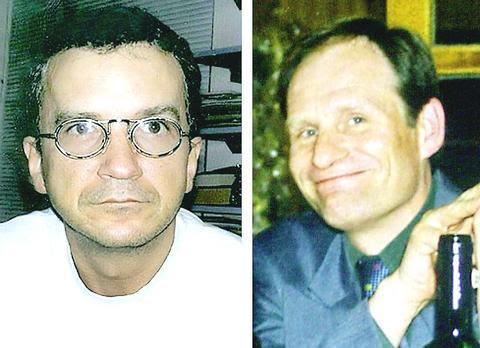
The world was recently shocked at the story of a German man who cannibalised a volunteer victim. Journalist, Rachael Bell reports in her article, The Cannibal & the Court the following-

The media has had a field day with Germany 's first cannibalism case. Armin Meiwes, a middle-aged computer technician, has wowed the court and the public with his bizarre confessions. He appeared relaxed and normal, despite the unusual nature of his crimes. Meiwes has been charged with murder for sexual pleasure, which has a maximum sentence of 15 years. However, he claims that the man he killed in 2001, Bernd-Juergen Brandes, volunteered to be killed and eaten so there was no murder. Here is how this unusual case began. Meiwes had advertised on the Internet for a well-built man who would consent to being killed and eaten. Meiwes says that there are over 400 cannibal web sites and chat rooms. Supposedly, more than 200 men responded favorably to his ad. Brandes was one of them and they got together for dinner at Brandes' home in Rotenburg. It's hard to say whether Brandes had planned to serve his penis that night or whether it came up as an idea once the two men were together. Meiwes claimed that Brandes wanted to have Meiwes cut off his penis. Meiwes then cooked the penis and they ate it together.

Source
The German courts convicted Meiwes and jailed him for 8 1/2 years. They regarded that what Meiwes had done was immoral despite their being mutual consent. Meiwes' legal defence team argued that Brandes was a willing participant in his cannibalism and murder, and therefore what Meiwes did was not immoral. But the courts rejected this reasoning and ruled on the basis that neither consent or democratic weight can ever make something immoral, 'moral'. Sometimes those who propose that what is immoral should be legalised on the basis that it should only affect those who consent to it. As the German Courts rightly ruled, consent never makes an immoral act, moral. Even if certain Jews during WW2 had consented to the Nazi's gas chambers, this does not make what was done to them 'moral'. It was during the Nuremberg trials in Germany after World War Two that another justification for legalising immorality was also soundly rejected. This was the idea that the most number of people in a society determine what is moral and immoral. At Nuremberg, SS Officers were charged, convicted and condemned for acts of immorality (referred to as "War Crimes") despite the vast majority of the German population supporting their actions and their national Government even having made their actions lawful. Opinion Polls sometimes matter. But not when it comes to what actually constitutes right and wrong. Jeffrey Dahmer, convicted of cannibalism and murderThus when people propose that governments legalise and make lawful such things as aborting unborn humans, embryonic stem cell research, and 'voluntary' euthanasia, legislators should filter out the arguments often used to buttress these campaigns that sound like "consent makes it moral" or "the majority view makes it moral". Otherwise we could become very ethically confused if these same people start campaigning for legalised cannibalism as is happening now in some European countries.

Thursday, 9 July 2009

Definition of Dignity

The definition of dignity
We all want to live a dignified life. Depending on how you regard life- whether from an naturalistic Darwinian evolutionary perspective (mankind is the random result of uncaused, unrepeatable, chaotic activity), or from a Biblical perspective (mankind is the direct creation of God and is uniquely invested with the image of God which endows us with certain sacred properties such as an immortal 'soul', you will either see that mankind must gain dignity or celebrate its dignity.
And it goes without saying that while we would probably want to live a long and enjoyable life most of us would want our dying condition to be without being humiliated, debased, or disrespected. Added to this, most of us would like our lives to end without pain or suffering. Possibly, many of us would also add that we would want our lives to end without them becoming a burden to our family and friends.

Yet, for most people who get old they end becoming how they were when they came into the world: dependent. Similarly, as you get older your body doesn't always respond the way you would like. This can make those you become dependent upon uncomfortable. In fact, in 1995 then Governor General Bill Hayden said that such people can become an unnecessary burden on society.
‘there is a point when the succeeding generations deserve to be disencumbered - to coin a clumsy word - of some unproductive burdens’
The Hon. Governor General Bill Hayden, address to the Royal College of Physicians, 21st June 1995, Brisbane Courier Mail, 26th June 1995

But dignity is still due to the dependent. They should not be pressured to think that the only way to be dignified is to allow others to give them a lethal injection (which sometimes causes toxic shock resulting unrelenting vomiting, uncontrollable convulsing, and prolonged severe shortness of breath).

When a dependent person loses control of vital body functions should they be made to feel 'undignified'?
Interestingly, when voluntary euthanasia was temporarily allowed in the Northern Territory of Australia in the 1990s, making provision for the terminally ill in intolerable pain to have doctor-assisted deaths, of the 7 people that took advantage of the temporary law, few (if any) actually had a terminal illness and none had untreatable pain. In Holland, where there is legalised voluntary euthanasia, up to 1,000 people each year are euthanased without their consent.

One man in Tasmania who cares for over 350 dying people each year, Dr Paul Dunne, said that each of these people despite their physical state dies with great dignity. To legalise Vountary Euthanasia in this State, he said, would be to introduce "a throw away mentality" when it comes to frail and vulnerable people.

Current medical practice is right now able to treat what was once 'intolerable' pain. This is called Palliative Care. Those involved in this field medicine are one of the greatest blessings to any "society". When a doctor helps to relieve a patient's dying pain with ongoing morphine (described by one doctor as one of the greatest blessings from God to the pained) they are activating what is called "The Law of Double Effect". This current practice is not euthanasia since it does not intend to kill a person but it may hasten their death after it has become established that further treatment is pointless.


Despite how others may respond to a person who is suffering and dying, they should never be regarded as worth less - which is what "undignified" means.

Thursday, 2 July 2009

The Dignity of Euthanasia

tearsNo one likes to suffer. But even more so, no caring person likes to see another person, especially a loved one, suffer. This is especially the case when it comes to how we feel about the terminally ill trying to endure intolerable pain. Some people propose that the kindest thing we can do for a person in this condition is at least what we would do for any animal- put them out of their undignified misery (read: euthanasia). It is perhaps this motivation that has led Mr Nick McKim to introduce a Private Members Bill, Dying With Dignity 2009. (A copy of the Dying With Dignity 2009 Bill can be found here.) But there is another way of looking at this problem. Rather than thinking that euthanasia is the solution, it may exacerbate a whole set of other even worse problems.

Here's some of the main points that I think that we need to be aware of and why we should play a role affecting the outcome of this Bill.

  • Human life is uniquely valuable, or rather: humans are uniquely invaluable.


  • Euthanasia is the taking of a human life. It is therefore (i) Assisted suicide; or (ii) Unjustified Homicide.


  • Euthanasia is therefore a violation of the 6th Commandment and an obscene mockery of God's image uniquely borne by human beings (Genesis 9:6).


  • We do not consider a terminally ill patient's refusal to accept life-saving treatment as Euthanasia.


  • The unrelenting physical pain of the terminally ill is an opportunity for, and more often than not a display of, dying with great dignity.


  • Death beds often bring great healing to fractured families.


  • People who are religious, and especially Christians, have long held that suffering is not meaningless or without purpose, and that it has the potential for great good to result. The epitome of this is the Cross of Christ where from one man's intense suffering the availability of salvation to the entire world as a result.


  • This Bill proposed by The Tasmanian Greens' Leader presupposes the following-
    (i) There is no meaning or purpose in the suffering of the terminally ill;
    (ii) That Frederick Nietzsche was correct when he taught that a human-being is just the sum of their chemical elements and that after their death there is no other form of existence for them. Therefore, there is no moral dilemma in ending a person's life since, according to the "Nietzsche's Naturalism" there is no spiritual realm where such moral choices will be judged;
    (iii) That a person who wants to die has the right to do so in a manner of their choosing;
    (iv) Governments have no right to stand in the way of a person who wants to take their life;
    (v) Justification for Euthanasia may include psychological or emotional "pain". (Suicide is not the solution to this type of pain!);

* Allowing this Bill to be passed would send a desperately sad message to those providing palliative care for the terminally ill; those involved in suicide-prevention among vulnerable teens; the elderly who feel pressured to stop being such 'a burden' to those around them.

ACTION REQUIRED-
1. We require as many thoughtful and considered submissions to be made as possible. The Parliament has set up an Inquiry which has quietly called for submissions by July 31st 2009.These submissions can incorporate an elaboration of any of the above points but would be enhanced by personal accounts (which pastors perhaps more than many in society should be able to provide) of people close to us who have died with dignity.

Written submissions to the Committee should be addressed to the Secretary, Joint Standing Committee on Community Development, Parliament House, Hobart, 7000, and forwarded prior to the close of business on Friday, 31 July 2009. Hon Kerry Finch MLC (CHAIRMAN). The Committee encourages the lodgement of submissions in electronic form. Emailed submissions must include name, phone number and postal address. Guidelines for witnesses and the preparation of a submission are available here or by contacting the Secretary – Ph: (03) 6233 2248 – Fax: (03) 6233 8103 –Email.

2. Attend the upcoming Pastors and Church Leaders' Briefing Sessions-
Hobart: St David's Cathedral, Bishop John Harrower's office
Thursday July 9th, 9:00AM - 10:30AM
Speakers: Rev. Dean Richard Humphrey, Mr Nick Overton and Dr. Andrew Corbett

Launceston: Legana Christian Church, Bridgenorth Road
Tuesday July 14th, 8AM for a complimentary cooked breakfast.
Speakers: Mr Nick Overton, Bishop Ross Nicholson, Dr. Andrew Corbett

--An Information Pack will be provided to all attendees. RSVP for either events to Nick Overton

I hope to see you at these briefings, and I hope you can make a submission as well.