Showing posts with label ethics. Show all posts

Friday, 13 May 2022

CHRISTIANITY IS A PROPOSAL NOT AN IMPOSAL


Chuck Colson’s Speech to Seminarians  |  Why Christianity is a rational and reasonable proposition  |
  Why Christianity is not an imposition  |  How Christianity is not just a proposition

Christianity is a 
proposal not an “imposal”. That is, Christianity is grounded is certain propositions that are rational, reasonable and evidential. Its propositions can then be either accepted or rejected. The notion that each person has the freedom to choose their response to a proposition is a biblical concept grounded in the teaching that every person has been created in the image of God with the God-given freedom to make their own choices and decisions. In one of Chuck Colson’s last speeches, he spoke to a group seminarians (theology students in training to become pastors) and reinforced this point to them. When you take up your pastorates, he told them, remember that Christianity is a proposition not an imposition. We cannot impose Christianity on anyone. Instead, he went on, we must give well reasoned propositions. This requires having the correct starting point for Christianity, Colson stated, and that starting point is the Bible and your unshakeable conviction that it is the very Word of God. Without this foundation we cannot offer the propositions that lead a person to meet with God and experience His forgiveness.

The sum of Your Word is truth,
and every one of your righteous rules endures forever.
I rejoice at Your Word like one who finds great spoil.
Psalm 119:160162


THE PROPOSITIONS OF CHRISTIANITY ARE TRUE, RATIONAL, & REASONABLE 

All Scripture is God-breathed, Paul reminded Timothy, and is profitable for teaching (2Tim. 3:16-17). This is because it is true. It doesn’t just contain truths, it is truth. When Christian leaders stray from the truth of God’s Word regarding matters of human exceptionalism, gender distinction, or sexuality, they will invariably attempt to impose their views rather than offer testable, verifiable propositions. Sometimes this involves twisting Scriptures to impose distortions of the truth into the Scriptures. For example, in Jude 9, the apostle Jude compares the sin of Sodom and Gomorrah (homosexuality) with the sin of the fallen watcher angels who took on human form and fornicated with human women (Gen. 6:2-5). In both instances, Jude declares, both the fallen angels who sexually sinned and the men of Sodom and Gomorrah who sexually sinned, did what was “unnatural” after “desiring different flesh” than what God had designed. In the case of those Watcher angels they were not designed to misuse their ability to materialise into human form, and the men of Sodom and Gomorrah were not designed to commit fornication at all – let alone with those of the same gender. The Creator has created a design for all of His creatures – which includes men, women, and angels. God’s Word is consistent from cover to cover that sexuality is sacred and spiritual and is gifted to humankind as an expression of the image of God that men and women each bear which intrinsically involves and includes procreation (Matt. 15:19-2019:4-6).

Chuck Colson warned these seminarians over 12 years ago that the issue of human gender and sexuality was going to be an issue that culture would oppose Christianity on – and it seems that he was rather prophetic. 

The Bible invites testing and examination of its claims. Because the Bible asserts to be true, we can have great confidence that it can stand up to scrutiny and investigation. Often times the objections that people have with the Bible are because they do not like what it says – not because they are disputing that it actually says it.  

¶ This is the disciple who is bearing witness about these things,
and who has written these things, and we know that his testimony is true.
John 21:24

The central claim of Christianity is the central claim of the Bible: The Creator became the Redeemer by becoming one of us and laying down His life as our substitute. He taught about God and God’s will for all people and this has been accurately and sufficiently recorded in the Scriptures. He then died an atoning death for the sins of mankind and was resurrected physically from the dead to be declared as Lord of all. He triumphed over the forces of darkness and ascended back to His Father where He was declared to be worthy of all creation’s worship. To live according to what He taught is to love God and others in word and deed. The historical impact of Christ’s atoning life has been well documented by J.Warner Wallace in his book, Person of Interest, where Wallace shows that all of the great social improvements in the world can be traced back to arrival of Christ. These are some of the reasons why we claim that the propositions of Christianity are not only reasonable, true, and evidentially verifiable, but are also good for the world and for each person. Living life the way Christ taught people to live can be shown to be beneficially physically, intellectually, spiritually, and mentally.

Because Christianity involves the acceptance of certain propositions such as the divine inspiration of the Bible, the Creator’s right to decree laws for our conduct, and foundation for true beliefs, Christianity has always been creedal. There are short creeds found in the Bible. These are statements of true beliefs. The word creed comes from the Latin word credo which means I believe. People who reject the Bible but still claim to be Christian sometimes spout, Christianity is about deeds not creeds! which itself sounds awful like a creed to me. Thus, Christianity is a set of propositions that are often presented as doctrines (“beliefs”), and theology (“how we understand God and is will”). In the apostle Paul’s last epistles, written to Timothy, his major themes in both epistles concerns sound doctrine. The basis of sound Christian doctrine is good theology!  

And He said to him, “You shall love the Lord your God with all your heart and with all your soul and with all your mind. This is the great and first commandment. And a second is like it: You shall love your neighbour as yourself. On these two commandments depend all the Law and the Prophets.”
Matthew 22:27-40


WHY CHRISTIANITY IS NOT AN IMPOSITION 

“You can’t legislate morality” is a false claim because you can only legislate morality – the question is, Whose? But it is true that you can’t legislate for anyone to become a Christian. Christianity cannot be imposed. This is why we make ‘a case’ in the public square about how all people, Christians or otherwise, should treat people — especially the poor, the marginalised, and the vulnerable. We are not arguing for governments to impose legislation to Christianise our society. Rather, we have good reasons for believing that the teachings of Christ are beneficial for all of society. That’s why we argue that marriage is sacred and designed by God for human flourishing. It’s why we argue that a pre-born baby has been given a sacred life and should not be murdered. It’s why we argue that men and women are equal and that men should use their strength to protect, provide, and pastor those in their care not harm or intimidate them. It’s why we argue that Physician Assisted Suicide (PAS, or a host of other euphemisms) should not supplant palliative care which coincides with a dying person’s natural end. We argue we do not impose.

Therefore, we are ambassadors for Christ, God making His appeal through us.
We implore you on behalf of Christ, be reconciled to God.
Second Corinthians 5:20


WHY CHRISTIANITY IS NOT JUST A PROPOSITION

I do not want to give anyone the impression that Christian is just a set of intellectually propositions. It is much more but it is certainly not less. One of the propositions that we Christians make is that Christianity is a spiritual transformation of a soul. While its propositions are true, they are not just true, they invoke a miraculous transformation in a human being. Jesus described this as being “born again” (John 3:3). The New Testament describes the moment this happens as being a transaction with God where we surrender our life and our sin to Him and He gives us His life and His pardon (1Jn. 1:8-9)! This transaction includes a hope that goes beyond the grave. God the Father adopts all those who turn to Him. It results a new way of seeing life and the world. The things that once troubled us no longer do, because we have a growing confidence that God has a plan and is currently outworking that plan. If you have never surrendered your life in a transaction with God, you can now. You are just one prayer away from peace with God and purpose for your life – both now and beyond the grave! The choice is yours. We can’t impose this offer from God on you, but I do have a proposition for you.


Your pastor,

Andrew

Let me know what you think below in the comment section and feel free to share this someone who might benefit from this Pastor’s Desk.

Friday, 1 March 2019

1. WHAT IT’S GOING TO TAKE - REDEEMING POLITICS

1. WHAT IT’S GOING TO TAKE: 
BABIES & POLITICAL PATH-TREADERS
The eighteenth century Irish writer, philosopher and British politician, Edmund Burke, once famously said, “The only thing necessary for the triumph of evil is for good men to do nothing.” Perhaps his words touched a young boy by the name of William who would grow up with a desire to enter politics and do something about the evils of English society some twenty years after Burke uttered these words. If Burke was alive today, and he had heard what happened in New York recently – or what is being proposed in South Australia – he might say, “I told you so.” I’m guessing, many years ago in New York, some young people, influenced by an ideology, committed their lives to changing society’s attitudes. This may have led to them embarking on a ‘political pathway’. They probably joined the Democratic Party quite young. They probably joined neighbourhood committees, sporting clubs, charity boards, and even municipal councils. I guess they would have been frequent participants at rallies and protests and maybe even helped organise them. I can imagine that they were quite active on their college campus joining fraternities and clubs to expand their social contacts. And eventually, the day came, when they had the numbers in the New York Legislature to pass a bill strangely called, New York’s Reproductive Health Act. The new law allows for an baby’s life to be terminated at any point in its mother’s pregnancy. South Australia is now proposing similar legislation.
¶ God-devotion makes a country strong;
God-avoidance leaves people weak.
Proverbs 14:34 [THE MESSAGE]
I speculate about the political pathway of New York’s Governor, Andrew Cuomo, and his political colleagues, because I believe that there are some hard lessons to be learned from it which I will soon point out and put out a call for young men and women to consider whether God is calling them on a political pathway to be ‘Esthers’ and ‘Daniels’ in an emerging generation of new political leaders of our State and nation.

New York Governor, Andrew Cuomo and Hillary Clinton

THROUGH HIM AND FOR HIM

For by Him all things were created, in heaven and on earth, visible and invisible, whether thrones or dominions or rulers or authorities—all things were created through Him and for Him.
Colossians 1:16
I anticipate that there will be many people who will object to what I am about to propose. They will cry, “Separation of Church and State!” and assert that the Church should ‘stay out of politics’. But I’m not arguing for the Church to get into politics. I’m appealing for those followers of Christ whom God is calling to make a difference for good in our society to accept their call and get on a pathway toward it. (I might also point out that it is usually repressive regimes which have the purist forms of ‘Separation of Church and State’ and that human rights generally don’t fair well in those regimes). Australia has never adopted a ‘Separation of Church and State’ approach to societal well-being. Rather, Australia has always had a ‘Cooperation between Church and State’ approach. This is seen in many facets of our society such as education, health, and welfare. There are some problems in society that the Church is just simply better resourced than the State to deal with. (Money alone doesn’t solve every problem.)
Our goal is not to ‘Christianise’ society. Our goal is to spread the fragrance of Christ into every arena of society so that women are not viewed as objects; children are respected and protected; leaders serve; politics guards; and sex is never unhinged from commitment. We strive for the vulnerable to be cared for. We seek for the enterprising to be ethically innovative, and development to be appropriate and sustainable. We want to inspire artists and artisans and imagineers to produce beauty. We want our environment to reflect its True Creator and for those called to subdue it to improve it. Thus, our mission is far bigger, far broader, far grander than just a ‘nice weekly worship service’. As Colossians 1:16 states, every realm of society – its governments, its institutions, its authorities – have been ordained by Christ to serve Christ for the glory of Christ.
There is not a square inch in the whole domain of our human existence over which Christ, who is Sovereign over all, does not cry, Mine!
Abraham Kuyper

GOD’S SOLUTIONS TO TOMORROW’S PROBLEMS

The fruit of the righteous is like a tree producing life, and the one who wins souls is wise.
Proverbs 11:30
F.W. Boreham once famously wrote, then illustrated how, God’s answer to every problem the world has ever faced has been a baby. He showed how the people who God clearly used to bring about justice, needed reform, and great good, came to necessary maturity just as the world faced its darkest hours. And while many Christians have put their hats in the ring of politics to make a much needed difference, all too often they have virtually attempted to ‘jump the queue’ in the process. It’s time we got a bit more intentional (and savvy) about how we encourage and support the divinely called into a life of political ministry. Simply seeing the need, or being well-intentioned, is not enough to qualify someone as an electable candidate. Despite what some think, winning a political election is not just a matter of ‘luck’!
Sometimes the ‘queue’ looks like saying hello to more people than most; running for SRC at Primary School (and if unsuccessful, trying again); joining a High School sporting team; joining Rotary; getting involved in community groups (such as Neighbourhood Watch); volunteering for a local charity; serving on the board of a not-for-profit organisation; attending more functions (including friend’s parties and more formal events); joining a political party; volunteering to help an already elected member get re-elected; getting involved in a Trade Union or University fraternity or club; standing for local council (and if you fail, running again); and then once you have personally connected with a few thousand people, run for State or Federal Parliament. Of course, in the meantime, get a trade or profession and diligently apply yourself in it in order to achieve two important things: (i) a strong work ethic; and, (ii) a strong reputation as a person of upstanding character. While many people have been taught that Proverbs 11:30 is about evangelism, its context is a actually a reflection of all that I have just proposed for someone who is a potential political candidate because what King Solomon is saying is that a wise person is someone who takes the time to get to know a lot of people and wins them over.
Perhaps you were born at just the time to be God’s response to the cries of God’s people (Esther 4:14).  
¶ During those many days the king of Egypt died, and the people of Israel groaned because of their slavery and cried out for help. Their cry for rescue from slavery came up to God. When the LORD saw that he turned aside to see, God called to him out of the bush, “Moses, Moses!” And he said, “Here I am.”
Exodus 2:233:4

WHAT IT’S GOING TO TAKE

Of course, I’m not suggesting that Christians in politics is the sole solution to society’s woes. But I am saying that it is a necessary part of it. It is my hope that young men and women in our church who are called by God to enter politics will take advantage of all the leadership development resources we offer and equip themselves to reach their leadership potential. This is one of the reasons we have a Youth Group. It is a seed-bed for youth leadership development. In my next instalment, I want to talk to another group of young people in our church, without whom my appeal for people with a political call on their lives to step-up will be made very difficult, if not impossible.
Andrew

Thursday, 24 October 2013

Journey To Integrity


Integrity In Leadership
And David shepherded them with integrity of heart;
with skillful hands he led them.

Psalm 78:72
Aloha Flight 243On April 28th, 1988, Aloha Flight 243 set off from Hilo, Hawaii, bound for Honolulu. It never arrived. As it reached its cruising altitude of 24,000 feet, suddenly the left side of the roof near the front of the plane ruptured then exploded off from the plane tearing a huge gap in the roof and damaging the right wing. Miraculously the Captain was able to perform an emergency landing at Kahului Airport on Maui but not before one flight attendant had been instantly sucked out of the place to her death and 79 seriously injured.
Aloha Flight 243Air Crash Investigators concluded that the crash was "caused by a breach in the aircraft's integrity". Their official NTSB report noted that Gayle Yamamoto, a passenger, noticed a small crack in the fuselage when boarding the plane but did not tell anyone. Maintenance workers had failed to insert several pop-rivets near the left side passenger door which had placed this small section under extraordinary pressure.

This small breach in  Aloha 243, was no more than a few centimetres long, but it was the basis for a breach in integrity. There is a life application here.
The definition of integrity
Integrity comes from the word: integer, which is the word used in mathematics to describe 'a whole number' (as distinguished from a fraction or number with a fraction). Being a person of integrity involves being a person who is one. They have one identity which is aligned with reality (the truth about themselves and the world in which they live). It is this latter aspect which makes moral uprightness (character) integral to integrity. When most people use the word integrity they are most often referring to this latter aspect to describe a person who is honest, trustworthy, and reliable. But this is more to do with character than integrity - although good character (moral uprightness) is an essential quality of integrity - integrity also involves the absence of any breaches.
The Story of Man's Journey To Integrity
And when he had removed him, he raised up David to be their king, of whom he testified and said, 'I have found in David the son of Jesse a man after my heart, who will do all my will.'
Acts 13:22
King David is described as 'shepherding Israel with integrity and skill' (Psalm 78:79). But this description applies to David toward the end of a long process of becoming a man of integrity. It seems that God saw David's potential to become an extraordinary man of integrity because his heart was soft before God. This was despite the Lord also seeing the existing breaches in David's integrity. But the qualities of David's heart, such as (i) humility, (ii) correctability, (iii) reverence for God, became the very qualities that enabled him to become whole - a man of integrity. These qualities are very close to God's own heart. Thus, integrity in a person's heart is, in one sense, the means by which a person can come close to God's heart. David became such a man and earned the most honoured description as a man after God's own heart - a description not given to any other man in the Scriptures. Here is an overview of David's journey to integrity. We begin with his battle against Goliath which reveals both his heart and his integrity breaches which would need to be exposed, confronted and dealt with for him to become a man of integrity.

King David's journey to integrityThe scene is set with the Philistine's champion, Goliath the Giant, challenging the nation of Israel to send a man to represent them to fight against him. No man is prepared to take up this challenge - not the least of all their king, King Saul. The young 16 year old shepherd-boy, David, is sent to the battle front to deliver supplies to his brothers. He hears that the king is offering riches, honour and his daughter to the man who will overcome Goliath. This piques David's interest. But it also sheds light on what would later become the obvious small breaches in his integrity.

It is no mere cliché that the downfall of many a man has been the girls, the gold, and/or the glory. In essence, King Saul's reward appealed to each of these human weaknesses. Yet, it was one of these rewards which particularly attracted David.

Thursday, 11 February 2010

Hard Work And The Soul

Do you know someone who is obviously well organised and highly productive? Chances are they work hard. These people tend to make "to do" lists. If we could see their lists we would see that the tasks they have listed for actioning reflect some clear goals they have. Over the past four months in particular I have watched several key people work very hard on two building projects. Each of these people have started their days early, proceeded through their days without wasting time and ended their days organising their next day's work. I have witnessed these amazing people combine two not-so-common activities: hard work and productivity. This contrasts with those who are busy and highly active yet not really productive.

First Corinthians 15:10 But by the grace of God I am what I am, and his grace toward me was not in vain. On the contrary, I worked harder than any of them, though it was not I, but the grace of God that is with me. 

In the "old days" hard work meant physical activity. These days, "hard work" means thinking plus acting. It involves thinking ahead, planning and organising necessary help before its needed. But this thinking also requires implementation. Knowing what to do does not make it happen. Planning for something to happen does not make it happen. Hard work involves doing something that has to be done - even though you may not want to do it - in order to achieve what you want.

While this is true in very practical matters, it is also true in spiritual matters. Paul the apostle could say that he worked hard for the Lord. He exerted himself in spiritual activity by grace. Paul knew that salvation was not a matter of hard work- but God's grace. But he also knew that this same grace enabled him to work hard for the Lord. Perhaps this meant that there were times for Paul when praying was hard, but the grace of God enabled him to sacrifice his time, energy and sleep in order to prayerfully conduct his ministry. Perhaps there were times when Paul was exhausted and didn't feel like writing another epistle or preaching another sermon or witnessing to another seeker- but something within him enabled him at those moments to work hard.
John 4:34 Jesus said to them, “My food is to do the will of him who sent me and to accomplish his work.
I believe, like the Reformers, that God is sovereign but I also understand what they meant when they described the Christian response to God's Sovereignty as the Protestant Work Ethic. These Reformers understood that God's grace enabled believers to work harder than they otherwise could. They regarded work as an act of worship to God. Work was a God-given means for man to find meaning for his existence. The Christian Work Ethic meant that believers in particular applied themselves more diligently to their contribution to a society's economy in the fields of enterprise, education and entertainment. Those believers who were employees should work hard for their employers by turning up earlier than required, staying longer than asked, and working consistently without the need for supervision.
Colossians 3:23 Whatever you do, work heartily, as for the Lord and not for men
Ephesians 6:5-8 Slaves, obey your earthly masters with fear and trembling, with a sincere heart, as you would Christ, not by the way of eye-service, as people-pleasers, but as servants of Christ, doing the will of God from the heart, rendering service with a good will as to the Lord and not to man, knowing that whatever good anyone does, this he will receive back from the Lord, whether he is a slave or free.
The generation of believers who came after the Reformers were known as the Puritans. They coined expressions extolling the spiritual benefits of hard work and decrying the spiritual affect of laziness. "Idle hands are the Devil's tools", "Labora Ut Requiescas" (Latin: Work hard so that ye will rest). A casual reading of the Book of Proverbs makes it clear that laziness, sloth, idleness, are bad for the soul. Hard work, that combination of well planned organisation and diligent implementation, is good for the soul. When a person is deprived of an opportunity to work (whether paid or unpaid) they can suffer all kinds of maladies, none the least: depression. Depression is the removal of hope's light to a soul. It discourages. It deceives. It consumes. The Bible prescribes an antidote: hard work. Geoffrey Norman once wrote, "A lot of what passes for depression these days is nothing more than a body saying that it needs work." "Employment", said Galen, "is nature's physician, and is essential to human happiness."

If you want to kill time, try working it to death. 
~ Sam Levonson
Work is good for the soul. Much of our modern economy is built upon a type of work that can be done without passion. The type of work that is good for the soul is the type of work that we can do "heartily" (Col. 3:23). Whether this is digging ditches, cleaning the house, weeding the garden, designing web pages, serving a customer, baking a cake, selling a house, servicing a car, or writing a report, work can be done with passion and enthusiasm. This type of work results in a positive, healthy pride-
Romans 15:17 In Christ Jesus, then, I have reason to be proud of my work for God.
During times of dire need the believer often cries out to God for miraculous provision. The way God usually answers this cry for help is spelt: w-o-r-k. Consider how the poor were to be treated under the Old Covenant. Rather than just giving them charity, God commanded that farmers harvest their fields once and allow the poor to glean the rest. God's answer to the predicament of the poor was not just charity, but work. Naturally, those who ignore this principle of work and attempt to gain by theft are not only injuring others, but they are damaging their own souls.
Ephesians 4:28 Let the thief no longer steal, but rather let him labor, doing honest work with his own hands, so that he may have something to share with anyone in need.
It therefore goes without saying that believers should work honestly without stealing either time, cash or property from their employers. Hard work from a believer is done for their employer as if they were working directly for the Lord (Col. 3:23). Perhaps for those believers who have an opinion of God's provision being only supernatural it might be time to consider that God normatively provides for His children by giving them work to do. Like me, you probably already have a lot of work to do. Some of this work, if not most of it, is maintenance- the type of work that needs to be done just to keep things normal. I have a small list of these jobs that need doing around my house. I have another list of jobs that I would like to do around my house. I then develop an action plan (how I will implement the completion of these jobs). In my pastoral duties I also work with lists. I recently bought some software (called "Things") which helps me to plan and organise these work items. This brings me back where I started. Hard work involves clear thinking and the effort of clear implementation. I'm not really interested in being "busy", but I am committed to working hard.
Father, thank You for Your saving grace. I pray that this saving grace will help me to work hard for Your glory. Lord, when I get an attack of the lazies, help me to overcome this with the kind of attitude that spurs me to reluctant motivation to what has to be done. Even when I am tired, help me to keep going knowing that working for You is my rest. Father, help me to plan, organise, and resource my life better so that I can be more productive in what You have assigned to me. In all my busyness may I not overlook people and their needs. May I feel Your heart for people and be filled with compassion to speak Your encouraging words and truth. May You use me to inspire those around me to have a "can do" spirit. In Jesus' Name, 
Amen

Tuesday, 14 July 2009

Is Cannibalism Immoral?


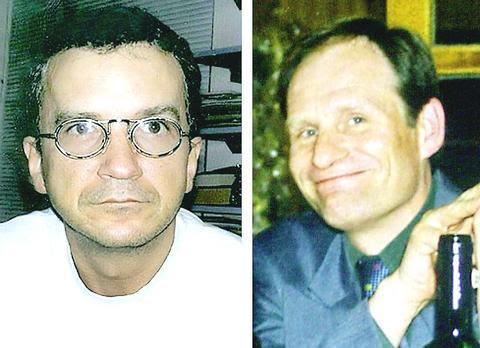
The world was recently shocked at the story of a German man who cannibalised a volunteer victim. Journalist, Rachael Bell reports in her article, The Cannibal & the Court the following-

The media has had a field day with Germany 's first cannibalism case. Armin Meiwes, a middle-aged computer technician, has wowed the court and the public with his bizarre confessions. He appeared relaxed and normal, despite the unusual nature of his crimes. Meiwes has been charged with murder for sexual pleasure, which has a maximum sentence of 15 years. However, he claims that the man he killed in 2001, Bernd-Juergen Brandes, volunteered to be killed and eaten so there was no murder. Here is how this unusual case began. Meiwes had advertised on the Internet for a well-built man who would consent to being killed and eaten. Meiwes says that there are over 400 cannibal web sites and chat rooms. Supposedly, more than 200 men responded favorably to his ad. Brandes was one of them and they got together for dinner at Brandes' home in Rotenburg. It's hard to say whether Brandes had planned to serve his penis that night or whether it came up as an idea once the two men were together. Meiwes claimed that Brandes wanted to have Meiwes cut off his penis. Meiwes then cooked the penis and they ate it together.

Source
The German courts convicted Meiwes and jailed him for 8 1/2 years. They regarded that what Meiwes had done was immoral despite their being mutual consent. Meiwes' legal defence team argued that Brandes was a willing participant in his cannibalism and murder, and therefore what Meiwes did was not immoral. But the courts rejected this reasoning and ruled on the basis that neither consent or democratic weight can ever make something immoral, 'moral'. Sometimes those who propose that what is immoral should be legalised on the basis that it should only affect those who consent to it. As the German Courts rightly ruled, consent never makes an immoral act, moral. Even if certain Jews during WW2 had consented to the Nazi's gas chambers, this does not make what was done to them 'moral'. It was during the Nuremberg trials in Germany after World War Two that another justification for legalising immorality was also soundly rejected. This was the idea that the most number of people in a society determine what is moral and immoral. At Nuremberg, SS Officers were charged, convicted and condemned for acts of immorality (referred to as "War Crimes") despite the vast majority of the German population supporting their actions and their national Government even having made their actions lawful. Opinion Polls sometimes matter. But not when it comes to what actually constitutes right and wrong. Jeffrey Dahmer, convicted of cannibalism and murderThus when people propose that governments legalise and make lawful such things as aborting unborn humans, embryonic stem cell research, and 'voluntary' euthanasia, legislators should filter out the arguments often used to buttress these campaigns that sound like "consent makes it moral" or "the majority view makes it moral". Otherwise we could become very ethically confused if these same people start campaigning for legalised cannibalism as is happening now in some European countries.

Friday, 29 May 2009

What Is Morality?

The issues of right and wrong are integral to the study of ethics which is a core component to morality. Right is understood as morally right, as distinct from absolutely right such as in the science of mathematics. Naturally, wrong is understood as morally wrong, as distinct from incorrect. Moral is understood to be: the best individual and social outcome. As Christians we believe that the best individual and social outcome is only achieved when the mind of God is sought and followed. In the Old Testament era, this was encapsulated within the Decalogue (The Ten Commandments). Now in the New Testament era, its understanding is enhanced by Christ’s teachings. . .[more]

Sunday, 17 May 2009

Understand The Embryonic Stem Cell Debate

Understand the debate about Embryonic Stem Cell Research from an ethical perspective...

To watch the full presentation of this summary video click here.
To read the transcript of this presentation, click here.