Showing posts with label theology. Show all posts

Thursday, 5 June 2025

ECCLESIOLOGY Part 11 - DEVELOPING A HEALTHY CHURCH CULTURE


Every local church has a culture. Culture is a sociological term. It encompasses what a community regards as: proper, acceptable, and honourable. Sociologists refer to these as morēs. Conversely, culture conveys what is: not proper, not acceptable, and is disgraceful and shameful. Sociologists refer to this negative behaviour as deviant. Culture celebrates what a community regards as important, and, what it frowns on. Every local church as a culture, but sometimes that culture is not entirely healthy. In this instalment in the Ecclesiology series, I am sharing some of the insights that we deal with in my church leadership seminar.


WHAT HEALTHY CULTURE ACHIEVES

The other week I saw a YouTube video of a Western tourist in Japan who showed a video of passengers on a Tokyo train. The passengers sat in an orderly fashion and were seated in silence. The tourist wondered if there was a Japanese law requiring the passengers to sit silently on the train. He found out that there was not. The reason the Japanese passengers sat on the train in silence was due to their culture. They didn’t need to be told to sit quietly – they just knew that it was the proper thing to do. This kind of positive culture is something any local church can achieve, if it works on the following two principles.

When I Kim and speak at a church for an extended weekend it is our mission to serve that church community and to help them to be even more effective in their mission to reach their community. This involves sharing on a Friday night with their youth or young adults about relationships; then sharing on a Saturday morning with Kim speaking to the ladies and myself speaking to the men; then a mid-morning leadership seminar with Board members/elders/team leaders;  a Saturday night dinner with the pastor/s elder/s; and on Sunday sharing in the morning service/s followed by an open (for anyone attend) Q&A luncheon. In the church leaders’ seminar we look at what makes for a healthy church. It is in this interactive seminar that we discuss the elements of what makes for a positive culture in a church. In essence, from my study, and the feedback we have received from these seminars, I can reduce what is needed are these two factors: firstly, the leader, and secondly, the attitude of the church.   


1. THE INDISPENSABLE RÔLE OF THE LEADER

The leader of a local church may be identified as the elder, pastor, senior pastor, senior minister, rector, or even the leader. Their title is not necessarily a critical issue. What is indispensable though is that they lead. It simply can not be overstated just how important their role is. The leader carries the weight of responsibility for the tone of a local church’s culture. It is not only the leader’s preaching which contributes to their culture-setting. It is their example –

  • How they treat people, how they deal with interruptions,
  • How they speak to their spouse and child/ren,
  • How they interact with their staff and/or volunteers,
  • How they manage their time,
  • How they admit their mistakes,
  • How they take correction,
  • How they deliver correction,
  • How they respond to tragedy,
  • How they they open their home to show hospitality,
  • How how they use those who are better than them,
  • What they laugh at – or – what they get angry at, and,
  • How they strive to improve their strengths and weaknesses. 


2. THE ATTITUDE OF THE CHURCH

While the leader is ultimately responsible for teaching sound doctrine and to exposit the Scriptures, as critically essential as this, it is not enough to ensure a positive and healthy church culture. It must be supplemented with a demonstrated explication of sound doctrine and the Scriptures. That is, a preacher can be a brilliantly powerful preacher who is an amazing teacher of God’s Word – but this is almost irrelevant if this preaching and teaching is not reflected in their godly attitude. When a leader consistently models a godly attitude it has an incalculably positive effect on their church’s attitude. Therefore, the senior leader must preach, teach, and model the biblical description of a godly attitude. This description is found in Colossians 3:12-17.

(12) ¶ Put on then, as God’s chosen ones, holy and beloved, compassionate hearts, kindness, humility, meekness, and patience,
(13) bearing with one another and, if one has a complaint against another, forgiving each other; as the Lord has forgiven you, so you also must forgive.
(14) And above all these put on love, which binds everything together in perfect harmony.
(15) And let the peace of Christ rule in your hearts, to which indeed you were called in one body. And be thankful.
(16) Let the word of Christ dwell in you richly, teaching and admonishing one another in all wisdom, singing psalms and hymns and spiritual songs, with thankfulness in your hearts to God.
(17) And whatever you do, in word or deed, do everything in the name of the Lord Jesus, giving thanks to God the Father through Him.
COLOSSIANS 3:12-17

If I was to list these attitude qualities, and then ask you, “How would you feel if your church was described by others as:

+  Compassionate

+ Kind

+ Humble

+ Meek

+ Patient

+ Forebearing

+ Forgiving

+ Loving

+ Harmonious

+ Peaceful

+ Thankful

+ Biblically literate

+ Wise

+ Prayerful and Pious (worshipful)

+ Sincere and holy?

Conclusion: The Gospel informs us that a culture can change. People can change. But what is needed are champions of cultural change who embrace the Church’s God ordained charge to be counter-cultural. When there is a champion of change – and better still – a champion team of change – building a healthy culture within a church is absolutely possible. And as this culture continue to be pursued I suspect that there will be many people who will be attracted to this church’s Christ-fragrance. Please pray that it does!

Amen.


Complementary Audio Podcast

Friday, 6 October 2023

THE LORDSHIP OF JESUS CHRIST, Part 4 - He is the Divine Promise Keeper


Throughout the Old Testament, God made certain promises to the patriarchs (Abraham, Issac, and Jacob/Israel) that their descendants, the nation of Israel, longed to see fulfilled. These promises centred on having a holy Homeland and a Messiah. Over the centuries that followed their expulsion from their Land which sent them into exile into Babylon initially and then into Persia, the Israelites became known as Jews. Their expectations of how these divine promises would be fulfilled then became greatly embellished with the promise of a homeland being interpretted to mean that the Romans would be overthrown and expelled out of ‘their’ land,  by the promised messiah who would then have to be a powerful military commander. These embellished expectations then gave rise to the Jewish sect known as the Zealots; and, prior to the Zealots it led various other unsuccessful Jewish revolts. But when the messiah actually appeared, He was not the military commander that the Jews were expecting. How could this carpenter’s son from Nazareth be the heir to King David’s throne and the one who would ultimately fulfil the promises of God to Israel? So how justified were the first-century Jews in their expectations of how God would fulfil His promises to them? How obligated was Jesus the Messiah to fulfil the promises of God? And what implications does this have for Christians today who are committed to claiming the promises of God?  


KING DAVID PROPHETICALLY IDENTIFIED
THE MESSIAH AS HIS LORD

¶ And as Jesus taught in the temple, He said,
“How can the scribes say that the Christ is the son of David?
David himself, in the Holy Spirit, declared,“‘The Lord said to my Lord,
“Sit at my right hand, until I put your enemies under your feet.”’
¶ David himself calls Him Lord. So how is He his son?”
And the great throng heard him gladly.
Mark 12:35-37

The answer to Christ’s question is grounded in how the Jews referred to someone as their father, and how they referred to someone as a son. In English we have the ability to identify our ancestors as our: father; grandfather; great-grandfather; great-great-grandfather, and so on. Inversely, we can also refer to their male descendant as their: son; grandson; great-grandson; great-great-grandson, and so on. The Jews through the ensuing centuries could refer to Abraham as “our father” (Lk. 1:733:8) and as it turns out, with such an emphasis on respecting elders, it was unusual for someone to refer to their eventual descendant as their ‘Lord’, yet, David could refer to his descendant, Jesus, as his “son” (Matt. 1:1). Thus, King David was prophetically declaring that the Messiah would be the divine Lord (Psalm 2). This then forms the background to the angelic announcement to the shepherds on the night the Jesus was born –

¶ And in the same region there were shepherds out in the field,
keeping watch over their flock by night.  And an angel of the Lord appeared to them,
and the glory of the Lord shone around them, and they were filled with great fear.
And the angel said to them, “Fear not, for behold,
I bring you good news of great joy that will be for all the people.
For unto you is born this day in the city of David a Savior, who is Christ the Lord.
Luke 2:8-11

The angel announced that Jesus was: (i) a Saviour; (ii) the Christ (Messiah); and (iii) the Lord. Significantly, the angel also specified that Jesus was born in Bethlehem (Luke 2:4) which fulfilled what the prophets had foretold (2Sam. 7:12-13Mic. 5:2). The angelic designation of Jesus as ‘saviour’ may well have been understood by the shepherds to mean what the Rabbis had long told their congregations about the coming Messiah as a military commander. But it wasn’t just these shepherds who probably held this expectation, even Christ’s own disciples expressed this understanding to Jesus immediately prior to His ascension:

¶ So when they had come together, they asked Him,
“Lord, will You at this time restore the kingdom to Israel?”
Acts 1:6


By the time of Acts 1, Christ’s disciples had already come to understand that Jesus was Christ, Lord and GOD who was worthy of the worship only due to GOD. It is therefore reasonable to understand why the disciples expected that Jesus would fulfil the promises that GOD had made to the patriarchs and which the nation of Israel expected the Messiah would deliver. This is why Christ’s response to His disciples’ question is so revealing (Acts 1:7) and it then leads us to reconsider how we understand “the promises of God.”


UNDERSTANDING THE PROMISES OF GOD 

The brief exchange between the disciples and the risen Lord prior to Christ’s ascension reveals three important insights:

1. Sometimes our expectations of GOD are misunderstandings of what the Scriptures actually say.

2. Understand that GOD always keeps His promises which may then invite us to consider how He has done so with a fresh perspective.

3. Recognise that often it takes the passage of time for us to realise and understand that GOD has kept His promises in a way that far exceeds what we had actually expected.


Paul’s statement to the Corinthians that Jesus had fulfilled all of the promises to Israel is an application of the above three insights. Paul, a converted Jew to Christianity grew up longing for God’s promises to Israel to repossess its Biblically-prescribed borders under the military leadership of the promised Messiah. In his consideration of these divine promises to Israel he had come to realise that Jesus had indeed fulfilled all of these promises which then confirmed that Christ was LORD of Lords (1Tim. 6:15) because He was the Divine Promise-Keeper.

In relation to these promises, Dr. Munther Isaac in his book, From Land to Lands, From Eden to the Renewed Earth (pps. 193-4), cites Dr. Peter W.L. Walker’s book, Jesus and the Holy City (p. 117)- “Moreover, Walker argues that the phrase ‘all the promises’ would necessarily include those concerning the land.” “In other words, the story of Israel, in its totality, including the part related to the land, must find its fulfillment – its Yes – in Jesus. Therefore, the land cannot but be a major themes in the story the NT writers are telling — a story that is continuing on the story of the OT, in which the land was such a central theme. Furthermore, some themes in the NT — like the selection of the twelve disciples, Jesus’ interaction with the temple, and the covenant with Abraham — are strongly tied with the theme of the land. If the land is a major them in the OT, then it is inherently a major one in the NT.” And Dr. Isaac goes on to point out that Jesus Himself was the fulfilment of what the Land promise was ultimately all about – where God and man could meet and worshipers of God could display God’s light of holiness to the world.  


THE PROMISES OF GOD IN THE OLD AND NEW TESTAMENTS THAT BELIEVERS CAN ‘CLAIM’ TODAY

God’s promises to Israel was not just about a Messiah and a homeland. His promise was that He would establish a new covenant that would be open to both Israelites and gentiles. 

For this is the covenant that I will make with the house of Israel after those days, declares the LORD:
I will put My law within them, and I will write it on their hearts. And I will be their God,
and they shall be My people. And no longer shall each one teach his neighbour and each his brother, saying,
‘Know the LORD,’ for they shall all know Me, from the least of them to the greatest,
declares the LORD. For I will forgive their iniquity, and I will remember their sin no more.”
Jeremiah 31:33-34

God’s promise of a new covenant to supersede the Mosaic Covenant, was to be a covenant in which He would forgive sins without the need for ongoing sacrifices. This would be made possible by the promise of His Son acting as the atoning sacrifice (Isa. 53:4-5). And long before this, GOD had promised that His Son would be born as the Seed of the woman who would vanquish (conquer and destroy) the source of evil by striking the serpent’s (representative of the devil) head (Gen. 3:15). The patriarchs also understood that GOD’s promises also included resurrection from the dead (Job 19:26Psa. 16:10). And, rather than being limited to a specific small piece of land, God’s promises also included the Lord dwelling forever with the righteous in a new heaven and earth that He would make (Isa. 65:1766:22). All of these promises the prophets declared – uncertain of what GOD was actually revealing:

Obtaining the outcome of your faith, the salvation of your souls.
¶ Concerning this salvation, the prophets who prophesied about the grace
that was to be yours searched and inquired carefully,
inquiring what person or time the Spirit of Christ in them was indicating
when he predicted the sufferings of Christ and the subsequent glories.
It was revealed to them that they were serving not themselves but you,
in the things that have now been announced to you through those who preached
the good news to you by the Holy Spirit sent from heaven, things into which angels long to look.
First Peter 1:9-12

We are now in the New Covenant foretold by the prophets and expounded by Christ’s apostles. Since all of these promises have now been fulfilled, or at least now set in motion, the New Testament believer can now stand on the promises that Christ will ever be with them by the infilling of the Holy Spirit (Matthew 28:20). The believer can stand on the promise — which means, pray to the Lord with confidence — that Jesus was indeed the Messiah who came to atone for their sins and redeem those who confess their sins and turn to Him through faith and repentance (1John 1:8-9). The believer can also pray with the assurance of the promise in First Peter 5:7 that we can cast all of our cares onto Him – because He cares for us. He is therefore, not just the promise-keeping Lord, He is the One who promises to always love us and cause all things to work together for our good and His glory (Romans 8:28).


Your Pastor,

Andrew

Let me know what you think below in the comment section and feel free to share this someone who might benefit from this Pastor’s Desk.

Friday, 24 December 2021

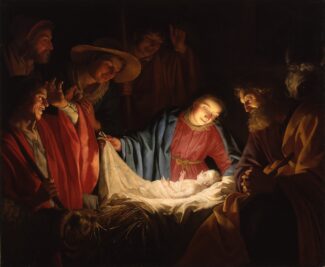
WHAT CHILD IS THIS?

 WHAT CHILD IS THIS?

One of the reasons every Christian who deeply loves Jesus the Christ should be thrilled around Advent and Christmas is that the songs that are sung and heard at this time – in churches and shopping malls – are among the most profound theological statements and descriptions of the glorious Christ ever penned! While we sing Hark! The Herald angels sing! as a Christmas carol, when Charles Wesley wrote it in 1739, he wrote it as a hymn of worship celebrating the incarnation, and saving work, of Christ. Just one year before he penned this poem, Charles had encountered the Redeemer himself. The joy of his own salvation is very obvious in this carol – “God and sinners reconciled” was a description of his own experience of coming to Christ. In another hymn that he wrote that same year he penned these amazing words:

And can it be that I should gain
An int’rest in the Savior’s blood?
Died He for me, who caused His pain?
For me, who Him to death pursued?
Amazing love! how can it be
That Thou, my God, shouldst die for me?
Amazing love! how can it be
That Thou, my God, shouldst die for me?   

Charles Wesley originally sought to follow in his famous brother John’s footsteps. But he failed miserably as a preacher. He was no preacher. Or was he? History now bears witness to Charles Wesley’s greatness as a preacher through hymns. Five years after writing “And Can It Be” and “Hark!” he wrote his masterpiece Carol – “Come Thou Long-Expected Saviour”.

Come, Thou long-expected Jesus, born to set Thy people free;
from our fears and sins release us; let us find our rest in Thee.

Israel’s strength and consolation, hope of all the earth Thou art;
dear desire of every nation, joy of every longing heart.

Born Thy people to deliver, born a child, and yet a King,
born to reign in us forever, now Thy gracious kingdom bring.

By Thine own eternal Spirit rule in all our hearts alone;
by Thine own sufficient merit, raise us to Thy glorious throne.

The high Christology in this Carol is impressive. Charles Wesley has captured Isaiah 7:149:6; and Micah 5:2 in this Carol. Chances are that his brother John had preached multiple sermons on these three texts of Scripture. But chances are that no-one today remembers any of them! But chances are remarkably good that there are tens of thousands of people today who could recite – and even sing – every stanza in Charles Wesley’s “Come Thou Long Expected-Saviour”! And by so doing they would again be meditating on these precious and profound Scriptures about the birth of the promised Messiah who was born to rule the world one soul at a time.

THE HEALING POWER OF TRUTH SET TO BEAUTIFUL MUSIC

William Chatterton Dix was blighted by a darkness that flooded his soul. In his despair he turned to the Bible and trained his heart to consider the Saviour and Deliverer who was born that first Christmas night. He was deeply struck by the opening chapters of Luke’s Gospel and as he fixed his heart on the truth contained in those first two chapters he found the darkness that had shrouded his soul gave way to the light of the truth. In 1865 he penned these words that summed up the truth that had set him free as he came to see that Christmas and Easter are not two gospel stories, but are intrinsically part of the one story, “Nails, spear shall pierce him through,
the Cross be borne for me, for you”. Dix realised that the message of Christmas was not an irrelevancy but was the plea to both the lukewarm Christian and the unforgiven sinner from the God of the Universe to be reconciled, “Good Christian, fear: for sinners here
the silent Word is pleading”. It was Dix’s hope that the profound truth expressed in his carol could open the eyes of the blind, whether they be a “peasant” or a “king”.

What child is this, who, laid to rest,
On Mary’s lap is sleeping,
Whom angels greet with anthems sweet
While shepherds watch are keeping?
This, this is Christ the King,
Whom shepherds guard and angels sing;
Haste, haste to bring Him laud,
The babe, the son of Mary!

Why lies He in such mean estate
Where ox and ass are feeding?
Good Christian, fear: for sinners here
The silent Word is pleading.
Nails, spear shall pierce him through,
The Cross be borne for me, for you;
Hail, hail the Word Made Flesh,
The babe, the son of Mary!

So bring Him incense, gold, and myrrh;
Come, peasant, king, to own Him!
The King of Kings salvation brings;
Let loving hearts enthrone Him!
Raise, raise the song on high!
The virgin sings her lullaby.
Joy! joy! for Christ is born,
The babe, the son of Mary!

William Chatterton Dix, 1865, Glasgow U.K.

There is something powerful about the grace of beautiful music cradling the truth of God’s revelation to mankind in song (Col. 1:6).

¶ And the Word became flesh and dwelt among us, and we have seen His glory,
glory as of the only Son from the Father, full of grace and truth.
For the law was given through Moses;
grace and truth came through Jesus Christ.
John 1:1417

The grace and the truth expressed in the classic Christmas Carols brings great joy to this preacher who strives to produce biblically and theologically informed followers of Christ. It’s one the reasons why this preacher also serves as a gate-keeper over the songs that use at Legana because I know that most of my sermons are long forgotten soon after they are preached yet what we sing on a Sunday rings in our hearts for years to come. This is no doubt why singing, music, hymns, has always been integral to Christian worship (Eph. 5:19). The consolation that us forgettable preachers have though is that most good song-writers were, and are, biblically/theologically informed by faithful preachers. May the magnitude of what we sing this Advent grip our hearts, enlighten our souls and fill us each with joy inexpressible. Merry Christmas.

Your pastor,

Andrew

Let me know what you think below in the comment section and feel free to share this someone who might benefit from this Pastor’s Desk.