Saturday, 28 March 2015


Friday, 27 March 2015
THE SEQUEL TO PRIDE AND PREJUDICE
We all love Pride and Prejudice. I don't mean the lesser known Jane Austin's version! When our original fore-father chose autonomy ("I'll do what I want to do!") rather than what The Maker told him to do, he doomed us all with a genetic code of pride and prejudice. As a result, all of us are controlled by our pride and our prejudice. This mercilessly robs and cruelly deceives us. While Adam wrote the original Pride and Prejudice, Jesus wrote the sequel...
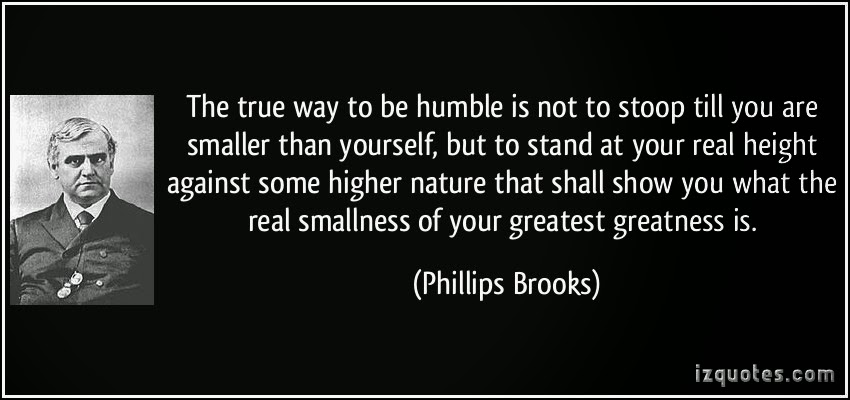
Pride and prejudice led man to lose his true connection with God, with others, with nature and even with himself. Pride still ruins our ability to be honest. Prejudice ruins our openness to learn from others. We now live in a world and among people who are ruled by their pride and by their prejudice. Human pride and prejudices causes terrible damage. It prevents a parent from listening to their frustrated child. It prevents a husband from hearing his wife. It prevents a man from being shown a better way by a younger man.
But the sequel Jesus has written completely undoes the damage wrought by pride and prejudice. His sequel is called Humility and Honour. It causes a person to consider someone's criticism. It helps a person to applaud someone achieving better results than them. It empowers a wife to apologise to her husband.
In the script of pride and prejudice we justify our rebellion. The genetic script tricks us into being overly-independent. In pride and prejudice the hero is always right. In the sequel, the story is quite different. The script of humble and honour has a different plot. It's hero is Jesus who was the perfect example of humility and honour.
Which script are you using for your life? The free and easy script of pride and prejudice prevents a person from achieving their best. Christ's script of humble and honour gives a person the best means of dealing with difficult people, difficult situations, and difficult challenges.
Take my yoke upon you, and learn from me, for I am gentle and lowly in heart, and you will find rest for your souls.
Matthew 11:29
If you choose to live your life from the script of humility and honour you will stand out as someone peculiar. This world doesn't honour the humble. But Christ does. And that's all that really matters.
For thus says the One who is high and lifted up,
who inhabits eternity, whose name is Holy:
"I dwell in the high and holy place,
and also with him who is of a contrite and lowly spirit,
to revive the spirit of the lowly,
and to revive the heart of the contrite.
Isaiah 57:15
The next you are tempted to react in pride when someone is trying to teach you something, read from Christ's sequel instead, and try humility. When you're tired and don't feel like you can keep giving, read from Christ's sequel and consider the One who went all the way to the Cross.
Ps. Andrew
Saturday, 21 March 2015
REPAIRING RELATIONSHIPS
"Woops! It broke. Never mind, I'll get another one." We live in a throw away society. Electronic stores often have "recycle bins" for cell-phones that just a few years ago cost a week's wages to buy and are now considered worthless. When I was growing up as a boy there were "Repair agents" who would fix broken appliances. Not today. We just throw them away and get another one. We are losing the art of repairing. I don't really care about dodgy toasters or kettles, but I do care about the things that are priceless which breakdown and are too easily thrown away. Some of you are in broken relationships and you need repairing.
A brother offended is more unyielding than a strong city,
and quarreling is like the bars of a castle.
Proverbs 18:19
We maintain our gardens, our cars, our machinery, and even our health, but all too often neglect our relationships. The busyness of life, the demands of work, the responsibilities we carry, the financial pressures we face, all undermine our most important relationships unless we take counter-measures to maintain them. The word, repair comes from the Old French re-parare which meant to take back to readiness. In this sense, repairing is the initial stage of maintenance. But as many parents discover, getting back to a harmonious relationship with your child is not an easy matter if the brokenness has gone on urepaired for a while. Any husband can tell you that repairing a broken marriage can be more difficult than scaling to the pinnacle of a great mountain bare-foot. Repairing is a skill, an art, an often elusive hope.
And your ancient ruins shall be rebuilt;
you shall raise up the foundations of many generations;
you shall be called the Repairer of The Breach,
the restorer of streets to dwell in.
Isaiah 58:12
Jesus knows a thing or two about brokenness and repairing. The Prophet Isaiah foretold of Him as 'The Repairer of The Breach' having just prophesied of Him in very rich symbolic language, 'a bruised reed He will not break' (Isa. 53). Who can not be moved deeply when reading of the Christ's final moments on the cross when He felt for the first and only time in all eternity a break in His fellowship with His Father. The immense pain of the breakage caused Him to cry out, "My God, My God, why have You forsaken Me?" And this highlights an oft misunderstood aspect of relationship breakdowns: it's rarely the relationship that breaks first - it's always the fellowship that is broken first. Your relationship with you parents, your children, your spouse, will always be - but when there is no investment of time together, talking, sharing, listening, caring, helping, your fellowship with the one you are related to will suffer.
God has given us each the marvellous opportunity of both relating and fellowshiping with others. We are created to do so. Isolate a person from others and you injure their soul. God created each one of us for a primary relationship with Him from which we are designed to enjoy our most satisfying fellowship. From this centre, we are created to relate and fellowship with others to lessening degrees. The first relationship that the Creator ordained for mankind to enjoy beyond his relationship with God, was a relationship and fellowship with his spouse. "God brought the woman to the man." This first marriage was to be the model from which all subsequent marriages would follow. What God had been to Adam, Adam could now, to some extent, be to Eve. This marriage union was meant to show Adam and Eve the richness of the eternal relationship and fellowship that God Himself enjoyed as Father, Son and Holy Spirit. Our most significant relationships are meant to be our richest.
so that Christ may dwell in your hearts through faith—that you, being rooted and grounded in love, may have strength to comprehend with all the saints what is the breadth and length and height and depth, and to know the love of Christ that surpasses knowledge, that you may be filled with all the fullness of God.
Ephesians 3:17-19
God is the ultimate relationship. His eternal fellowship has never been broken, except once. And the reason it was broken then is the same reason it continues to be broken for others today. Jesus experienced the forsaking of His Father while on the cross. (Forsaking involves ceasing to listen, refusal to answer, being absent.) The Father forsook His Son because Jesus became what the Father can not accommodate: sin (2Cor. 5:21). And neither can you and I. When someone sins against us they break their fellowship with us and damage our relationship with them.
Consider the Trinity (the Ultimate Relationship). It is a relationship that is noted for two goals. Firstly, each member of the Trinity is committed to the glory God. Secondly, the way they glorify God is characterised by holiness. "Holiness" sounds like a boring religious word reserved for monk types. But in reality, holiness is the only means of our greatest delights and pleasure. We are created in the image of a holy God to be holy. And not until a married couple realise that God has gifted mankind with marriage for the same two goals- to glorify God, and to grow in holiness.
But sin is the opposite of holiness. Sin robs a person of being able to give God glory. Sin prevents a person from reaching their potential because it denies a person the beauty and power of holiness. The holiest people are the happiest people. Similarly the unholiest people are the unhappiest people. God gifted marriage to mankind, not for our happiness (the fruit of holiness) but so that a person might more completely glorify God and attain holiness. Marriage as God intended is for your holiness not your happiness. Repairing a marriage means getting back to these two foundational goals. It's the same for repairing any relationship - i) commit your life to living for God's glory and ii) pursue holiness.
¶ Work at living in peace with everyone, and work at living a holy life, for those who are not holy will not see the Lord.
Hebrews 12:14
If you are married, these are the goals for your marriage (God's glory and your holiness). Your job is to help your spouse to give God the greatest glory and deepen their holiness. This is why us husbands should always take the lead in repairing our marriages. We repair intimacy with our wife when we give her attention, listen (actively, reactively and responsively) apologise for the disappointments we have caused, relearn what she wants from us, and take steps to meet her needs (even though they sound like "wants"). Marriages need constant repairing. But it's not just marriages that need repairing. Friendships, brothers, sisters, parents, children, all need repairing.
For any relationship to be repaired, sin must be dealt with. When someone has been sinned against, this sin must be atoned for. If you steal someone's TV, you can atone for it by either returning it or replacing it - and then apologising before asking for forgiveness. You may not have 'stolen' something from the one you're now estranged with, but the principle is still the same: i) You put it right, ii) You apologise (feel the pain you have caused and express regret for that injury), iii) Seek forgiveness. This requires an essential element in the repairing process that is extremely difficult: humility. Of course, each of us need our fellowship with God repaired. We may not have stolen God's TV, but each of us have violated our sacred mandate to bear His image when we lust, covet, hate, blaspheme, or make other things a higher priority than Him. But unlike a stolen TV we can't put these things right with God by returning them to Him. This is why our own efforts - even our own religious efforts - are utterly useless to repair our relationship with God. We need The Repairer of The Breach to take our sin, guilt and shame and bear our penalty. What love! What grace!
When I survey the wondrous cross
On which the Prince of glory died,
My richest gain I count but loss,
And pour contempt on all my pride...
Were the whole realm of nature mine,
That were a present far too small;
Love so amazing, so divine,
Demands my soul, my life, my all.
Isaac Watts, 'When I Survey', 1707
No matter how damaged your relationship is, it can be repaired. Jesus is still The Repairer of The Breach. Look to Him. See His humility in enduring the Cross. Notice His passion for the glory of God and holiness. This is why being in church for worship (giving God glory) and the instruction of the Word (our holiness) is indispensable for our fellowship with God. Like any of our relationships, it is from this basis that we draw the grace to repair all of our other relationships.
Ps. Andrew
Friday, 13 March 2015
What if?
We all do it. Those of us who are prone to make more mistakes than a reasonable person's allowance tend to 'what if' more than most. Due to my my hightened gift of hindsight I indulge frequently in "what if" moments with the adjoining words, "what if I had only..." These whatiferisms are nearly always in a regretful, reflective, nostalgic tone. But what if we looked forward rather than back? What if we dared to dream more than we regretted? What if we took steps to go where we could go rather than pouting about where we can't? What if?
Surely there is a future,
and your hope will not be cut off.
Proverbs 23:18
Rather than, "What if I had only..." and regretting that I cannot change the past, what if I embraced this amazing gift that God has given each one of us: and change our future? None of us has the power to change the our past, but we each have the power to change our future!
Remember not the former things,
nor consider the things of old.
Behold, I am doing a new thing;
now it springs forth, do you not perceive it?
I will make a way in the wilderness
and rivers in the desert.
Isaiah 43:18-19
Rather than, "What if I had only done it this way?", I began to look forward and start asking different question: "What if I will take the necessary steps to achieve this dream?" "What if I will do what has to be done to ensure that I'm no longer haunted by the past?" "What if I will pray bigger, bolder, more outrageously glorious prayers?" (Eph. 3:20 ¶ "Now to him who is able to do far more abundantly than all that we ask or think, according to the power at work within us")Then how different might my future look compared with my past?
Therefore, if anyone is in Christ, he is a new creation. The old has passed away; behold, the new has come.
Second Corinthians 5:17
What if I will refuse to accept that my past necessarily has to be the only thing that defines my future? What if we as a church began to pray together as if we really believed the hope that Ephesians 3:20 presents to us - that our God is able to do far more abundantly than anything we could ask for, think or imagine? What if?
¶ And he who was seated on the throne said, "Behold, I am making all things new." Also he said, "Write this down, for these words are trustworthy and true."
Revelation 21:5
Ps. Andrew
Thursday, 12 March 2015
WHAT MOST IN THE MEDIA DON'T KNOW ABOUT MARRIAGE
I've been Marriage Celebrant for over two decades. I've also been married for nearly three decades. I understand about marriage - both legally, and emotionally. When I hear the 'arguments' put forward for redefining marriage I find it frustrating that what is often just sound-bites and slogans goes almost completely unchallenged by those in the media. Here's some things that most in Media do not know about marriage.
WHAT PROPONENTS OF SAME-SEX MARRIAGE WANT. . .
Proponents of Same Sex Marriage (“SSM”) are passionate about equality, tolerance and respect for all people. They are deeply hurt by the attitudes of others who are too often unkind toward them. Sometimes those who defend the institution of marriage as exclusively being the union of a man and woman, do so in an ungracious and aggressive manner.
Legislatively redefining marriage to encompass same-sex couples is also a powerful statement that is hoped to bring a sense of validation and endorsement to those who currently feel deprived of this. In this sense, SSM is as much a statement of our society’s value of equality, tolerance, fairness, non-discrimination, and inclusiveness. In fact, arguably, this is actually what SSM is fundamentally about. And because any decent, civilised society is so – because those values are at their core – it sounds hateful, intolerant, and bigoted, if anyone in that society opposes this highly symbolic legislative statement!
THE INTENT OF MARRIAGE. . .
But the Institution of Marriage was never intended to be a symbolic ambassador for any political agenda. Neither was it meant to be a government’s – or even a society’s – endorsement of a couple. The government has no interest in its citizens’ various social partnerships – none! You can form a partnership with a fishing buddy, a tennis doubles partner, a car-pooling colleague, and the government has no interest. But when two people intend to form an exclusive, life-long union with the aim of having and/or raising children, the government and society has learned that it must take an interest. This type of union must have individuals (not couples, for the Marriage Act can only apply to individuals) comply with the Act’s five criteria in order for the marriage to proceed (The five criteria necessary for proceeding with a marriage are summed up in the acronym, GRAPE -Gender, Relationship, Age, Person, Eligibility). This interest is designed to protect those who are historically the most vulnerable to abuse – women and children – and this is one of the two reasons why Governments have any interest in regulating marriage in the first place. And in doing so, Legislators did not have to define marriage – they simply describedit and reflected what is the case in reality, that as a group, as a rule, and by nature, it requires the literal wedding (a biological term – not a ceremonial term) of a man and a woman for a child to result. And all the social data states that a child is raised best when raised in a loving home by their married mother and father (cf. Children In Three Contexts in the Journal: Australian Children Vol. 21, No. 3, pp. 23–31).
But the Institution of Marriage was never intended to be a symbolic ambassador for any political agenda. Neither was it meant to be a government’s – or even a society’s – endorsement of a couple. The government has no interest in its citizens’ various social partnerships – none! You can form a partnership with a fishing buddy, a tennis doubles partner, a car-pooling colleague, and the government has no interest. But when two people intend to form an exclusive, life-long union with the aim of having and/or raising children, the government and society has learned that it must take an interest. This type of union must have individuals (not couples, for the Marriage Act can only apply to individuals) comply with the Act’s five criteria in order for the marriage to proceed (The five criteria necessary for proceeding with a marriage are summed up in the acronym, GRAPE -Gender, Relationship, Age, Person, Eligibility). This interest is designed to protect those who are historically the most vulnerable to abuse – women and children – and this is one of the two reasons why Governments have any interest in regulating marriage in the first place. And in doing so, Legislators did not have to define marriage – they simply describedit and reflected what is the case in reality, that as a group, as a rule, and by nature, it requires the literal wedding (a biological term – not a ceremonial term) of a man and a woman for a child to result. And all the social data states that a child is raised best when raised in a loving home by their married mother and father (cf. Children In Three Contexts in the Journal: Australian Children Vol. 21, No. 3, pp. 23–31).
THE NATURE OF MARRIAGE. . .
An essential social ingredient in this parenting union has long been observed: that this union provide that highest form of emotional security for each other and their children whom they birth and raise. This union derives its maximum effectiveness when the individuals entering into the marriage union do so voluntarily, to the exclusion of all others, for life, with a view to having and/or raising their children. This is not so much the definition of marriage as it is the description of marriage. Thus, marriage does not submit to redefinition – in much the same way that a shape doesn’t either. A circle is not a circle because it has been defined that way. Things like circles are best described rather than vainly attempting to arbitrarily define them. Any effort to redefine what a circle should now be is completely disregarded by the circle. Marriage is something. It does not invite redefining.
An essential social ingredient in this parenting union has long been observed: that this union provide that highest form of emotional security for each other and their children whom they birth and raise. This union derives its maximum effectiveness when the individuals entering into the marriage union do so voluntarily, to the exclusion of all others, for life, with a view to having and/or raising their children. This is not so much the definition of marriage as it is the description of marriage. Thus, marriage does not submit to redefinition – in much the same way that a shape doesn’t either. A circle is not a circle because it has been defined that way. Things like circles are best described rather than vainly attempting to arbitrarily define them. Any effort to redefine what a circle should now be is completely disregarded by the circle. Marriage is something. It does not invite redefining.
CONCERNS INDIVIDUALS NOT COUPLES. . .
Marriage doesn’t grant anything to couples – rather, it requires something of individualsand these requirements are applied equally, fairly, and justly, to every individual (irregardless of gender or orientation). Marriage is not the privilege granted to lovers. Two individuals can love each other without the regulatory consent of Government. In fact, there is no mention of love being a pre-requisite for marriage in the Marriage Act (although love is usually the vowed subsequent responsibility of those who marry). The idea that just because two people love each other they should be allowed to marry and similarly to forbid them this “right”, is to “treat certain people unfairly” is a furphy of enormous magnitude – because this is neither the criteria now, nor even the existing rightof a man and woman who do. This argument for SSM is a classic ‘Straw-man’ argument.
Marriage doesn’t grant anything to couples – rather, it requires something of individualsand these requirements are applied equally, fairly, and justly, to every individual (irregardless of gender or orientation). Marriage is not the privilege granted to lovers. Two individuals can love each other without the regulatory consent of Government. In fact, there is no mention of love being a pre-requisite for marriage in the Marriage Act (although love is usually the vowed subsequent responsibility of those who marry). The idea that just because two people love each other they should be allowed to marry and similarly to forbid them this “right”, is to “treat certain people unfairly” is a furphy of enormous magnitude – because this is neither the criteria now, nor even the existing rightof a man and woman who do. This argument for SSM is a classic ‘Straw-man’ argument.
We want everyone in our society to be treated fairly, equally, and appropriately and not to be subjected to hate or spiteful intolerance. But politicising marriage and treating it as political tokenism is not the means to this end. We do not need to endorse the politicising of marriage in this way for these values to be demonstrated in our society.
Dr. Andrew Corbett
Legana, Tasmania
Legana, Tasmania
Friday, 6 March 2015
CLOSE YOUR EYES AND SEE
How do people see you? It was the English poet, Blake (1757-1827), who said that the problem with most people is that they see with their eyes, rather than see through their eyes. He was meaning that people don't see all there is to see because they only see what they think they see. It was the deaf and blind Helen Keller who said, "There are none so blind as those who will not see!" Ordinarily Blake and Keller did not have much in common except when it came to the art of seeing. There is more to see than what our eyes show us. Jesus had something to say about how we see - that if you can grasp it, will change the way we view everything.
And Jesus, looking at him, loved him, and said to him, "You lack one thing: go, sell all that you have and give to the poor, and you will have treasure in heaven; and come, follow me."
Mark 10:21
When Jesus was "looking at him" what did He see that others couldn't? Most people saw a very successful wealthy young man. But God-in-the-Flesh saw an empty, lonely, hurting young man who was a slave to his 'things'. Rather than this young noble owning lots of things, Jesus saw that lots of things owned him. Sometimes we might see an angry young person who is hostile toward anything to do with God, the Bible, and in particular, Christianity. But I wonder who Jesus sees? Perhaps He sees a very hurt young child who grievously resents their inability when they were too vulnerable to resist their attacker who hid behind the subterfuge of a false religion they called, 'Christianity'. I wonder if Jesus sees this young person taking their hatred toward their victimiser out on "the Church" - and in particular Church leaders - and less particularly, Christians in general?
Then turning toward the woman he said to Simon, "Do you see this woman? I entered your house; you gave me no water for my feet, but she has wet my feet with her tears and wiped them with her hair.
Luke 7:44
Just before Jesus was executed, a woman with a reputation crashed a dinner party where Christ was a guest. She created a scene when she poured the proceeds of her profession over the feet of her Maker. The looks of disgust were probably no greater than the ones coming from Simon, the host. While Simon and his distinguished guests were glaring at this woman, Jesus asked him, "Simon, do you see this woman?" We do this all the time too. We think we see people. We think we've got them figured out. We think we know what a person is like. While Simon was staring scornfully at this woman, Jesus was seeing Simon. Despite Simon's religious hypocrisy, Jesus saw him as a broken man. You see, Simon had a secret that he was hoping no-one would ever find out. Jesus knew his secret. When these men saw a woman who had a 'name', they didn't see what Jesus saw. Jesus saw a little girl. This little girl may have been like other little girls who have been treated like objects to gratify the evil lusts of sick men. These violated girls grow to involuntarily believe that love equates to sex (even though they never actually do find the kind of unconditional acceptance and commitment from any man that would even begin to be constituted as "love"). The woman that Jesus saw was a gravely sorry lady who had previously had a 'chance' meeting with the Saviour. In that moment, she was both seen and loved for the first time. And she was forgiven. Not the "don't-worry-about-it" type of forgiven, but the "even-though-you've-hurt-Me-maliciously-and-repeatedly-and-deserve-to-be-judged-appropriately-I-forgive-you-and-release-you-from-your-debt-to-Me" type of forgiveness.
Sometimes our eyes are our biggest obstacle to truly seeing. It's long been known that sometimes the best way to see the world is to close your eyes. This world of problems looks different after we close our eyes and pray.
Our eyes can tell us that our situation is hopeless. Our eyes can tell us that there is no-one who can help us. Our eyes can tell us that God has abandoned us. Our eyes can tell us that the Enemy is getting the upper hand. It's in these time that we really need to see better.
for we walk by faith, not by sight.
Second Corinthians 5:7
When I close my eyes I see a church full of worshipers. I see a city with thriving vibrant churches. I see a state where politicians honour God in both public and private. Maybe the only way we will see this with our eyes open though, is if more of us close our eyes!
Ps. Andrew
Friday, 27 February 2015
I'MPATIENT
Waiting is always the key to success. No surprise then, that the masters of waiting are the richest people in the world. People who have discovered the potent delights of waiting enjoy what evades most. Waiters have found that far more is achieved when they wait than if they rush. They have learned that there is often a dire difference between taking the best available option and waiting for the best option. If you wait a moment, I'll explain what they know.
Indeed, none who wait for you shall be put to shame;
Psalm 25:3a
About seven years ago I started a project I thought would take a few months to complete. As I undertook this, it soon became apparent to me that this Boreham Project - to make a documentary series of one of the greatest preachers and essayists of all time - would take a little longer than three months. After six years, four parts are completed (but still have to be re-edited and closed-captioned) and there remains one more concluding part to make. I have travelled to Victoria, New South Wales, New Zealand, and Canada to research, film and interview for this project.
¶ Be patient, therefore, brothers, until the coming of the Lord. See how the farmer waits for the precious fruit of the earth, being patient about it, until it receives the early and the late rains.
James 5:7
Along the way to assembling this project, I have had to deal with several crises and other unexpected issues. These included taking on the leadership of one of Australia's premier regional Christian Radio Stations (WayFM), the increased demands of leading ICI Theological College (which has quadrupled in student population over the last few years), and an invitation to be a founding National Leadership Team member of the Acts 2 Alliance. None of these are diversions from my God ordained mission - they are an expression of it. Added to this has been increased number of weddings I've been invited to do over the past few years (even though as these couples discover I don't do good weddings because my focus with them is about their marriage not so much about just the first day of their marriage) and each couple requires around 9 months of preparation involving monthly, fortnightly and weekly meetings as we approach their wedding dates. And lately I've been involved in a city-wide effort to hold a majorfestival at Easter. My Boreham Project has had to wait. In the midst of this waiting I discovered an ancient secret.
So Jacob served seven years for Rachel, and they seemed to him but a few days because of the love he had for her. Genesis 29:20
Waiting is proportional to value. I must confess that I do not know if this was ever intended to be a secret. But it must be a secret because so few people know it. We live an instant-messaging, fast-food, microwave world. This impatience and tendency to rush has even impacted relationships. Such bizarre practices as "speed dating" may be amongst the most innocent expressions of this impatience while domestic violence and forced divorce are undoubtedly among the most damaging effects. It seems that the world is not prepared to wait anymore.
The modern reader is shocked by such Old Testament statements as Jacob waiting and serving seven years for the opportunity to marry the woman he loved. The secret to waiting is that the more valuable the prize the more prepared one is to wait for it. Jacob prized Rachel. His waiting seven years "seemed to him but a few days" - because to him, the prize was great. Impatience always diminishes something's value. Always. In a rare moment of Ecclesiatical correctness, Solomon shares the secret this way-
Better is the end of a thing than its beginning,
and the patient in spirit is better than the proud in spirit.
Ecclesiastes 7:8
What are you waiting for? This is often the world's summons to not wait. But I wonder if we shouldn't have a short list ready to answer the question? What are you waiting for? Knowing that the greater the wait the greater the value of the prize, I think more of us should wait up. This year marks our twentieth anniversary at Legana. Before I commenced as the pastor of Legana, the Lord spoke softly into my heart about His plans for our church. Even though we only had 17 members when we started, thousands of dollars of debt, and no facilities, the Lord showed me a church of over 300 worshipers making a "significant" difference in our State. I honestly thought the Lord would do this in just a few months or maybe, at the outside, a few years. I have too long been impatient about most things. Now, twenty years later we are beginning to see the fulfilment of this softly spoken word. The wait will have been worth it.
The ancient secret is: the greater the wait, the greater the value of the prize. This is why the people who wait best are the wealthiest people in the world - and in a far lesser way, but not too infrequently, they also become wealthy financially. F.W. Boreham tells the story of travellers who stayed some nights in a English manor. They had heard that the surrounding forests was home to some of the most exotic English wildlife. Despite their best efforts, they had seen none. As they told of their disappointment over the manor's grand breakfast table, the son of the laird quietly interjected that he had seen several very rare species of this wildlife not far from where these travellers had been shortly before they had been there. They asked him how this possible. He said that it was important to sit very still and wait. They assured him that this is indeed what they had done. He then said, "Well after the fourth or fifth hour you should have seen some of these rare animals." Their problem was never a lack of the prized animals but of their relative impatience to see them. The greater the value of the prize, the greater the wait to possess it. In light of this waiting secret, Scriptures profoundly tell the worshiper of God to-
Be strong, and let your heart take courage,
all you who wait for the LORD!
Be still before the LORD and wait patiently for him;
Psalm 31:24; 37:7a
Scripture tells the worshiper to wait for (on) God more than anything else. Because the value of the prize is so limitlessly great, the wait through delay, adversity, trial, obstacle, or disappointment is insignificant in comparison - it seems "but a few days". The apostle Paul called these kind of circumstances during our worship wait for God, "momentary light affliction" (2Cor. 4:17 "For this light momentary affliction is preparing for us an eternal weight of glory beyond all comparison"). God is infinitely worth the wait.
"but they who wait for the LORD shall renew their strength;
they shall mount up with wings like eagles;
they shall run and not be weary;
they shall walk and not faint."
Isaiah 40:31
If you're impatient, learn to wait. Of course, while waiting certainly requires patience, it doesn't idleness (just ask any professional waiter at a restaurant). While we wait, we are trusting. While we wait, we are resting. While we wait we are serving. We do this for a prize. For me, I'm waiting to complete my Boreham project. I'm waiting to see all that God has for our church in the time that He has us here. I'm waiting to see how my children blossom. I'm waiting to see our State turn to Christ. What are you waiting for? Please wait.
Ps. Andrew
Friday, 20 February 2015
DID YOU HEAR?
 As you know, you have three sets of ears. But what you may not have heard is that not everybody knows how to use them. You don't have to be deaf to not hear - you just have to not listen. Even though many people have ears on the sides of their heads that are in reasonable condition, they may not use them particularly well. This is called selective hearing. But selective hearing not only effects the outermost ears, it can effect a person's inner ears as well.
 ¶ Wisdom cries aloud in the street,
in the markets she raises her voice;
at the head of the noisy streets she cries out;
at the entrance of the city gates she speaks:
Because I have called and you refused to listen,
have stretched out my hand and no one has heeded
Proverbs 1:20-21, 24
Our second set of ears are not really "ears" because they involve our eyes as much as our ears. Hearing what someone is really saying requires seeing, looking, noticing, asking, and remembering.
¶ Know this, my beloved brothers: let every person be quick to hear, slow to speak, slow to anger;
James 1:19
 Even though we all have these second ears, it takes practice and training to learn how to use them. It seems that women are more adept at this form of listening. But when a man is introduced to his second ears it opens up a whole new way of seeing the world to him. It helps him to understand what his wife has really been saying to him. This is one of the most components in pre-marriage counselling when a couple is introduced to the five levels of communication (which start with clichés, then secondly facts, and so on). When we get to Level 3 communication, we introduce a new set of listening skills to the couple. This is a three stage process of listening. Stage 1 is "Active Listening". Stage 2 is "Reactive Listening". And Stage 3 is "Responsive Listening". Each stage is sequential. That is, you cannot do Stage 3 listening unless you've done Stages 1 and 2. This is one of the most difficult phases of the pre-marriage preparation for a couple. It requires learning to hear what they previously thought was criticism as heart. Reactive listening involves posture, mood, engagement, and openness. Have you ever tried to tell someone something they just wouldn't hear? Do people find it difficult to be frank and open with you? If you learn to be a positively reactive listener (give verbal cues that you're listening, smile with your eyes as they talk to you, don't interrupt them, don't be defensive, thank them for the courage and willingness to share with you) you may well find that more people want to talk with you.
And his ears were opened, his tongue was released, and he spoke plainly. Mark 7:35
 HEAR HEAR
What stops us from hearing with our first two sets of ears? Even though your physical ears work adequately, you can zone out and not hear what someone is saying to you (this is a common complaint that wives have with their husbands). We might have a lot on our minds. We may be stressed. We may be disinterested. Even though someone is talking clearly and directly to us, we may not be hearing them. Listening with your first set of ears requires concentration and this requires practice.
Even though we hear the words and sentences of the one talking to us, we can still mis-hear or even not hear what is really being said. This requires what we call in pre-marriage counseling, Level 3 hearing. This is where you begin to listen to other person's heart. In the West we automatically correlate heart with emotions. But in the Ancient World, the heart was where the mind resided. Often times someone is sharing their heart when they sound opinionated. It's easy to hear arrogance and miss that they are telling you they trust you enough to share their opinion with you.
But Jesus, knowing their thoughts, said, "Why do you think evil in your hearts?
Matthew 9:4
 Hearing someone's heart does not come naturally. It might be possible to develop it without some training, but like anything learned the hard way, it would have to be learned the hard way. You could start by asking the one talking to you things like, "Help me to understand what you're really saying." "Are you saying...?" By restating to someone what you heard them say you are learning how to hear with your first two sets of ears. It's with your second set of ears that you hear and take note of what someone isn't telling you. These ears are used to hear hesitation. These ears are used to detect sadness, loneliness, excitement, fear, or care. But we all have a third set of ears.
HEAR HEAR HEAR
If our first two sets of ears require training and practise, our third set probably does as well. These are our spiritualears. We all have them - not just 'religious' people. I'm a professional communicator. I spend my life communicating with people. Despite it being my profession and despite how hard I work at it, I am still not heard by some. Even though I am speaking clearly and even though there is nothing obstructing the sound of my voice from being heard, and though my language and vocabulary are quite understandable, people still misunderstand me at times and therefore do not truly me. Successful communication involves two dynamics: what is communicated and what is communicated. To put it another way- what is intended to be communicated, and what is actually communicated.
It is one of the most profound truths a person can experience. God speaks. You don't need to take a seminar on hearing from God because when God speaks to you the way we see Him often speaking to someone in the Bible, He was clearly heard by those He intended to communicate with. This was almost always at moments of 'Redemptive History' (those moments involving people and actions which played an indispensable role in God saving the world through Christ). Most of the fellowship that people enjoyed with God was generally far less dramatic and usually subtle. I suspect that most of the fellowship between people and God during Bible times is not described in the Scriptures.
And you said, 'Behold, the LORD our God has shown us his glory and greatness, and we have heard his voice out of the midst of the fire. This day we have seen God speak with man, and man still live.
Deuteronomy 5:24
We have recently been reminded that Daniel and all the wise men of Babylon faced imminent death - unless one of them could tell Nebuchadnezzar his dream and its interpretation. When Daniel heard of this dire situation he asked his three friends to pray for him. He then went into deep prayer, seeking God for revelation. (God normally 'speaks' by revealing insights, or illuminating His Word, see 1Cor. 14:26, 30; 2Cor. 12:1.)
"Whoever is of God hears the words of God. The reason why you do not hear them is that you are not of God."
John 8:47
People who say that when God speaks there is always absolute clarity and certainty about what God has said, also say that there is nothing a person can do to be more aware of what God is saying. But there too many injunctions in the Scriptures to seek the Lord for this to always be the case.
But from there you will seek the LORD your God and you will find him, if you search after him with all your heart and with all your soul.
Deuteronomy 4:29
¶ I sought the LORD, and he answered me
and delivered me from all my fears.Psalm 34:4
And without faith it is impossible to please him, for whoever would draw near to God must believe that he exists and that he rewards those who seek him.
Hebrews 11:6
It is with our third set of ears that we hear God. For most of us, our biggest challenge will be learning how to use our first two pairs of ears. (It's uncanny how many people improve their spiritual ears after they've learned to use their first two pairs of ears). In the meantime, if you want to develop your spiritual ears, learn what the voice of God sounds like. Reading the Bible, attending worshipfully to the public preaching of God's Word, and regularly fellowshiping with fellow believers in an intentional small group, all help our spiritual ears to discern the voice of God with our spiritual ears. Do you hear me?
If anyone has an ear, let him hear:
Revelation 13:9
Ps. Andrew
Friday, 13 February 2015
10 Yards
His beloved home-city lay in ruins. The effects devastating conquest by its invaders had taken its toll. And to make matters worse, those who had been sent there a few years before with the task of repairing the city had despaired at the enormity of the task and done nothing. But now he had an opportunity to achieve in a few weeks what these others had failed to do in years. He succeeded. His success was due entirely to his "10 yards" strategy.
And they said to me, "The remnant there in the province who had survived the exile is in great trouble and shame. The wall of Jerusalem is broken down, and its gates are destroyed by fire."
Nehemiah 1:3
When Nehemiah arrived in Jerusalem, he found the city in utter ruins, the Temple gone, and their city walls demolished.
I said to the king, "Let the king live forever! Why should not my face be sad, when the city, the place of my fathers' graves, lies in ruins, and its gates have been destroyed by fire?"
Nehemiah 2:3
The task looked hopeless because the problem seemed too far gone. Many people feel like this with the problems they face too. But Nehemiah didn't the situation only like this. He saw the problem as a leader sees what most people see as an overwhelming problem. A high-level leader, like Nehemiah, sees overwhelming problems as a series of smaller problems. Rather than just seeing the miles and miles of problems, a seasoned leader has developed the ability of seeing these problems in a series of "10 yards" of problems. Inexperienced leaders who are daunted by the tasks before them will often make the mistake of delegating "miles and miles" of problems, and then wondering why competent help is so hard to find. Nehemiah turned up at the site of the former Jerusalem and assigned each family a task just 10 yards in length.
¶ Then I said to them, "You see the trouble we are in, how Jerusalem lies in ruins with its gates burned. Come, let us build the wall of Jerusalem, that we may no longer suffer derision." Nehemiah 2:17
"I CAN DO THAT!"
When Nehemiah delegated the task of rebuilding the walls and gates of Jerusalem, he went first to those who were leaders already. Even though these people weren't builders, he had them model to the others what it was going to take to rebuild the walls and gates of Jerusalem.
¶ Then Eliashib the high priest rose up with his brothers the priests, and they built the Sheep Gate. They consecrated it and set its doors. They consecrated it as far as the Tower of the Hundred, as far as the Tower of Hananel.
Nehemiah 3:1
Wise parents with a growing family soon learn the "10 yard" technique with their children. Rather than assigning them to miles and miles of tasks (which cause most children to despair and shut down) they assign to them just "10 yards". When Jed is just two years old, his 10 yards might look like putting the salt and pepper on the dinner table for the family meal. His older sister Merga, aged four, has her 10 yards - to set the cutlery on the table. Her six year old brother Selwyn has his 10 yards to do by putting the glasses and drinks on the table. His eight year old sister Myrtle has the 10 yard task of clearing the table between courses and at the end of the meal. Her ten year old brother Reginald-James III does his 10 yards by washing the main course dishes and cutlery. His twelve year old sister Wilhelmina has to do her 10 yards by drying the main courses utensils. Her sixteen year sister Franscesca-Fern-Florantina has her 10 yards done when she washes up the dessert and drinking utensils while her fourteen year old brother Augustus-Archibald enjoys drying them up as his 10 yards. For the sake of time (and out of respect to the oldest child of this family who is in therapy for the trauma caused by his triple hyphenated European rhyming name) I will avoid detailing what the next five older children in this family have to do as their 10 yards, suffice to say, this family enjoys a pleasant nightly meal together and basks in the joy of their teamwork in making it happen.
When Nehemiah presented the task to each family in Jerusalem to rebuild just 10 yards of the wall, we could reasonably guess that many of them who had previously been over-awed by the enormity of the project could say, "I could do that!"
BREAK DOWN YOUR PROBLEMS INTO 10 YARDS
Nehemiah quickly got the job done of rebuilding the walls and gates of Jerusalem. He laid the foundation for the Temple to be rebuilt and for the spiritual revival of Israel after he organised for Ezra to come to Jerusalem. It's often very practical people who pool their 10 yards of effort together with others who are pooling theirs that enables great and seemingly impossible things to happen. You may be facing a problem that seems beyond you. You may not know where to start and indeed be afraid to start (being easily distracted by other things so that you never make a start is often a clue that this is what is happening). Try breaking your problem down into 10 yard segments. Instead of looking for someone to come and rescue you and solve your problem for you, invite others who offer to help by giving them just a piece - 10 yards - of the problem.
In this light, from God's perspective, every local church is "10 yards" of the solution. And within each local church is the potential to make their 10 yards count if people within that church are given a clear model of what it looks like to repair just 10 yards.
¶ So we built the wall. And all the wall was joined together to half its height, for the people had a mind to work.
Nehemiah 4:6
In our church, 10 yards might look like this -
1. Pray 10 minutes a week for our church - particularly, 1 minute a day asking God to bless, keep, grow, protect. our church, and especially our leaders. Ask God for new souls to be saved. In addition to this, take 2 minutes on a Saturday night to pray for the following day's services. On Sunday morning before the church service pray for our church for an extra minute.
2. Give 10% - your giving makes a hug difference to what we are doing. It enables us to punch above our weight. It provides the resources for us to take the Gospel each week into hundreds of homes Live around State.
3. Say hello to 10 people each Sunday - by all means catch up with your established friends during our Sundays together, but could you say hello to another 10 people as well? Look them in the eye, smile at them and say, "Gidday, my name ... What's yours?"
Our city is just 10 yards away from being touched with the Gospel for eternity. You don't have to win or reach out to all our city. But you can touch just 10 yards of it.
Ps. Andrew
Subscribe to:
Posts (Atom)