WHY JAMES GUNN’S SUPERMAN IS NOT SO SUPER!
I was really looking forward to seeing James Gunn's Superman (2025). I bought two pre-release tickets weeks before the opening night to view it at the Hoyts, Forest Hill (the one with the Gold Class electric recliner seats). I left the launch screening on Thursday July 10th utterly disappointed — and I really didn’t want to be.

WHAT I LIKE ABOUT THE SUPERMAN STORY
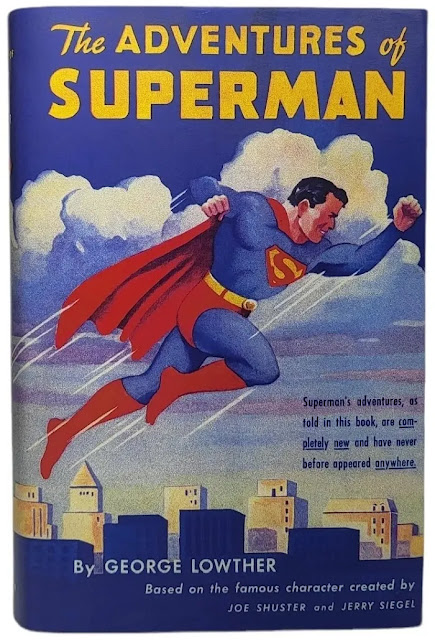
The two creators of Superman were two Jewish teenagers, Jerry Siegel and Joe Shuster, both born in 1914. Their creation of a 'superman' was inspired by their challenging experiences as immigrants in the United States who also had to endure the harshness of the rising global antisemitism.
Siegel and Shuster could not afford to go to college, but found financial success by creating comics (including increasingly popular newspaper comic strips). In the early 1930s they began drawing on their Jewish heritage and the aspirations of their messianic hope. By 1933, they published their first Superman comic strip - presenting to the world an ultra-immigrant (from the planet of Krypton), who came to America as a baby, who looked like any other American, but was secretly different because of His Krypton physiology. Surely if the world could accept and embrace such a character then surely Americans could open their hearts also to their Jewish immigrants.
The creators of Superman clearly defined the world of Superman. It was our world. But like the fiction of C. S. Lewis’s mythopoeia (his Trilogy and Septet), Siegel and Shuster created a “Supposal”. That is, they framed their Superman story in an imaginative way founded on the on the idea:
“Suppose there was a planet within our universe in which its people resembled earth’s human beings - yet had certain other supernatural powers or abilities. Suppose that for some reason this planet was about explode and the parents of a newborn child were able to send their child on a journey to our earth where he would be able to blend in but use his powers for great good.”
Siegal and Shuster have the space-craft with the infant Kal-El crash-land on a farm near Smallville, Kansas, owned by John and Martha Kent. As it turns out, the effect of the gravity of earth is something that the young Kal-El is able to manage so that he can fly at will. The radiation of the earth's Sun has the effect of giving Kal-El extraordinary strength. This was something that his Father, Jor-El (note the Hebrew implications of these names — “El” means 'God' or 'mighty one' in Hebrew) anticipated and sent his son, Kal-El, to earth with a message embedded into a crystal telling his son that he was to be a “savior of the helpless and oppressed” to the people of earth.

SUPERMAN AS A JEWISH MESSIANIC-LIKE HERO
I like the idea of a super-hero who selflessly helps the helpless and rescues the oppressed in virtual anonymity thanks to his Clarke Kent disguise and has hypno-glasses (which hinder people from perceiving that Clark Kent was Superman). There are many parallels between this original concept of Superman and Jesus Christ! Jesus the Christ, the True Desire and Hope of Israel, was omnipotently strong - yet looked ordinary (note Isaiah 53:1-2). Jesus was the epitome of humility, like Siegel and Shuster had imagined the Messiah to be and had their Superman exhibit. And these traits are why I was so disappointed with James Gunn's 2025 Superman.
WHAT I DID NOT LIKE ABOUT THE 2025 GUNN SUPERMAN
The meta-narrative of James Gunn’s Superman over-looked several non-negotiables in fictional story-telling. The first of these is that fictional stories, especially mythopoeic stories, require a 'world' where there are rules. Unlike the world of Siegal and Shuster, the world in which James Gunn’s Superman is not set in this world. It is part of a multiverse - rather than our universe. In our universe there are governing physical laws. For example, “ex nihilo nihil fit” - from nothing, nothing comes. Yet in James Gunn's multiverse, Lex Luther not only creates things apparently out of nothing, he creates entire universes from out of nothing and does so in a previously non-existent dimension as well.
Secondly, James Gunn's Superman was not a model of moral excellence. Perhaps we could overlook the foul language that he used (although this is the first time that anyone playing Superman has used expletives). This is the first time a Superman has killed human beings. This is the first-time that a Superman has spouted ontological nonsense about what a human-being is - and virtually renounced his own ontological identity (this happens in the final exchange between Kal-El and Lex Luther.
Thirdly, then there is the introduction of Kal-El’s cousin, Kara-Zor-El. She is the epitome of a wild-child who is unable to get drunk on earth and is now forced to travel to a planet with a red-sun which is the only place in the multi-verse where she can get drunk! It seems to me that James Gunn’s Superman, and his Supergirl cousin, are a far cry from what Jerry Siegel and Joe Shuster had envisaged for their concept of Superman — especially their Jewish messianic hope.

CONCLUSION
Superman is my favourite superhero. As a Christian thinker who has an appreciation for the redemptive use fictional literature and especially mythopoeia, I would like Hollywood to give more consideration to superheroes who reflect Jesus Christ - especially since Christ was the Ultimate Superhero! I would also like to encourage other preachers to consider how culture's ache for a virtuous hero is actually an intuitive ache to be reconciled to God the Father through the work of the eternal divine son of God.
Have this mind among yourselves, which is yours in Christ Jesus, 6 who, though He was in the form of God, did not count equality with God a thing to be grasped, 7 but emptied Himself, by taking the form of a servant, being born in the likeness of men. 8 And being found in human form, He humbled Himself by becoming obedient to the point of death, even death on a cross. 9 Therefore God has highly exalted Him and bestowed on Him the name that is above every name, 10 so that at the name of Jesus every knee should bow, in heaven and on earth and under the earth, 11 and every tongue confess that Jesus Christ is Lord, to the glory of God the Father.
PHILIPPIANS 2:5-11
Amen.


