Saturday, 9 April 2022

THE WIND BLOWS WHERE IT WISHES - SO IT IS WITH THE SPIRIT


This week I have heard of yet more stories of people who had no knowledge of Christianity as they grew up, yet had an almost sudden conversion to Christ. This has included the stories of several Muslims (now ‘former Muslims’) who knew nothing to very little about Christianity, and had always been taught that Islam was the one true religion, who then heard a Christian explain the gospel and were then supernaturally converted. (Several of these Islamic converts to Christ also had supernatural dreams where they claimed that Jesus appeared to them!) I also heard of an atheist scientist who been taught that science could explain away the need for a God/god, who then heard the gospel and was resoundingly converted. The other story I heard this week was closer to home and involved a young lady who had grown up in an ‘atheist home’ where her parents were actually hostile to religion and particularly forbad her from anything to do with Christianity. Years later, her growing curiosity led her into a church one Sunday morning. She heard the gospel and was converted to Christ. Each of these stories confirm what Jesus taught about the power of the gospel and the mysterious work of the Holy Spirit in unlikely people being like the invisible force of the ‘wind’.

“The wind blows where it wishes, and you hear its sound,
but you do not know where it comes from or where it goes.
So it is with everyone who is born of the Spirit.”
John 3:8


THE WIND OF THE SPIRIT
BRINGS UNLIKELY CONVERSIONS

When Jesus spoke these words about the transforming work of the Holy Spirit in a person being like the wind, He was talking to the Teacher of Israel, Nicodemus.

¶ Now there was a man of the Pharisees named Nicodemus, a ruler of the Jews.
This man came to Jesus by night and said to him, “Rabbi, we know that you
are a teacher come from God, for no one can do these signs that you do
unless God is with him.”
John 3:1-2
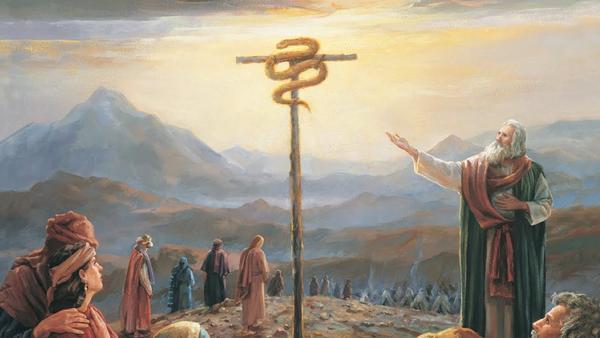
Num. 21:5 And the people spoke against God and against Moses, “Why have you brought us up out of Egypt to die in the wilderness? For there is no food and no water, and we loathe this worthless food.” Num. 21:6 Then the LORD sent fiery serpents among the people, and they bit the people, so that many people of Israel died. Num. 21:7 And the people came to Moses and said, “We have sinned, for we have spoken against the LORD and against you. Pray to the LORD, that he take away the serpents from us.” So Moses prayed for the people. Num. 21:8 And the LORD said to Moses, “Make a fiery serpent and set it on a pole, and everyone who is bitten, when he sees it, shall live.” Num. 21:9 So Moses made a bronze serpent and set it on a pole. And if a serpent bit anyone, he would look at the bronze serpent and live.Nicodemus was used to viewing God as the Law-Giver, and religion as a matter of keeping God’s Laws. But Jesus talked to him about God as a Father who gave His only Son, with whom anyone who simply looked (KJV, Isa. 45:22, ESV “turned”) to Him could be spiritually healed. Just as Moses had lifted the bronze serpent in the wilderness and all the poisoned people had to do was to look to this bronze serpent on the pole, so, anyone who would look to the lifted Saviour who would be lifted up on a cross of wood could also be healed from the serpent’s (Rev. 12:9) poison of sin (Jn. 3:14-15). 

¶“For God so loved the world, that He gave His only Son,
that whoever believes in Him should not perish but have eternal life.
For God did not send his Son into the world to condemn the world,
but in order that the world might be saved through Him.
John 3:16-17 (note 1Cor. 10:9)

As a result of his encounter with Jesus, the religious leader of Israel (John 3:1) was transformed spiritually. Nicodemus remained faithful to Christ from that point on and attended to the dead body of the crucified Saviour (John 7:50-5219:39). His conversion to Christ had the obstacle of religious pride that only a work of the Holy Spirit could heal. Nicodemus was an unlikely convert.


THE WIND OF THE SPIRIT BRINGS
UNLIKELY ANSWERS TO PRAYER
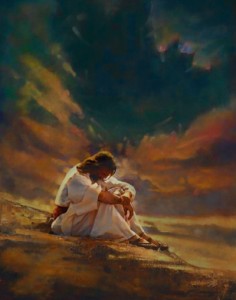
At the age of 30, when Jesus was baptised by John the Baptist, John saw the Holy Spirit come down upon Jesus as a dove would (John 1:32). This was the point when Christ’s public ministry began. After His baptism, and a 40-day fast in the wilderness, Jesus returned to Galilee “in the power of the Spirit” (Luke 4:14). As a result, Christ performed signs, wonders, and miracles (Acts 10:38). With such an intimacy with the Holy Spirit and consistent demonstrations of the Spirit’s miraculous power, the thing that actually impressed those closest to Him was how He prayed. At times He spent all night in prayer while His disciples slept (Luke 6:12). It seemed to His disciples that Jesus prayed from His heart to God as if God was His Father. This led His disciples to ask Him, “Teach us to pray.” (Luke 11:1). Jesus not only taught them how to pray, but He also taught them what to pray.

Then He said to His disciples, “The harvest is plentiful, but the labourers are few;
therefore pray earnestly to the Lord of the harvest to send out labourers into His harvest.”
Matthew 9:37-38

It seems to me that if the most Spirit-led, Spirit-empowered, Spirit-anointed, Spirit-filled, man spent more time praying than sleeping and then taught people how and what to pray, we should probably take note. What we note is two profound truths: (i) pray; and, (ii) pray for people to accept the gospel and for people to have preached that gospel. The result of implementing these two truths is that the wind of the Spirit often brings unlikely answers to our prayers leading to unlikely people encountering Christ. Saul of Tarsus was an unlikely convert that almost certainly resulted from the Christians he was persecuting praying for his conversion (Acts 9:1-18).


UNLIKELY MOMENTS

The wind of the Spirit leads to unlikely moments. Sometimes the Christ-follower finds him or herself in situations where sharing their conversion story leads to someone beginning their journey to Christ. These moments can be quite unlikely. They can occur in a supermarket aisle. They can occur while walking your dog. They can occur at a football match. The Spirit’s wind blows He wishes in the most unlikely moments. For Nicodemus it happened in the dark of night in a secret meeting with Jesus. 

Jesus answered him, “Truly, truly, I say to you, unless one is born again he cannot see the kingdom of God.” Nicodemus said to Him, “How can a man be born when he is old? Can he enter a second time into his mother’s womb and be born?”  Jesus answered, “Truly, truly, I say to you, unless one is born of water and the Spirit, he cannot enter the kingdom of God. That which is born of the flesh is flesh, and that which is born of the Spirit is spirit. Do not marvel that I said to you, ‘You must be born again.’
John 3:3-7


UNLIKELY WELCOMES

The wind of the Spirit also results in the most unlikely welcomes. The most dramatic example of this in the four Gospels would have to have occurred at the most unlikely moment. When Christ was crucified between two criminals He was ridiculed repeatedly by both criminals for hours on end. But then something happened in the soul of one of them. The wind of the Spirit had blown on his soul. He stopped mocking and ridiculing and asked Christ for forgiveness. Christ pardoned him and assured him that he would enter into Paradise and be with Christ for eternity. 

But the other rebuked him, saying, “Do you not fear God, since you are under the same sentence of condemnation? And we indeed justly, for we are receiving the due reward of our deeds; but this man has done nothing wrong.” And he said, “Jesus, remember me when You come into Your kingdom.” And He said to him, “Truly, I say to you, today you will be with Me in paradise.”
Luke 23:40-43

Within three hours all three crucified men were dead.

¶ It was now about noon, and darkness came over the whole land until three in the afternoon, because the sun’s light failed.
The temple curtain was torn in two. Then Jesus, calling out with a loud voice, said, “Father, into Your hands I commit My spirit!
And after He said this He breathed His last.
¶ Now when the centurion saw what had happened, he praised God and said, “Certainly this man was innocent!”
Luke 23:44-47 NET

Physical death is not the end of a person’s life. Can you imagine the scene when the crucified criminal who had just been forgiven three hours earlier turned up at the entrance of Paradise? I doubt that there was a need for security at Paradise’s doors, but if there was, I could imagine, with a little inspiration from Alistair Begg, that they might have wanted to quiz this unlikely convert before granting him entrance into Paradise.

“Can you explain justification by faith?” they might have asked.

“No, I don’t even know what that means” he might have replied.

“Were you baptised?”

“Baptised? I’ve never heard of it.”

“Then how in the world did you come to be here?”

“The man on the middle cross said I come here!”

“Oh! Then come right in. Welcome!”

As we prepare for the upcoming Tasmania Celebration with evangelist Will Graham, I suspect that the result will be hundreds and hundreds of people who will also experience an unlikely welcome into that heavenly Paradise because the wind of the Spirit blew on their soul awakening them to their need to turn to the Saviour. And some of these unlikely welcomes will be result of the Spirit’s wind blowing on their soul in their final moments in this life. But for the majority of these unlikely welcomes given to unlikely converts who experienced the Holy Spirit’s unlikely breeze upon them in unlikely moments, their welcomes will be given at the doors of hundreds of churches where they had previously thought they would never have been made welcome! May the Spirit of God blow across our State and bring more and more unlikely converts into the Kingdom of God’s Son!

Your pastor,

Andrew

Let me know what you think below in the comment section and feel free to share this someone who might benefit from this Pastor’s Desk.

Friday, 1 April 2022

“I WAS IN THE SPIRIT ON THE LORD’S DAY"

THE FAITH OF CHRIST’S YOUNGEST APOSTLE

A year earlier all hell had broken loose when the tyrant emperor Caesar Nero had outlawed Christianity; and now, the last surviving apostle of Christ had been banished to Patmos Island. All looked bleak. The youngest of Christ’s apostles, John was just a teenager when he witnessed the brutal and protracted execution of Jesus. John, now in his fifties, had many reasons to feel disappointed and even disillusioned with God. His apostolic colleagues had each been martyred – having been put to death in often gruesome ways including: crucifixion, flaying, and beheading. On this barren rocky island, separated from the woman he had pledged to her crucified Son that he would look after, and away from the people that Christ had shed His blood for, John was alone. Ever since Jesus had risen bodily from dead, these life-time faithful sabbath-keeping Jews now recognised that Christ had sanctified the first day of the week, Sunday, as His day. It was also on this sanctified day that Christ poured out Holy Spirit on his gathered disciples. Ever since that day, no matter how he felt or the circumstances he was in, John had made it his custom to be in the Spirit on the Lord’s DayThis is why the earliest Christians shifted the day of worship from Saturday to Sunday as their ‘Sabbath’.

John’s first Sunday on this island of banishment was no exception. He was in the Spirit on the Lord’s Day. While some weak Christians (note Rom. 14:115:11Thess. 5:14) find disappointment with God an excuse to forsake God, John did not. While they may use their excuses for disappointment with God to walk away from their church family, John did not. John’s example has something to teach us.    

¶ I, John, your brother and partner in the tribulation
and the kingdom and the patient endurance that are in Jesus,
was on the island called Patmos on account of the word of God
and the testimony of Jesus. I was in the Spirit on the Lord’s day…
Revelation 1:9-10a


JOHN’S WORSHIPPED CHRIST
EVEN WHEN THINGS GOT DIFFICULT

Have you had a bad day? A bad week? A bad month? Have you prayed and God has not answered your prayers? The apostle John had been subjected to horrible violent persecution for month after month since Caesar Nero had commenced a State sponsored campaign of martyrdom against Christians. He had recently been publicly humiliated in Ephesus and it is believed that he was subjected to an attempt to martyr him (note Rev. 1:9). Rather than yelling at God about how unfair God had been, John continued to remember what his Lord and Saviour went through – especially after Jesus had entered Jerusalem days before He was to be crucified – and understood that God is still good even when things are bad. Shortly before the apostle Peter was martyred by order of Nero, Peter had written this to the Bithynian believers (take note of how he referred to Nero):

Honor everyone. Love the brotherhood. Fear God. Honor the emperor…
But if when you do good and suffer for it you endure, this is a gracious
thing in the sight of God. For to this you have been called, because Christ
also suffered for you, leaving you an example, so that you might follow
in His steps. He committed no sin, neither was deceit found in his mouth.
When He was reviled, He did not revile in return; when He suffered,
He did not threaten, but continued entrusting Himself to Him who judges justly.
First Peter 2:1720-23


JOHN ALWAYS KNEW THAT GOD WAS GOOD
EVEN WHEN LIFE WAS SOMETIMES BAD

Each of the apostles of Christ, including John, had a resolute confidence in God’s goodness despite their often difficult circumstances. The apostle Paul wrote to the Romans before he was extradited there to stand trial before the Emperor, and stated in Romans 8, that all of creation was subject to futility as a result of the fall of mankind into the devil’s plot to destroy them.

For the creation was subjected to futility, not willingly,
but because of Him who subjected it, in hope
Romans 8:20

All of creation, says the apostle Paul, was subject futility as a result of mankind’s rebellion. But it was not subject to this futility – disease, sickness, viruses, accidents, pain, betrayal – by the devil. No, it was subject to the consequences of rejecting God by God who subjected it in hope! What is our hope? It is surely not that we will lives exempt from futility as much as we would prefer that. No, our hope extends beyond this life, beyond the grave, to the kingdom of God prepared for all ‘the children of God’.

 that the creation itself will be set free from its bondage to corruption
and obtain the freedom of the glory of the children of God.
Romans 8:21

This world is subject to the futility of cancer. This is world is subject to the futility of war. This world is subject to the futility of injustice. But the believer is not subjected to only dwell with God in a world of futility. In my previous Pastor’s Desk I cited the fourth century theologian, Athanasius, who said that followers of Christ now “despise” death and find it as nothing to be feared.

Death used to be strong and terrible, but now, since the sojourn of the Saviour and the death and resurrection of His body, it is despised; and obviously it is by the very Christ Who mounted on the cross that it has been destroyed and vanquished finally.
Athanasius, On The Incarnation, 5:29

HOW DID JOHN GET IN THE SPIRIT?

John tells us that it was “the Lord’s day”, so, he took steps to be in the Spirit (Rev. 1:10). He treated Sunday as a day different to every other day. This was the day when believers gathered to sing, pray together, heed God’s Word and Spirit, and fellowship together (“Communion”) over the Lord’s Table. It was a day to hear from God and be refilled with His Spirit. Even though John was alone and isolated from his brothers and sisters in Christ, and he prepared his soul to meet with God. Perhaps he spent time in prayer. Perhaps he spent time seeking God. Perhaps he worshiped by singing the songs that the early Church had developed to teach theology and gospel truths to their illiterate members. Then he waited to hear from God. And he did (which is how we came to have the Book of Revelation). How would our Sunday church’ experience be different if we each took time to prepare our souls to meet with God together? How might our collective witness be effected if we each regarded Sunday as a different day to every other day? 

¶ Then I turned to see the voice that was speaking to me,
and on turning I saw seven golden lampstands,
and in the midst of the lampstands one like a son of man,
clothed with a long robe and with a golden sash around His chest.
Revelation 1:12-13


TWO LESSONS 

John was in the Spirit on the Lord’s day. We have just considered these two important aspects of how the last of the original apostles remained faithful to Christ even when he was on his own. John’s example inspires us not to let our disappointments or unanswered prayers to be excuses to walk away from God. Secondly, John understood that Jesus ushered in the New Covenant and sanctified a new day of corporate worship, Sunday. This new day of worship would not need the old festivals and ceremonies that the Old Covenant demanded (Heb. 10:18). The New Covenant was commemorated by bread and wine. The Old Covenant involved effort, rituals, ceremonies, sacrifices, and a priesthood. The New Covenant was established by Christ and administered by the Holy Spirit. And it still is. And it this same Holy Spirit who invites each of us to prepare our souls to meet with God, especially as we prepare to meet together on the Lord’s day.

And when they had prayed, the place in which they were gathered together
was shaken, and they were all filled with the Holy Spirit and
continued to speak the word of God with boldness.
Acts 4:31


Your pastor,

Andrew

Let me know what you think below in the comment section and feel free to share this someone who might benefit from this Pastor’s Desk.

Friday, 25 March 2022

NEVER BE AFRAID AGAIN

Fear can be crippling. Being afraid is often the result of not what is happening, but what we fear might happen. Such fears make each of us vulnerable to withdraw, give-up, hide, or excuse ourselves from ever trying something new. The result of this happening is that we each become less than who God has created us to be and in the process we deny the world the benefit of what God can do through us. In the Bible there are many stories of many heroes who learned the secret of overcoming their fears by trusting God and learning how to ‘fear’ Him despite their circumstances or fearful expectations. We read of how Kings led their vastly outnumbered army to defeat immensely more powerful and ruthless enemy armies by fearing the Lord. We read how previously unsure, uncertain, unable people became fearless, decisive, and confident and able to solve previously insurmountable problems by simply fearing the Lord. We read how the arrogant were humbled and transformed into gentle and caring souls when they experienced the fear of the Lord. Then, in the early chapters of the Book of Acts when becoming a Christian could cost you your life, we read of the numbers of Christians exploding across the Empire because they also no longer had a reason to be afraid because they had learned what it meant to fear the Lord.

¶ So the church throughout all Judea and Galilee and Samaria had peace and was being built up.
And walking in the fear of the Lord and in the comfort of the Holy Spirit, it multiplied.
Acts 9:31


OUTNUMBERED, OUTGUNNED, OUTMANNED, YET NOT AFRAID!

¶ Jehoshaphat lived at Jerusalem. And he went out again among the people, from Beersheba to the hill country of Ephraim, and brought them back to the LORD, the God of their fathers. He appointed judges in the land in all the fortified cities of Judah, city by city, and said to the judges, “Consider what you do, for you judge not for man but for the LORD. He is with you in giving judgment. Now then, let the fear of the LORD be upon you. Be careful what you do, for there is no injustice with the LORD our God, or partiality or taking bribes.”
Second Chronicles 19:4-7

King Jehoshaphat led the nation of Judah into revival even though they faced enemy forces on nearly every part of the borders. The secret to his leadership success is revealed in the one thing he insisted from his leaders – that they learn to fear the Lord.

And he charged them: “Thus you shall do in the fear of the LORD, in faithfulness,
and with your whole heart”
Second Chronicles 19:9

The result of fearing the Lord was that his officials refused to take bribes, they refused to pervert the cause of justice, and they refused to be intimidated by enemies. When someone truly fears the Lord they trust God more than they are afraid of those who try to intimidate them. King Jehoshaphat took the commands of the Lord through Moses seriously –

¶ “And now, Israel, what does the LORD your God require of you,
but to fear the LORD your God, to walk in all His ways, to love Him,
to serve the LORD your God with all your heart and with all your soul,
Deuteronomy 10:12

Jehoshaphat believed the words of the prophet Samuel who said that if Israel’s kings would fear the Lord they would trust God and therefore be faithful to Him by implication then, God would protect them from their enemies (1Sam. 12:24). 

¶ And the fear of the LORD fell upon all the kingdoms of the lands that
were around Judah, and they made no war against Jehoshaphat.
Second Chronicles 17:10


UNSURE, UNCERTAIN, UNABLE, BECAME FEARLESS, DECISIVE, & CONFIDENT

Someone has wondered how Lazarus viewed problems and threats after Jesus had raised him from the dead. When Jesus appeared at the tomb of Lazarus four days after Lazarus had died and been buried, He wept (John 11:35). F.W. Boreham suggested that Christ wept not because of what had happened to Lazarus, but because of what He was about to do to Lazarus in bringing him back from the dead.

¶ Then Jesus, deeply moved again, came to the tomb. It was a cave, and a stone lay against it. Jesus said, “Take away the stone.” Martha, the sister of the dead man, said to Him, “Lord, by this time there will be an odour, for he has been dead four days.” Jesus said to her, “Did I not tell you that if you believed you would see the glory of God?” So they took away the stone. And Jesus lifted up his eyes and said, “Father, I thank you that you have heard Me. I knew that you always hear Me, but I said this on account of the people standing around, that they may believe that You sent Me.” When He had said these things, He cried out with a loud voice, “Lazarus, come out.” The man who had died came out, his hands and feet bound with linen strips, and his face wrapped with a cloth. Jesus said to them, “Unbind him, and let him go.”
John 11:38-44

Bizarrely, after Lazarus had been raised from the dead, the Jewish religious leaders sought to put him to death (John 12:10). I can imagine that if Lazarus had discovered this plot to put him to death, he would have been somewhat bemused. Did these religious leaders really think that mere death threats could make Lazarus fearful? Perhaps through his pre-mortem illness (Jn. 11:1), which his sisters were hoping that Christ would come and heal him of (Jn. 11:3), the ailing Lazarus had become unsure, uncertain, and fearful. But after experiencing healing when his pain-ridden body was vacated for a pre-resurrected pain-free immaterial body, and he was ushered into glorious comfort that awaits the righteous, he could never be fearful of death or the trials of this life ever again! Lazarus’s fear of the Lord before he was raised from the dead would have been profoundly boosted after his death as a result of his experience in paradise where there was no sorrow or pain. After his being raised from the dead by Jesus, no more would the thought of dying ever cause him to be afraid. Lazarus had now discovered that the fear of the Lord was the fountain of true life (Prov. 14:27).   


ONCE AFRAID, ARROGANT, AND THEN HUMBLE & GENTLE

Discovering the magnificence of the fear of the Lord is a very humbling transformation. Saul of Tarsus was an arrogant, fearful, man. He was fearful that the growing number of Christ-followers would undermine his world and everything he believed in. As with most violent men, he too was afraid and responded to what he was afraid of with murderous violence (Acts 9:1). Then he experienced the fear of the Lord (Acts 9:5) and his newfound fear meant that he was no longer afraid (Acts 9:1820). From that moment, Saul became Paul and he lived with a constant awareness that Christ was not just with him he was always watching over him (Matt. 28:20). Living in the fear of the Lord transformed Paul from an angry, afraid, man into a gentle, humble, man (1Thess. 2:7). And this is what the fear of the Lord does to a person.

The ultimate example of what living in the fear of the Lord was declared in 750BC by the prophet Isaiah to be the coming messiah.

And the Spirit of the LORD shall rest upon Him,
the Spirit of wisdom and understanding,
the Spirit of counsel and might,
the Spirit of knowledge and the fear of the LORD
And His delight shall be in the fear of the LORD.
He shall not judge by what His eyes see,
or decide disputes by what His ears hear,.
Isaiah 11:2

No one exemplified living in the fear of the Lord more than Jesus did. According Isaiah 11:3, Jesus delighted in the fear of the Lord. That is, Jesus delighted in the knowledge that everything He did was watched by His Father. Jesus described the fear of the Lord in terms that would bring comfort to every person who turns to Him in faith and obedience – but in terrifying terms for those who refuse to accept the love of God (Matt. 12:36-37).


NO LONGER AFRAID

Little wonder then, that when people encountered the Christ they experienced the fear of the Lord. Thus, in the early chapters of the Book of Acts, the apostolic preaching of the gospel resulted in new believers walking in the fear of the Lord –

¶ So the church throughout all Judea and Galilee and Samaria had peace and was being built up.
And walking in the fear of the Lord and in the comfort of the Holy Spirit, it multiplied.
Acts 9:31

Three things resulted from these members of the early church learning to walk in the fear of the Lord. Firstly, they experience the comfort of the Holy Spirit. Secondly the Church (and churches) grew exponentially. Thirdly, they were no longer afraid of death. Athanasius, writing about A.D. 280 described this change in attitude about death by the early believers as “the disciples of Christ [now] despise death”. By despise Athanasius was saying that the early Christians were no longer afraid of death.

All the disciples of Christ despise death; they take the offensive against it and, instead of fearing it, by the sign of the cross and by faith in Christ trample on it as on something dead. Before the divine sojourn of the Saviour, even the holiest of men were afraid of death, and mourned the dead as those who perish. But now that the Saviour has raised His body, death is no longer terrible, but all those who believe in Christ tread it underfoot as nothing, and prefer to die rather than to deny their faith in Christ, knowing full well that when they die they do not perish, but live indeed, and become incorruptible through the resurrection.
On The Incarnation, Athanasius, A.D. 280, Chapter V, The Resurrection (27)


ONCE YOU DELIGHT IN THE FEAR OF THE LORD,
YOU NEED NEVER BE AFRAID AGAIN!

When the early Church walked in the fear of the Lord, their lives reflected a sincerity of authentic trust in the Lord. The fear of the Lord brought a fear to sin or compromise and it also led to these early believers no longer being afraid of death despite the threats that came from the Jewish leaders, then from Rome. This is why I am bewildered by the spate of high profile Christian celebrity preachers who have been exposed for compromised lifestyles which has brought great disgrace to the cause of Christ. It is my pastoral hope that we will learn—and delight in—the fear of the Lord so that we be quick to repent when we fall, eager to seek God’s will in our lives, and strive to make Christ known by how we live and by our preparedness to confidently share the gospel. And we can do this because through Christ we never have to be afraid again!

Your pastor,

Andrew

Let me know what you think below in the comment section and feel free to share this someone who might benefit from this Pastor’s Desk.